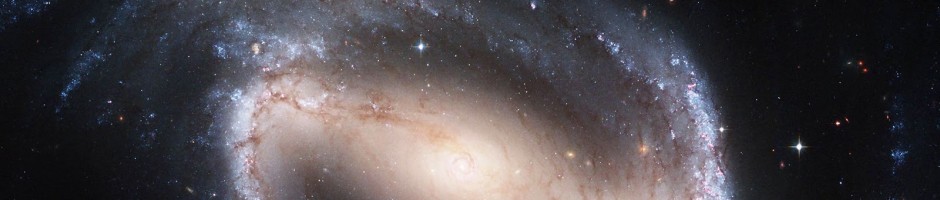
The dawn of Galaxy Zoo’s new incarnation – Galaxy Zoo: Cosmic Dawn!


This week, Galaxy Zoo begins its latest incarnation, Galaxy Zoo: Cosmic Dawn, with tens of thousands of new galaxy images now available for you to help classify! These were taken by the Hyper Suprime-Cam (HSC) on board the 8.2m Subaru telescope on the summit of Mauna Kea in Hawaii, as part of the Hawaii Two-0 (H20) survey, a key component to the more ambitious Cosmic Dawn survey.
The Cosmic Dawn Survey is a multi-wavelength survey aiming to understand the co-evolution of galaxies, the dark matter haloes that host them, and their central black holes over cosmic time, all the way from when galaxies first formed in the early Universe. A major part of this is the H20 survey which has obtained ultra-deep Subaru HSC imaging over large and particularly dark areas of the sky. The H20 survey targets two areas of the sky which, as part of the Cosmic Dawn Survey, were observed by the Spitzer Space Telescope in the largest allocation of observing time ever awarded on the spacecraft. When combined with these infrared data, H20 aims to push the boundaries of extragalactic astronomy by studying galaxy evolution out to around 800 million years after the Big Bang. This incarnation of Galaxy Zoo features images from a portion of the sky called the Euclid Deep Field North (EDF-N), from one of the two areas targeted by the H20 survey.
This effort from Galaxy Zoo will therefore also help prepare for the upcoming launch of the Euclid space telescope by the European Space Agency (ESA) in 2023, with the classifications you make now helping to guide what Euclid will observe in more detail with its even higher resolution imaging in visible light and the infrared.

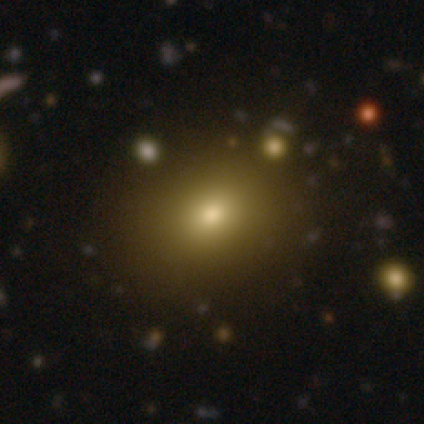
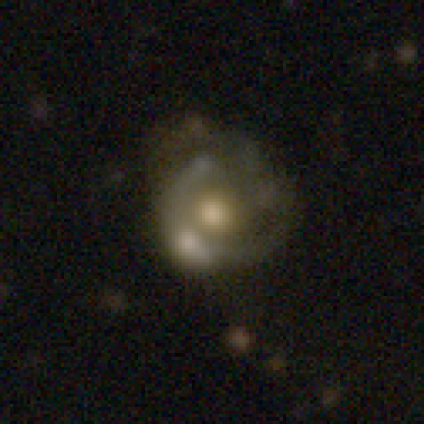
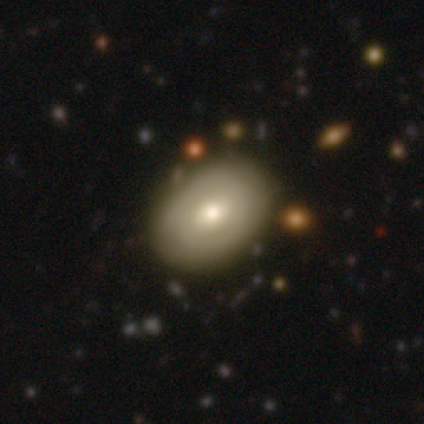
Compared to previous incarnations of Galaxy Zoo such as those using SDSS and DeCALS images, H20 enables us to see fainter and more distant galaxies from earlier in the Universe’s history, thanks to higher angular resolution of HSC and greater depth of the survey. However, deeper imaging also means we can observe many more distant galaxies in the same patch of sky, so the images you will see may often appear redder and blurrier than you might expect.
The Galaxy Zoo decision tree of questions has been modified so that your classifications can help refine the software used by the H20 team, and perhaps that of future Galaxy Zoo incarnations as well. For example, the “Star or Artifact” question now includes a “Bad Image Zoom” option, while selecting “Non-star Artifact” will allow you to classify the type of any image artifact you come across, such as satellite trails. In the future, Galaxy Zoo will also be running a simplified decision tree of questions for some of the fainter distant galaxies, as their lower resolution prevents many features from being identified.

Also, look out for any galaxies containing bright clumps! We’ve added a question about these, as they can help us understand the period of intense star formation that took place in the early Universe.
Finally, we are also asking volunteers to tag any extremely red objects, or those with a lens or arc features, in the Talk board, using the “Done & Talk” option. These are rare objects that we don’t want to miss, especially for such distant galaxies!
We are excited about the new images and looking forward to seeing what you’ll discover. Join the classification now!
James Pearson, Galaxy Zoo and H2O teams
From Galaxy Zoo to JWST – dust and gravitational lensing

My previous post on the Zooniverse blog gave some history of how having Galaxy Zoo participants call attention to backlit galaxies led to the galaxy pair VV191 being on the schedule for observations with the James Webb Space Telescope (JWST), what we expected to learn, and a final note to watch for the outcome in mid-2023. It is not yet mid-2023, and here we are with the outcome. A short-notice schedule reshuffling (which I suspect was enabled by how rapidly the commissioning process went, and the fact that this was a brief series of observations totaling only 30 minutes of exposure) brought these observations up to mid-July of this year.
Short form: we got what we came for, and the Universe provided interesting bonuses. NASA is releasing this nicely processed rendering of our combined Hubble and HST image sets today. The Hubble near-ultraviolet and red-light data are shown in blue, with green and red showing progressively deeper-infrared bands from JWST. 
The dust in the spiral arms of the big spiral (VV191b) stands out where it is silhouetted by the bright light of the elliptical galaxy VV191a. In fact, the dusty arms can be traced farther from the spiral’s center than even the JWST data show bright spiral arms, cutting off very sharply at a radius of 20 kiloparsecs (66,000 light-years, about 8 times the distance from us to our own galactic center). This testifies to the past history of star formation in VV191b. Having a map of the light transmitted through the dust at different wavelengths lets us examine the so-called reddening law, the relative amount of light blocked at different wavelengths. This is characteristic of the sizes of interstellar dust grains, and how they are distributed on scales smaller than we can resolve in our data. This RGB display shows the transmitted light at wavelengths 0.6-1.5 microns (plus background galaxies and foreground star-forming regions we masked in numerical analysis). The dust lanes are redder (or, to my eye, browner) than the surroundings, illustrating how blue light is more effectively blocked than red (and red more effectively than deeper red, and both of those compared to near-infrared, until at the 4.4-micron longest-wavelength band of JWST’s NIRCam detectors the absorption is too small to measure)
.
Analyzing these maps pixel by pixel (after matching the image resolutions; JWST images at 1.5 microns are still sharper than HST data at 0.6 microns, a welcome outcome which was not guaranteed) we can ask more precisely how the dust in VV191b reddens light passing through the galaxy. The answer is – a lot like typical dust grains in our part of the Milky Way. This was a bit unexpected first because while both are large spiral galaxies, VV191b is considerably larger than the Milky Way, and we are examining its outermost spiral features in ways that are very difficult in our own Galaxy. Second, where there are clumps with more dust than their surrounding, so smaller that our data blur them together with their surroundings, we will measure less reddening than we would if we could use single stars as background sources (“greyer extinction”).
There is more to learn, but these data are a great step. The research paper has been submitted to the Astronomical Journal, and is now under review; a preprint version is at https://arxiv.org/abs/2208.14475
In our first looks at the JWST data, something else became obvious. Near the core of the elliptical galaxy VV191a is a very red arc appearing to partly wrap around its nucleus. Opposite the nucleus is a much smaller red spot. Together these fit perfectly for being a gravitational lens, light from a galaxy over 10 billion light-years away, seen as the gravity of the foreground galaxy distorts and magnifies it. While hundreds of such lenses are known from more distant galaxy clusters (eagerly sought to improve our knowledge of very early galaxies), only a handful of single-galaxy lenses have been found so nearby. (There is a bit of irony in finding this – the overall project these data came from, led by Rogier Windhorst at Arizona State University, acquired the name PEARLS, Prime Extragalactic Areas for Reionization and Lensing Science, so now VV191 honestly belongs through that L). Team members Giovanni Ferrami and Stuart Wyithe from the University of Melbourne in Australia were able to get a good match to the lensing distortion using the galaxy’s light distribution and estimating the background galaxy distance from its colors. In fact, because everything is connected if you look closely, this measurement tells how much mass including dim dwarf stars plus dark matter is in that part of the foreground galaxy. A second distant background galaxy has only a single image, but is distorted in a way similar to the arc. These distant galaxies are so red that the lensing was not seen in the Hubble images, even though the arc was obvious in each of the JWST images. This crop shows the arc and its counterimage on either side of the elliptical-galaxy core.

Around the edge of the image above (which comes from only a single one of the eight near-IR detectors in the NIRCam instrument), many other background galaxies appear (they are everywhere with JWST, even showing up the recent Jupiter image). To the upper left of the elliptical galaxy are two patchy spiral galaxies that look almost the same size but have very different colors (one so red that, again, Hubble data did not show it). Without further data they could be at similar distances but one so dusty that dust reddening change sits colors, something we need to know more about to interpret incoming results in the early Universe). Or the red one could be very bright and at a much higher redshift – in an expanding Universe, very distant objects can look large although dim (more or less because they were much closer to us when that light was emitted). This means that galaxies of the same actual size will look nearly the same size to us at any distance beyond about 5 billion light-years (although progressively more redshifted and a great deal dimmer with distance).
Some readers may have followed the public discussion about how JWST calibration uncertainties (since it’s so early in what we hope will be a very long mission) may have affected initial attempts to identify the highest-redshift galaxies. In this light, this was a very good project to do so early – for our dust analysis, all that matters is how the brightness in various parts of each galaxy is compared, using uniformity within a single detector and not at all needing to know its absolute sensitivity. To get the absolute sensitivity for colors of the gravitationally lensed galaxy (which we did not initially know we’d need to do), we were able to combine a Sloan Digital Sky Survey spectrum of the elliptical galaxy with the very well-known near-IR properties of giant ellipticals to reduce calibration uncertainties.
As said above, this all comes from 30 minutes’ worth of data using 1/8 of the field of view of JWST’s NIRCam camera. There are a lot more galaxies out there. Watch this space as we try to work out the best way to do JWST Galaxy Zoo.
 Galaxy Zoo