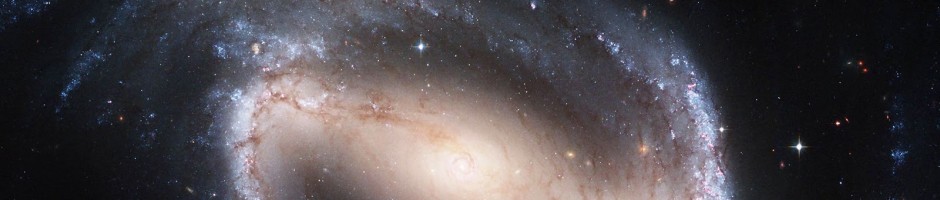
Bars appear to fuel supermassive black holes
Hi all! We recently had a paper accepted that used Galaxy Zoo data to identify whether accreting supermassive black holes (known as AGN) are more often found in strongly barred galaxies.
Thanks to the copious amount of data in GZ DESI, we were able to show to a very significant level that strongly barred galaxies are more likely to host AGN than weakly barred galaxies, which are in turn more likely than unbarred. We did this by using a sample of disk-dominated galaxies, determining whether or not they had an AGN (and removing any galaxies where we weren’t certain), and then looking at the AGN fraction in strongly barred, weakly barred and unbarred galaxies. By separating the barred galaxies by strength, and by having a greater sample of galaxies to work with, we were able to tease out our result.
You can check out the paper at https://arxiv.org/abs/2406.20096.

Examples of galaxy morphologies and activities: The left column has unbarred galaxies, the middle has weakly barred, and the right has strongly barred galaxies. The top row shows AGN-host galaxies, the middle row shows star-forming galaxies, and the bottom row shows undetermined galaxies, mostly red spirals.
If you want to continue reading about bars, be sure to check out the Tobias’ recent post!

 Galaxy Zoo