Why Are Mergers Important?
What will we use our merger data for?
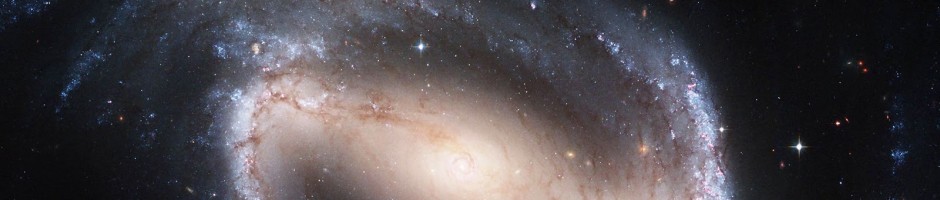
Mergers are really interesting since they are the main process by which the universe evolves its galaxy population and creates more and more massive galaxies. Additionally, the collision between two galaxies involves ALOT of energy. This energy gets transferred into compressive forces when clouds of gas in the galaxies collide and collapse into violent bursts of star formation. Understanding how all the stars in the universe form is a really important aspect of a full understanding of the cosmos and so mergers help us understand some of the key observations made in modern astronomy. We also want to know what fractions of mergers involve spirals and how many are ellipticals, what is the typical mass ratio between merging galaxies and whether or not mergers tend to happen in clusters or not.

Another important contribution mergers can make is help us understand the formation of Active Galactic Nuclei (AGN). Mergers and, more generally, galaxies with disturbed morphologies often turn out to be Ultra-Luminous-Infra-Red Galaxies (ULIRGs) which are themselves interesting because they tend to host AGNs. An AGN is thought to be a Super Massive Black Hole that sits at the centre of a galaxy and produces vast quantities of radiation as matter falls into it (this is called ‘accretion onto a black hole’). AGNs produce vast amounts of light that far out strips that emitted by all the stars in its galaxy combined. Also, they sometimes produce dramatic jets of matter that fly out at relativistic speeds. Alot is still unknown about the mechanism that produces these jets and so AGN and their formation is a hot-topic of research. Distant quasar galaxies are thought to be AGN and tell us much about the formation of the first galaxies in the universe. The more we know about AGN and how they form, the more we can know about some of the distant events near the beginning of the universe. Specific properties of AGN can be probed by examining the spectra that they produce and we hope to apply these tests to all of the good mergers that we find.

Merger hunting the easy way
I posted a request yesterday afternoon for help in sorting out a set of possible mergers; as the developers are busy with Zoo 2, I just posted a set of lists. Clunky, and annoying, but I’d hoped people would still be able to help out. By the end of last night, forum member Waveney had built us a proper interface. You’ll find the address at the end of the instructions below.
Merger hunters needed
One of the most impressive aspects of Galaxy Zoo has been the way we’ve been able to use the data in all sorts of unexpected ways. Whether it’s finding overlapping galaxies or strange blue blobs it’s become obvious that there is a lot more to all of your efforts than just elliptical vs spiral. When we were putting together the site, we didn’t give much thought to the many galaxy mergers in the catalogue; as far as the primary science goals went they were mostly just contaminants in our data set.It quickly became obvious that we had the chance to assemble a large and interesting set of mergers and learn more about why, where and how these beautiful collisions occur; conducting the first investigation into this is Daniel Darg who’s based here in Oxford.
He’s already got interesting results, but we’d like his paper to be as comprehensive as possible and that means including as many mergers as we can find. Everything which has a weighted vote of more than 60% in the merger category has proved to be a true merger, but now we need for help to have a closer look at those which have a vote between 40% and 60% in this category. We’re keen to get on with this, so rather than wait for Zoo 2 we thought we could ask for your help here. To find out how, read on below.
Update : New, easier classification system available : See this post.
Galaxy Zoo goes observing
We’re only a couple of weeks from the observing session to look at some of the overlapping galaxies pointed out by the good people of Galaxy Zoo, so it’s high time for us to think about how to do this most effectively. We are scheduled for the nights of April 25-29, using the 3.5-meter WIYN telescope at Kitt Peak, Arizona. The timing is just right for the SDSS sample, since the northern galactic hemisphere that it covered most completely is up all night this time of year and the moon is waning and moving out of the way. Here are some outside and inside views of the telescope:


You can even see the current weather at Kitt Peak (as long as it’s daylight there) using this webcam view – WIYN is at upper right, on the mountain horizon directly above the nearby University of Arizona telescopes.We’ll be using a fairly new CCD camera called OPTIC, which is visiting from the University of Hawaii. This camera has chips with a special architecture allowing the accumulating image to be moved around on the chip in any direction by purely electronic means, so it can keep up with atmospheric motions as long as there is a bright enough guide star in the right field of view. The advantage of doing this is that electrons can be moved around much faster than the whole telescope, and without introducing any mechanical vibrations. This device will help us work out how far out in redshift we can pursue galaxies for this project using ground-based telescopes.
Now – which galaxy pairs do we start with? You all have furnished a magnificent sample, something like 875 overlapping pairs that look useful for dust measurements by the time I fold in the last few weeks’ harvest. I keep my target book for this project as a set of PDF files accessible from anywhere – for those who really want to see, the list is broken into four parts starting at right ascension zero, 10 hours = 150 degrees, 13 hours = 195 degrees, and 15 hours = 225 degrees. (These are really cool to flip through rapidly page by page). This huge sample gives us the luxury of being able to select our targets carefully, making sure to span ranges of foreground galaxy type and luminosity. An obvious starting point is the nearest galaxies, where we can see the most detail in the dust. We want to include pairs with both elliptical and spiral background galaxies; the dust detail is clearest when the background galaxy is smooth, but we also want to correlate with ultraviolet data from the GALEX satellite, and only spirals are bright enough in the UV to do this sensibly.If we think about choosing galaxies based on a score, we give them points for being bright and nearby, points for having two known and quite different redshifts, and points allocated according to how long the GALEX UV sky survey looked at that piece of the sky.
But we also want to pick a few higher-redshift galaxies, at z=0.1 or greater, to show just how well we can measure their dust from the ground. (Recall that we do have pending Hubble proposals to do some of these, but there are something like 960 competing proposals for next year’s observations and the oversubscription will be fierce).Our goal is to look at something like 50 pairs for an hour each over the 5 nights, and naturally we want to start with the most interesting ones in case the weather goes downhill. Chris will be blogging during the observing run, and certainly we’ll be getting action pictures. There are also plans for a writer to watch the action for a night and report the scene from a non-astronomer’s perspective. We hope to be able to do some analysis near real-time and get dust maps to show how well the data match our needs; if so you’ll be seeing some. I’m attaching a couple of images showing this on NGC 5544/5, which has been posted a couple of times in different threads (but from older data here). First the blue-light image shows the overall geometry. Then we have subtracted a symmetric model for the light from the foreground galaxy and divided by a symmetric model for the light of the background galaxy (both models being based on the data in the non-overlapping regions), giving a map of the absorption by dust in the overlap area. We hope to get a lot more of these.


New Scientist
As some of you may have noticed, our first paper has caught the eye of New Scientist (in fact they have written about us before). This is pretty cool considering that we effectively had a null result in our paper – concluding that the Universe seems to be relatively normal. The real excitement is due to the ‘people power’ that the Zoo has harnessed.
I think you need a subscription to see the full article, and however much I’d love to give out Chris’ account details I am sure this breaks certain rules! However, if you have been able to take a look at the full piece then you may be a little curious about the comments from Prof Michael Longo towards the end
It turned out people have a preference when picking orientation: despite the mirroring, 52 per cent of the galaxies were still described as anticlockwise. “Rather than the universe being odd, it might be that people are odd,” says Land. The team has submitted the findings to Monthly Notices of the Royal Astronomical Society (www.arxiv.org/0803.3247).
Longo, however, is unconvinced. The mirroring analysis was only carried out for 5 per cent of the galaxies studied and he believes this sample is too small to justify rejecting the original excess that users spotted, which corroborated the existence of the axis. “[Land and colleagues] have done an impressive job of organising the Galaxy Zoo project, but I believe their analysis is flawed,” he says.
It is really thanks to him that this part of the Zoo, looking into the spins of galaxies as opposed to just the morphology, took place (see here for more on the motivation of this part of the study). And he raises an interesting point in the article that I thought it’d be worth responding to…
The point was raised that because we only did the bias study on about 5% of the Galaxy Zoo sample then we cannot really comment at all on the level of bias in our full dataset. Indeed this sounds quite reasonable. We can see how the classifications for this random ~5% of the data behave when we flip the images, but how do we know that the full sample wouldn’t behave differently?
Well, I think there are two important points to be aware of. Firstly, with statistics we were able to confidently detect a bias in the classifications of these ~50,000 galaxies. The analysis we performed is discussed in some detail on this blog. It is a bit technical, but not only do we detect a bias effect, but with a method called resampling we further established the uncertainty in this result – the probability that the effect could just appear by chance.
For this the data was split into further subsets, and by looking at how the results varied between these groups we could estimate the overall uncertainty in our results. For example – if it turns out that removing a few pieces of information causes the results to vary wildly then this means that you have a huge uncertainty and cannot make strong final conclusions about the full dataset. In our case this method actually returned relatively small errors because even between subsets of the data the results did not vary much. When we formally computed the uncertainty (we used the jackknife method to be specific) we are able to detect the bias at the ‘3-sigma level’.
This kind of lingo is used a lot by scientists, and what we mean by ‘sigma’ is one standard deviation. This is a measure of how much numbers can be expected to vary by chance. Consider for example that you toss a fair coin a thousand times, and you want to know how many times you can expect to return a heads. Well obviously you’d expect 500 heads – but not necessarily exactly 500 as there will be some natural variance in the results. In this example it actually turns out that the number of heads you expect roughly obeys a Normal Distribution with mean of 500, and standard deviation of ~16. This means that if we repeated the experiment a number of times we expect 68.3% of the results to find the number of heads to be with 1 standard deviation of 500 (between 484-516), 95.4% within ‘2 sigma’ (468-532), and 99.7% within ‘3 sigma’ (452-548). If your experiment returned 450 heads from 1,000 tosses of the coin, then this would be unexpected at the ‘3-sigma level’ and would be highly unlikely – thus indicating that the dice is probably biased.
Well, similarly we found that our original and our flipped classifications were inconsistent at more than 3 standard deviations – and this means we can be sure at the 99.7% level than there is a bias effect in our study. This is what we mean by confidently!
But what about the full dataset? Well this is the second point – the bias-study galaxies were selected completely at random from the full dataset in order to get a representative sample of them. We have conclusively shown that there is a bias in the way people classify galaxies and hence the same effect should be present in the full sample. We cannot be 100% sure that the full sample would show exactly the same bias effect, but we can be over 99.73% sure (3 sigma) sure. In other words, for the bias effect to be a statistical fluctuation due to reanalyzing just 5% of the data, we would have to be very lucky (not quite LOTTO lucky, but more than BINGO lucky!). But once the bias effect is taken into account, the axis (or more specifically the excess of anti-clockwise galaxies) disappears. Alas!
The World of Galaxy Zoo – Part 2 of 2
Today’s post from Alice once again, this time talking about the first-ever Galaxy Zoo real-universe meetup. To share the photos from these meetups, I have created a free Flickr account for Galaxy Zoo. You can check out the photos as you read; links to individual photos are below.
Here is Alice:
I can’t remember who it was who thought of a Christmas party back in July, but the idea of actually meeting fellow classifiers stuck in my mind ever since. Chris and I hit on 2008 Astrofest as good venue, especially since some Zooites were likely to be going there anyway. I set up a thread to advertise it, and more than 20 people came, including (this still stuns me) four from abroad!
As ever, friendly Zooites jumped to ask questions, and then to help. Astrofest regulars described the lectures and exhibitions; web-savvy people put up maps and advice on buying tickets. I built up a database of everyone who expressed an interest and wrote updates as we finalised our plans. We amused ourselves thinking up ridiculous tannoy announcements (“Scaryitalian is looking for Fluffyporcupine” . . . “Would all members of the Zoo please meet at the watering hole” . . . “Would you please make your way down to the foyer where infinity is waiting” . . .).
How to recognise each other was also a problem to solve and of course an excuse for further hilarity. We set an exact time and place, and Geoff and Jules kindly made badges for everybody to wear. (By the way, if you do the same, please ask Zookeeper Phil if you want to use the Galaxy Zoo logo – we failed to think of that and then felt very guilty. Any SDSS images are OK, though.)
Apparently, some people’s friends and family were aghast. “What? You’re going out to dinner with people you met on the Internet? You’re crazy! They could be anybody!” Well, we could and we are! But it’s important to remember that if you’re unhappy in such a situation, you’re free to leave.
Actually, we had a lovely day. Within about twenty minutes of Astrofest’s doors opening, I had bumped into Geoff, Scaryitalian and Jules; by lunch time a cheerful gaggle were eating sandwiches outside; and by evening we were laughing companionably over our prior fears – that the people we’d chatted to online were the product of our lonely dreams, or would turn out to be insane and intimidating astronomy geeks. But nobody seemed like a stranger, because we’d all been being ourselves on the forum.
Astrofest itself was just as enjoyable and impressive as I remembered, with its stalls staffed by friendly enthusiasts and selling books, binoculars and pretty pictures. Sir Patrick Moore’s lecture and book-signing also added hugely to the big grins on our faces (photo). I asked him how his typewriter was doing; he told me it was still functioning, just about . . . Chris, any updates here? Then, we went out for an outdoor lunch (photo).
At 5.30 p.m. we had assembled as a group outside, phoning the last few stragglers and waving a “Galaxy Zoo Meeting Point poster” kindly provided by Jules. The only blot on the festivities was the absence of Zookeepers Chris and Kevin, who it would have been very exciting for us all to meet, but who had been called away at the last minute. Edd and Kate made it, though, and it was great to meet them. It was when we arrived at our venue that things began to get interesting.
If you are old enough to remember nativity plays before political correctness ordered their extermination, you’ll know that stars, children and innkeepers don’t always make for a happy formula. I’m a great believer in involving children in Galaxy Zoo. I’m training to be a teacher and I haven’t yet met a school pupil who has seen this site and not liked it. And as you know, it’s a strong policy of ours to keep the forum scrupulously family-friendly and educational too! Besides, I’ve lived in Spain and seen the beneficial effects of including young people in everything, rather than enclosing them in cotton wool capsules.
So I was keen to find a venue that would not throw us out because we were bringing along three extremely polite and interested young classifiers. Unfortunately, whoever had spoken to me when I booked the venue and thought the young people would be welcome was now due to get in big trouble with the manager. Meanwhile, out we went onto the pavement (photo) . . .
It didn’t really matter. Righteous anger plus excellent company only brought us closer together. We’d been on a classifying mission together for months anyway; now we had a “find a pub” one! One Zooite shook my hand and said: “Well, Alice, I don’t know how many years it is since I’ve been thrown out of a pub – I’m very proud to have had it happen, even by association. Thank you!”
Thanks to the speed and kindness of those who knew London well, we soon found an extremely noisy place which nonetheless did good food and wine, and merry conversation flowed on. As night fell and even a few stars began to appear over the streetlights, people began to trickle away amidst many hugs, smiles and appreciations of the excellent fun and company. Eventually, Infinity took us on a tour of Kensington, past Hyde Park and the Albert Hall, until we ended up drinking tea in a hotel that none of us were staying in. Hanny said it was the nicest cup of tea she’d ever drunk, and I certainly thought it was the nicest weekend I’d ever had!
As soon as we’d got home, we started reminiscing and rushed to post our photos, we knew our urgent priority was to have another one. So on Sunday 30th March, we had another lovely day in Greenwich. Geoff Roynon was the star of this one – his organisation was incredible, from pub research to group ticket buying to maintaining a database of everyone coming!
Fewer people could make it this time round, but we were delighted to meet Halibut and Thomas J. While the day lacked the dangerous glamour of Astrofest, it included excellent weather (photo), some very nice shows at the Planetarium, a walk through and a game of rounders in the park, tea at picnic tables, fish and chips by the Thames and food and chat in very carefully chosen pubs. Jules thoughtfully prepared an illustrated greeting for all Zooites who couldn’t make it (photo).
You can read more about both our gatherings, and any future ones (definite or dreamed-of) at the Galaxy Zoo Get-Together Index. It appears that UK meetings will take place roughly every six weeks, whenever there is a school holiday. If you have any ideas for venues or activities, please post them in the Dreams & Schemes sticky.
My main purpose of writing this was to encourage you to come along, or, if you live too far away, to organise a similar gathering yourself. Find out what astronomical events might be taking place near you, or if there is a museum, planetarium or show of some kind other Zooites might like to visit. You can start a new thread in the Café, and I will provide links to it and any help or advice I can.
It’s important to keep track of who’s coming, a way to contact them, whether you can collectively buy a ticket (which is often cheaper), and a way to recognise everyone. If you’re a group and meeting in public, it’s almost bound to be safe. It’s surprisingly easy to organise such a meet-up, and wonderfully rewarding. I’ve seen truly awesome contributions to the forum and to meet-ups by our Zooites, and have made some terrific friends.
If you haven’t met me (or any other classifiers) yet, I hope one day we will. In fact, I’m already looking forward to it – see you there!
Shameless plug
For those of you who enjoyed our coverage of the AAS meeting back in January, I’m helping provide similar coverage of the UK’s National Astronomy Meeting currently being held in Belfast. The blog is here – come and join us.
The World of Galaxy Zoo – part 1 of 2
One of the most exciting aspects of Galaxy Zoo has been the way in which a really amazing community has developed around the project. When we started, we didn’t even have a forum, but the incredible success of the project led to many requests, and we created the Galaxy Zoo Forum. The story of how that forum became a real, meaningful community is just as fascinating as the scientific story of Galaxy Zoo. So, we have asked Alice, one of our forum moderators, to tell the story of Galaxy Zoo as soical community. Today, she’ll talk about some of the wonderful things that the community has created, and on Thursday, she’ll tell the story of face-to-face meetup. So, here is the story of the Galaxy Zoo community, courtesy of Alice:
Well, I can’t tell you much about astrophysics. But, perhaps because of this, I can tell you an awful lot about the other species inhabiting Galaxy Zoo, namely the wonderful people.
I can honestly say that Galaxy Zoo is the best thing I’ve ever done. I was staggered to be asked to moderate the discussion forum, but was already addicted to the galaxies and the thrill of making a real contribution to science. Eight months on, I still say that this, added to working with our Zooites, have capped even living abroad.
And I’m not the only one. I don’t know quite what it is, but Galaxy Zoo does something to people. The contributions, both creative and academic, that people have made to the forum are as stunning as the sight of any spiral, and never fail to move me. Infinity rewrote a passage of Shakespeare. Quarkspin came up with this song. Pluk collected up the letters of Galactic Alphabet to write us all a Christmas message. Rick Nowell put together this stunning montage of mergers, which I hope will one day make it to Astronomy Picture of the Day – if not, Rick, hundreds here appreciate it, as you know! He and Starry Nite have also done a disturbingly vast amount of work collecting galactic peas; laughs and science mix all too well here.
Zooites have made huge contributions to finding your way around the forum and the science, as well. Geoff Roynon wrote most of the FAQ Reference Library and Finding Information for your Target Object. NGC 3314, who also got us our telescope time to investigate overlapping galaxies and who has done so much work with the Team on Hanny’s Voorwerp, has written a thread about galaxy spectra. EigenState, meanwhile, has written two deliciously scary scientific papers on the physics of spectra – because beginners and professors both come here! Added to that, there is a wonderfully welcoming and helpful atmosphere here, generated entirely by our regulars: was it Half65 who started the tradition of saying “Welcome to the zoo” to all our newcomers? And patient people never tire of helping newbies make galactic signatures, explaining how to classify irregular galaxies or discussing space, time and black holes.
So it goes on – I won’t have mentioned everything or everybody; you may include links to worthy pieces I’ve missed out in the comments! By the way, I can’t resist including my own contribution, with thanks for all the inspiration to Dr Brian May (whose music and website also brought some of our Zooites to us!). But my favourite to date has been SMacB’s awesome galactic videos.
What happens next… Peer Review
With the first Galaxy Zoo paper submitted (kudos to Kate and Anze!), we’d like to describe to you what happens next. What’s scientific publishing all about? How does it work? If you’ve followed the blog and the forum, you have a pretty good idea of the first part of the scientific process: discovery!
We set out on the Galaxy Zoo project in part to test whether spiral galaxies in different parts of the sky somehow have spins that align, as has been claimed by earlier work. Kate and Anze have commented on the motivation for this work and blogged about how we did find an effect, were startled by it and so started the bias test to understand it. Kate and Anze used the bias test data to show conclusively that in the case of Galaxy Zoo it was an effect with the observers and that the universe isn’t mad.
This is one of the amazing and unique things about science. Good scientists spend most of their time arguing against the effects they see in their own data, to avoid falling into traps of seeing only what they expect to see. To see how unique and amazing this is, try to imagine a politician arguing against a piece of legislation s/he is sponsoring! This process of double, triple, and quadruple-checking one’s own work is a very important part of science.
Once we were convinced that we really understood what is going on, we could then write up our conclusions in the form of a scientific paper. Steven wrote here about the process of writing a paper; Kate went through the same process Steven described. Over the past few weeks, she passed her paper around to the rest of the Galaxy Zoo team for comments. Kate’s paper has thus passed through the first check — her own examination of her results — and the second — amongst the team itself.
The next step in scientific research is to submit the paper to a journal. This has now happened, and the paper Land et al. (2008) (where “et al.” means “and the rest,” including YOU!!) has been submitted to the top UK journal Monthly Notices of the Royal Astronomical Society (MNRAS).
The editor of this journal will now select an anonymous referee who can comment on the scientific and technical merits of the paper. The referee is another astronomer or cosmologist whom the editor can ask for an expert assessment of the work. He or she will have a few weeks to read it, think about it, and then make a number of recommendations to the editor of the journal. There are three options. The referee can reject the paper outright. This generally happens very rarely, except in highly competitive top journals like Nature and Science. They can support publication of the paper, asking for only a few minor modifications. This also happens quite rarely, though! The most common outcome is for her to write a “referee report,” suggesting a number of modifications and ask for clarifications. The referee might have questions about some part of the analysis, suggest some alternative thoughts and ideas, or criticise the methodology. Sometimes referees can be hostile to a paper; but often, they are genuinely helpful and constructive.
After receiving the report, we get a few weeks to digest it and modify the paper according to the referee’s comments, and argue against the points raised that we disagree with. This process may repeat itself a number of times if the referee isn’t happy with our modifications, and so it can often take weeks and months for a paper to get to a decision by the editor (acceptance or rejection). If a referee is being particularly unreasonable, we can write to the editor requesting a new referee. In extreme circumstances, we could even choose to submit the paper to a different journal and hope for a more reasonable referee.
The whole process is generally known as peer review since the referee is a peer — a fellow scientist and expert in the field. If the paper is accepted, it will appear both in the online and print version of the journal after another few weeks or months. A paper accepted in such a journal is then considered peer-reviewed.
So, if Kate’s paper hasn’t yet been peer-reviewed why is the paper already “public”? It’s general practice in astrophysics to post papers as preprints on a web server called astro-ph. Astro-ph is updated daily to make all papers publicly accessible for anyone. Most people post their papers there when they submit them to journals so they are available immediately. Some wait till the paper is accepted. Thus, not everything on astro-ph is peer-reviewed! In fact, in cosmology, some like to submit preprints to astro-ph before submitting so to allow the community to comment before the draft is submitted to a journal.
It’s important to note that something said in a “peer-reviewed” paper isn’t necessarily true. The point of peer-review is to weed out obviously flawed paper whose logic has holes or whose data don’t support the conclusion. Knowing that a paper has been peer-reviewed should give you extra confidence that its results are believable – that means that an expert in the field has read through the paper and thinks its conclusions are believable.It’s really just the first step of proper “peer-review,” because the process continues. As the community of astrophysicists digests the paper, they too pass judgement on whetherthey consider the paper important and whether they believe the conclusion. Thus, in the years after publication, other astrophysicists might deem Land et al. (2008) a key paper and cite it in the future, commenting on it positively. Or they might disagree with it, but that would still be a sign that it was important enough to comment on. Or it might just fade into obscurity if astronomers don’t consider it important. That’s the historical legacy of a paper – and that’s the ultimate peer-review.
First paper submitted
It’s taken more or less a whole year to get to this point, but I’m very proud to announce that the first Galaxy Zoo paper has been submitted to the journal, the Monthly Notices of the Royal Astronomical Society or MNRAS as it’s known to its friends. Congratulations to Kate for getting us to this point, and fingers crossed that the referee will be kind to us.

It’s become increasingly common in recent years – particularly in cosmology – to make papers public even at this early stage. This is usually done via the central astro-ph server, so expect to see the paper here in the next day or so. Thanks to all Galaxy Zoo members for the careful classifying which made this possible – there’s lots more to follow.
Update: Here it is.
 Galaxy Zoo
