She's an Astronomer: Manda Banerji
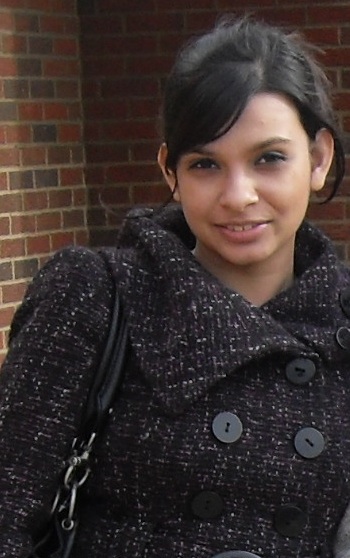 Dr. Manda Banerji is a postdoctoral researcher within the Institute of Astronomy at the University of Cambridge where she works on distant galaxies in the Universe. Originally from India, Manda moved to the UK almost 10 years ago to complete her A-levels and never dreamed at that point that she would fall in love with the UK so much that she’d still be here today! She completed her undergraduate degree at the University of Cambridge in 2005 and her PhD at University College London in 2009. In between Manda also spent a year working as a research scientist at the National Physical Laboratory.
When not doing research, Manda loves traveling the world and enjoys good food, good wine and the company of good friends. If she ever finds more hours in the day (or less of a need to sleep), she hopes to take up dancing again and start working on her first novel!
- How did you first hear about Galaxy Zoo?
I saw the Galaxy Zoo papers on astro-ph of course when they were first coming out. However, I only decided to get involved later when my PhD supervisor, Prof. Ofer Lahav mentioned it to me while I was at UCL. We were working together on using machine learning algorithms such as artificial neural networks to estimate the redshifts of galaxies from their colours. Ofer mentioned that he had used the same neural network tool to classify galaxies with collaborators in the early nineties. He also knew Chris Lintott from having been his PhD co-supervisor at UCL so we decided to start working together on applying machine learning to the Galaxy Zoo data.
- What has been your main involvement in the Galaxy Zoo project?
I led the machine learning paper which showed that the Galaxy Zoo classifications can be used as a “training set” in order to supervise the learning of automated morphological classifiers such as artificial neural networks. Once these networks have been “trained” using the human classifications, they can be used to automatically classify much larger data sets.
- What do you like most about being involved in Galaxy Zoo?
The best thing about being involved in Galaxy Zoo is the mass appeal of any work carried out on the project. I have always believed in the importance of communicating science not just to fellow researchers but also general members of the public so that they hopefully find it interesting and feel inspired to pursue some aspect of it themselves. The Galaxy Zoo project provides a wonderful forum through which to communicate interesting science to many many members of the public while at the same time getting them involved to contribute to the projects themselves.
- What do you think is the most interesting astronomical question Galaxy Zoo will help to solve?
I think one very unique aspect of Galaxy Zoo is the sheer size of the data set that has now been classified by eye. This means we can actually make a lot of statistically significant statements about the nature of our Universe. For example, what fraction of elliptical galaxies don’t live in overdense regions of the Universe? What fraction of them are blue? In addition, the discovery of unusual classes of objects such as the Green Peas will pose as yet undefined questions. This to me is the most fun part of doing science. You often don’t know what the best questions are to ask before you’ve stumbled upon an answer!
- How/when did you first get interested in Astronomy?
I first became interested in astronomy when I was about ten years old. I still remember the day actually. We were visiting the Kennedy Space Center in Orlando on a family holiday in Florida. I was so inspired and fascinated by everything I saw and just contemplating the vastness of space and the many things we didn’t know about it, I couldn’t imagine not wanting to find out more. Ever since that day I have wanted to be an astrophysicist. I should also mention that were it not for my brilliant physics teacher at sixth form college, I probably would never had the confidence to pursue an academic career. He would spend most of his lessons making us read New Scientist and watching Horizon and I think this is when I developed an appetite for scientific research and began to appreciate the creativity and independence it affords.
- What (if any) do you think are the main barriers to women’s involvement in Astronomy?
I think there probably were many barriers to women in astronomy ten maybe twenty years ago. However, I do feel that today this is much less of an issue. For example, I don’t think astronomy is any longer a male dominated subject and the situation here is much better than in other areas of physics. That is not to say that there aren’t many barriers to pursuing an academic career. For example the need to move around frequently for postdoc positions often means people have to make very tough choices. However, in my experience there are many men who worry about this too and many women who don’t so I don’t think this is a barrier that is specific to women by any means!
Having said that, one problem that I do think faces women in astronomy today is the lack of female role models. There are very few female astronomers in very senior academic positions and even fewer who have chosen to have a family. This does sometimes make me doubt if I can pull off both having a successful academic career as well as a family because there are so few examples of women who have actually achieved this! I hope this will change though in years to come.
- Do you have any particular role models in Astronomy?
I think there are so many people in astronomy (both men and women) who are inspiring in different ways that it’s very hard to single out just a few of them. I’ve learned different things from all the different people that I have interacted with so far in my research career and they’ve all been valuable lessons to learn!
This post is part of the ongoing She’s an Astronomer series on the Galaxy Zoo Blog is support of the IYA2009 cornerstone project of the same name (She’s an Astronomer). We are listed on the She’s an Astronomer website in their Profiles.
- Zooites:
- Hanny Van Arkel (Galaxy Zoo volunteer and finder of Hanny’s Voorwerp). Hanny’s interview in het Nederlands.
- Alice Sheppard (Galaxy Zoo volunteer and forum moderator).
- Gemma Couglin (“fluffyporcupine”, Galaxy Zoo volunteer and forum moderator).
- Aida Berges (Galaxy Zoo volunteer – major irregular galaxy, asteroid and high velocity star finder). Entrevista de Aida en español.
- Julia Wilkinson (“jules”, Galaxy Zoo volunteer. Frequent forum poster, and member of irregular and HVS projects).
- Els Baeton (“ElisabethB”, Galaxy Zoo folunteer. Frequent forum poster, and member of most of the spin-off projects!). Els’s interview in het Nederlands.
- Hannah Hutchins (Galaxy Zoo volunteer, forum poster and co-creator of Galaxy Zoo APOD)
- Researchers:
- Dr. Vardha Nicola Bennert (researcher at UCSB involved in Hanny’s Voorwerp followup and the “peas” project). Vardha’s Interview auf Deutsch.
- Carie Cardamone (graduate student at Yale who lead the Peas paper).
- Dr. Kate Land (original Galaxy Zoo team member and first-author of the first Galaxy Zoo scientific publication; now working in the financial world).
- Dr. Karen Masters (researcher at Portsmouth working on red spirals, and editor of this blog series.)
- Dr. Pamela L. Gay (astronomy researcher and communicator based at Southern Illinois University).
- Anna Manning (Masters’ Degree Student in Astronomy at Alabama University working with Dr. Bill Keel on overlapping galaxies)
We’re almost done – just one more Zooite and one more researcher to come in the series!

 Galaxy Zoo
Holi, the Indian festival of colour, begins today. I remember once (on video) seeing a guy with a fire hose spraying different colours of water over an ecstatic crowd. It lasted for half an hour perhaps. Nothing to do with Astronomy however.
Wonderful interview!
Hi Manda, I hadn’t really known anything about you before, so lovely to “meet” you. What a wonderful interview, and what interesting things you choose to do! Glad you like the forum; do pop in for good food discussions (oh yeah, and astronomy of course) when you get the chance 🙂
It is great to see so many young and promising lady astronomers contributing to science. If anyone has any doubts about the progress of equal opportunities for women the doubter need to look no further than the astronomy community. Congratulations, ladies !
JKHC.
Really Great !!!
I have an interest about Astronomy and Cosmology. So as a woman when I see you here , I feel so much interest again.
Thanks Manda for such an inspirhng interview.My wish for you – may god help you to become a role model for all youngsters in this field.
Respected manda banerji iread your great work proud of you i am Bhupen from GUJARAT INDIA I HOPE TO WRITE TO YOU IN hindi letter please reply me your pistal address Bhupen