Zoonometer Approaches 60 million

Having only announced the race to 60 million, only ten days ago, the Zoonometer is showing that we are now making the final 500,000 classifications! The response has been quite incredible and you can now start to see the winners going up on the Zoonometer page. We are still contacting winners as the classifications are made.
There is still one more prize draw to be made, at the 59,750,000 mark – when one classification from the previous 250,000 will be selected at random. Beyond that we await our 60,000,000th galaxy classification. The lucky person that makes that fateful classification will win a cool bundle of prizes:
- An original Sloan Digital Sky Survey plate
- A Galaxy Zoo mug and mousepad
- A Zooniverse t-shirt
Those of you that are wondering what will happen to Galaxy Zoo after the 60 million mark need not worry. We have a nice surprise in store for everyone very soon, but classifications will continue beyond 60,000,000 in the meantime. 60 million marks our minimum, best database. Every galaxy classified afterwards is still just as valid and useful as the 60,000,000 that preceded it and thus Galaxy Zoo will continue.
So if you want to be in with a chance of winning our prize for the 60,000,000th classification then go forth and classify! Watch this blog for more news and updates on the future of the Galaxy Zoo project.
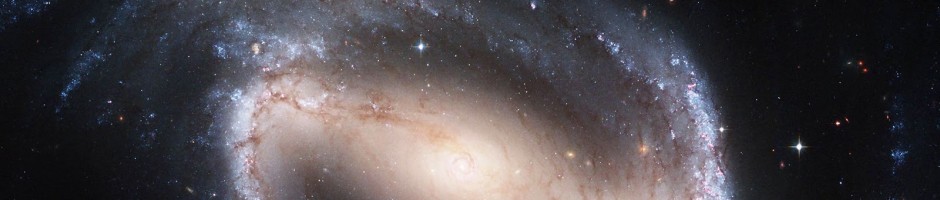
[Image credit: NASA, ESA, K. Sheth (Spitzer Science Center, California Institute of Technology), and P. Capak and N. Scoville (California Institute of Technology)]
Machine Learning Paper Accepted!
Exciting News from Manda Banerji on the Machine Learning paper:
Hi Everyone!
This is to let you all know that the Galaxy Zoo machine learning paper has now been accepted for publication in the Monthly Notices of the Royal Astronomical Society journal. The final version of the paper is at http://arxiv.org/abs/0908.2033. You can read all about the paper in my previous blog post at http://blogs.zooniverse.org/galaxyzoo/2009/08/05/latest-galaxy-zoo-paper-submitted/.
The paper has already attracted a lot of interest from the computer science community demonstrating that your classifications are proving useful and interesting to non astronomers as well!
60 Million Classification Giveaway
Yesterday, Galaxy Zoo launched a fun little competition to mark the approach of our 60,000,000th classification. This is the point at which we can create an amazing and powerful database from the Galaxy Zoo 2 data.
Galaxy Zoo’s ticking clock of classifications, The Zoonometer™, has been steadily ticking away, toward our target of 60 million classifications for a long time. We can hardly believe it, but we’re nearly there! To mark this historic moment in Galaxy Zoo’s history, we’re giving away prizes to the people that provide the clicks that take us to our target.
The person that makes the 60 millionth classification will receive a bundle of goodies, including a Galaxy Zoo t-shirt and mug, a Galaxy Zoo poster and an original Sloan Digital Sky Survey plate! As well as this, we’re giving away individual prizes to one person at random for each collection of 250,000 classifications.

The prizes kicked off with the 57,000,000th classification, which was achieved last night at about 2100 UT (see extremely geeky screenshot). One of the 250,000 classifications that led us to the 57,000,000 mark will now be selected at random to win a Galaxy Zoo mousepad. We will also be picking a winner from the 57,000,000 – 57,250,000 range as well. The winners will be posted on the Zoonometer™ page. We are appaoraching 57,500,000 as I type this.
If you want to take part, all you have to do is what you do best: classify galaxies! It will also help if you make sure you’re Zooniverse email address is up to date so we can contact you if you’re a winner.
60 Million Target Explained
With 60,000,000 classifications in the database, the Galaxy Zoo 2 project will have reached a critical point. 60 million classifications represents our minimum, ideal database. With that many classifications you, the participants, will have collectively classified every galaxy enough times to create an incredibly robust, well-defined and scientifically valid catalogue of Sloan galaxies. Beyond the 60 million classifications, every additional click still goes into the database – it just means that our minimum science goal is achieved.
What is an SDSS Plate?
The person who classifies the 60 millionth galaxy will win an original Sloan Digital Sky Survey plate. These plates are quite large and make amazing memorabilia, since they were actually used to observe galaxies by the SDSS. We are lucky enough to have one of these plates at Zooniverse HQ, to give away. 640 holes have been drilled into the plate, with each hole corresponding to the position of a selected galaxy, quasar or star in the sky. During observations, scientists plug the holes with optical fibre cables. The fibres simultaneously capture light from the 640 objects and record the results in CCDs. The plates are interchangeable with the CCD camera at the focal plane of the telescope. You can read more about how the SDSS performed observations on their own webpages.
Who's looking at the Voorwerp?
I just got a notification from the XMM-Newton Science Operations Centre that our observations of IC 2497 and the Voorwerp have now been scheduled for April 19th. XMM-Newton is esa’s flagship X-ray satellite and can observe photons from 0.2-10 keV. We’ve already got our hard X-ray observations from Suzaku last year, so XMM will have a second, detailed look at the softer X-rays. Also, if there’s anything there, then XMM will give us a very rough image; Suzaku can’t take images, only spectra. After the data are taken, it may take a few weeks for esa to process the raw data before they send it to us. Stay tuned…
Ring of the Week: The Eagle Has Landed
“Fly me to the moon
Let me play among the stars
Let me see what spring is like
On a-Jupiter and Mars”
– Frank Sinatra, “Fly Me to the Moon”
This week I had the honour of meeting three legends of the 20th century; astronauts Capt. Neil Armstrong, Capt. Gene Cernan and Capt. Jim Lovell. Neil Armstrong is, of course, the first man to set foot on the moon (Apollo 11), Jim Lovell was the commander of Apollo 13 and Gene Cernan was the last man to walk on the moon (Apollo 17).

Right to left: Capt. Gene Cernan, Capt. Neil Armstrong and Capt. Jim Lovell
The astronauts were talking on behalf of the Foundation for Science and Technology at the Royal Society and Cernan and Lovell both spoke of their disappointment at the US plans to abandon the “Constellation” programme which aimed to put astronauts back on the moon by 2020. Cernan said that, walking on the moon in 1972, he never would have imagined that he would still be the last man to set foot on the moon’s suface over 37 years later. The astronauts also talked of their hope that they would be alive to see man set foot on Mars.
Politics aside, it was fascinating to hear the astronauts speak about their experiences. All of the astronauts agreed that travelling to the moon changed their perspective of life on Earth. Cernan said it was staring out of the window into the black “infinity of space”, whereas Lovell said it was looking back from the moon and “being able to cover the entire World with my thumb” that was the most life changing moment.
 My Ring of the Week this week is Galaxy Zoo image 587741708326863123 and is in honour of Neil Armstrong and his lunar module, the Eagle. You can see the ring on the bottom right of the image and an unusual, bird-shaped “Eagle” galaxy on the top left. The “Eagle” galaxy is at the same redshift as the ring and so at the same distance away from us. This means that the two galaxies are most likely interacting in some way.
It could be that the “Eagle” is a polar ring (see last week’s post), where stars have been gravitationally stripped from the larger ring galaxy to rotate around the poles of the smaller galaxy. Or perhaps this is a collisional ring system, the “Eagle” having crashed through the centre of the larger galaxy to create the blue ring of stars that we see on the bottom right of the image. At the moment I’m not quite sure exactly which option (if either!) is the right one so feel free to post your own ideas about what you think may be happening and I’ll let you know if I figure it out!
Galaxy Zoo auf Deutsch!
Galaxy Zoo goes international. Nachdem unsere Webseiten schon seit einiger Zeit auf Polnisch zur Verfuegung stehen, haben wir jetzt endlich die langerwartete deutsche Version online. Saemtliche Links zur Zoo-Story, zur Zoo-Wissenschaft, und natuerlich zum Klassifizieren sind jetzt auch in deutscher Sprache vorhanden. Falls ihr euch nicht sicher wart, ob ihr die Kategorien alle richtig verstanden habt – klassifiziert die hundert tausend Galaxien doch einfach nochmal :-)! Und was viel wichtiger ist: jetzt koennen endlich eure Freunde und Verwandten mitmachen, die des Englischen weniger maechtig sind.
Ist die Galaxie strukturlos und rund, ohne Anzeichen einer Scheibe? Hat die Galaxie einen Bauch in ihrer Mitte? Wie rund ist die Galaxie? Gibt es Anzeichen fuer einen Balken der durch die Mitte laeuft? Gibt es Anzeichen fuer Spiralarme? Und viele Fragen mehr zu Galaxien, die euch sicher bekannt vorkommen – alles jetzt auf Deutsch. Also – viel Spass beim “clicken”!
Ring of the Week: Arp 87
“Up on a hill, as the day dissolves
With my pencil turning moments into line
High above in the violet sky
A silent silver plane – it draws a golden chain
One by one, all the stars appear
As the great winds of the planet spiral in
Spinning away, like the night sky at Arles
In the million insect storm, the constellations form
On a hill, under a raven sky
I have no idea exactly what I’ve drawn
Some kind of change, some kind of spinning away
With every single line moving further out in time”
– Brian Eno, “Spinning Away”
Well if you ask me, what you’ve drawn there Brian is a “Polar Ring” galaxy.
Polar ring galaxies, unlike all other galaxies in the Universe, are made up of two distinct parts. In the centre we have a normal galaxy and around the outside we have a “golden chain” of stars and gas clouds. This ring is perpendicular to the “silver plane” of the host galaxy disk, rotating over the poles, and so it’s known as a polar ring.
So how are polar rings formed? Polar rings are thought to form when two galaxies gravitationally interact with each other. We believe that “one by one, all the stars appear” as they are stripped from a passing galaxy and “spiral in” to produce the polar ring we see today. Polar rings, although not quite as rare as smoke rings, are pretty hard to find. According to “New observations and a photographic atlas of polar-ring galaxies”, about 1 in every 200 lenticular galaxies (a type of galaxy between an elliptical and a spiral) have these “golden chains” of stars and gas spinning around them. Below is a selection of some of my favourite polar rings from the Galaxy Zoo:
 The Zooites have done fantastically well at finding Polar Rings and you can see all of their incredible finds on the Possible Polar Ring thread on the Galaxy Zoo forum.
My Ring of the Week this week is the stunning pair of interacting galaxies Arp 87. Located in the constellation Leo, approximately 300 million light years away from Earth, Arp 87 gives us a fantastic insight in to exactly how polar ring galaxies are formed. The image on the left is the Galaxy Zoo Arp 87 image and on the right is an image taken by the Hubble Space Telescope. We can clearly see the galaxy on the left gravitationally stripping away the stars and gas from the spiral galaxy on the right.

Unfortunately for Brian Eno, his hypothesis of a “golden chain” of stars that “spiral in” a “silver plane” came a full 23 years after the first polar ring galaxy was identified by J. L. Sérsic in 1967.
However, perhaps someone else had already had a genuine polar ring premonition a full 78 years before Sérsic’s discovery…?

– “Starry Night” 1889, Vincent Van Gogh
The Hubble image is part of a collection of 59 images of merging galaxies released on the occasion of its 18th anniversary on April 24, 2008. (NASA, ESA, the Hubble Heritage (STScI/AURA)-ESA/Hubble Collaboration, and A. Evans (University of Virginia, Charlottesville/NRAO/Stony Brook University))
Hubble observations – any week now!
Speaking of the long-awaited Hubble observations of Hanny’s Voorwerp – where are they? We know certain windows when each can be done, and is supposed to be carried out. One such week-long window has already gone by without getting data, so things are narrowed down a bit. Read More…
UV(oorwerp) from Space
We have some new results to show off, Hanny’s Voorwerp observed using a space telescope. No, not that space telescope, that’s still coming up (shortly, we hope).
Soon after the initial results showed what a fascinating object Hanny’s
Voorwerp was proving to be, it was entered in the observing schedule for NASA’S GALEX satellite (GALaxy Evolution EXplorer). Alex Szalay, who belongs to both the GALEX and Galaxy Zoo science teams, played a key role in making this happen). Alex has interesting career parallels with Brian May, but that’s another story.
GALEX was designed to make the first sensitive ultraviolet survey of most of the whole sky (skipping only areas where there are such bright stars that they would damage the detector array), with a major goal of tracing the recent evolution of galaxies. Read More…
Zoo 2 Bars Paper Available Now
There’s been a lot of interest in the Galaxy Zoo 2 bars paper since I posted about its submission last month. So this is just a quick note to say we decided to make it available on astroph where you can read about the results in full.
 Galaxy Zoo