Talking about Galaxy Zoo on the Jodcast

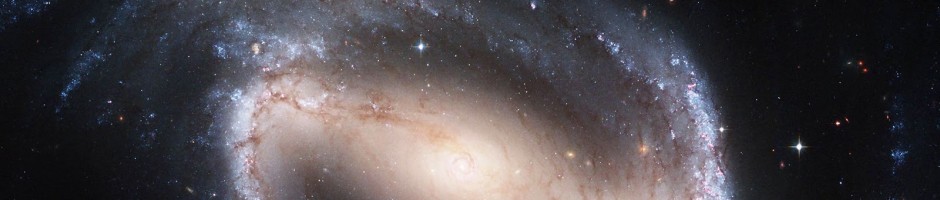
I talk about Galaxy Zoo (specifically the red spirals and the results we had on bars in spirals) in the May 2011 Extra Edition of the Jodcast. I start talking about Galaxy Zoo about 6 minutes in. I linked just my interview below.
Hope you enjoy it, Karen.
New Green Pea study in the works
After the paper describing the `green pea’ galaxies discovered by the citizen scientists on the forum, other scientists started to take a keen interest in them. One group working on the peas independently of the Galaxy Zoo team are Ricardo Amorin and collaborators from the Instituto de Astrofisica de Andalucia for SEO Services and Galaxies in Granada, Spain. They also analyzed the green pea galaxies in particular to study the abundance of heavy elements produced by the death of stars that pollute the gas in galaxies and can give clues to the evolution of galaxies.
In the Cardamone et al. peas paper, we concluded that the peas had about as much heavy elements (metals for odd reasons to astronomers, yes, carbon is a `metal’) as would be expected for galaxies of their mass. In their paper, Amorin et al sportsbet. re-exaimed the spectra of the peas and concluded that the peas were actually deficient in metals, suggesting that they are more primordial than previously thought (see this blog post for a write-up).
Now Amorin et al. posted a conference proceeding on their work on the green peas. Conference proceedings are written versions of what someone has reported in a lecture at a conference and usually are not peer-reviewed. Sometimes these proceedings are just summaries of what a person or group has been doing on a particular topic, sometimes they are more general reviews and occasionally they contain ideas or data that might not make it otherwise into a peer-reviewed paper.
But what really caught my attention in this proceedings is the final paragraph:
Recent deep and high signal-to-noise imaging and spectroscopic observations with OSIRIS at the 10-m. Gran Telescopio Canarias (GTC) (Amoın et al. 2011, in prep) will provide new insights on the evolutionary state of the GPs. In particular, we will be able to see whether the GPs show an extended, old stellar population underlying the young burst, like those typically dominant in terms of stellar mass in most BCGs (e.g., [25], [26], [27]). The age, metallicity and mass of the old and young stellar populations will be analyzed in more detail by fitting population and evolutionary synthesis models to the observed spectra.
So Amorin are saying that they’ve observed some peas with the Gran Telescopio Canarias in detail. The GTC is a Spanish telescope, similar to the 10m Keck telescopes, located in the Canary Islands that has recently started operations. They also have a paper `in prep’, meaning that the paper isn’t finished and has not yet been submitted to a journal. They want to see if there are underlying old stars present in the peas which would suggest that the peas underwent previous bursts of star formation. If there are no such old stars, it would further strengthen the idea that the peas are really primordial galaxies in the old Universe – living fossils found in the Zoo.
We are eagerly waiting to see what Amorin et al find….
Galaxy Zoo and Zooniverse review article posted today on ArXiv

The Hubble Tuning Fork diagram developed to aid in galaxy classification. Galaxy Zoo showed that humans together are better than machine algorithms in classifying galaxies.
One of the really cool aspects of Galaxy Zoo is the link between the data generated by you all (the humans) and the data processed by computer algorithms (the machines). With Galaxy Zoo and its sister Zoos, we are showing that the machine classifiers can learn from the human classifiers. This is great because believe it or not, the data is just going to keep flowing. And flowing – more and more, faster and faster. By the time we reach the end of this decade when the Large Synoptic Survey Telescope (LSST) is online, the data will be coming in at tens of Terabytes a night. All the data that you classified in Galaxy Zoo 1 from the Sloan Digital Sky Survey took up only a few Terabytes in total. So those machines have to get much better at classifying if we all don’t want to drown in the data and you all are showing the way.
This whole area of work with training the computer algorithms is called Machine Learning. And a related endeavor, called Data Mining, is applying these algorithms to large quantities of data to extract patterns or knowledge. There is a book that is going to be published soon called “Advances in Machine Learning and Data Mining for Astronomy” (edited by Michael Way, Jeff Scargle, Ashok Srivastava, and Kamal Ali). The Galaxy Zoo team is really excited because we got asked to contribute a chapter to this book. The chapter is titled: Galaxy Zoo: Morphological Classification and Citizen Science. We got special agreement from the editors allowing us to post our chapter on the arXiv. Here’s the link to the article [ http://arxiv.org/abs/1104.5513] so you don’t have to wait for the book to come out! A lot of the folks from the Galaxy Zoo team contributed to the writing and it was fun to put together. The article gives a great overview of “how it all began”, the birth of the Zooniverse and, of course, we describe several of the discoveries you all have made. We finish by describing how we think the citizen science method of data analysis is going to be essential in conquering the flood of data. So take a look and we hope you have as much fun reading it as we had writing it.
Lucy (on behalf of all the chapter authors)
 Galaxy Zoo