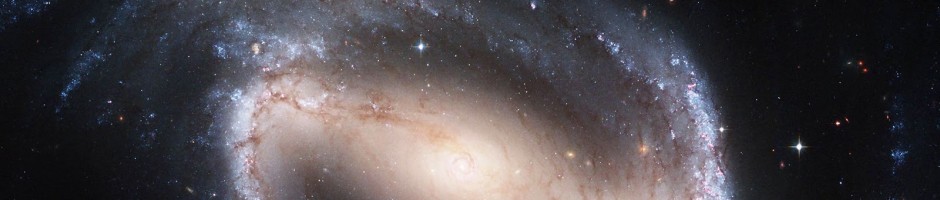
Galaxy Zoo paper on host galaxies of growing black holes submitted!
It’s usually me who is reminding people to go blog about paper submissions and acceptances, so it’s a bit embarassing that I forgot to remind myself last week to announce the submission of the latest Galaxy Zoo paper.

I’ve been working on it for a while, probably over a year. The paper took so long to finish because not only did we have to analyse a huge amount of data, it also took quite a while to figure out what it all meant. I kept producing new plots that showed trends that didn’t really make any sense to us. We therefore needed to take our time digesting what we saw and condensing it into a `readable’ paper. It still over 20 pages long and there are still many results for which we could only offer some speculation. It’s not an easy paper to summarise, so I will (for now) simply summarise it as: “the black hole growth in spiral and elliptical galaxies is due to completely different evolutionary scenarios.”
Or, as I will put it in my talk on Friday at the IAU Symposium on the black hole-galaxy connection:
The answer may depend on

(thanks to stellar on the forum!)
Unlike our previous papers, this is the first paper that we have decided to submit to the Astrophysical Journal. Now fingers crossed that the refereeing process goes well.
Greenwich meeting on Sunday
I meant to post about this earlier, so apologies for those who only read the blog and not the forum. My only excuse is that we’ve been busy hunting for Supernovae…

On Sunday 16th August, a motley gathering of Zooites and Zookeepers will be descending on the Royal Observatory, Greenwich. There are more details in the forum, but the general plan is as follows :
13.45 : Recommended Planetarium Show – The Sky Tonight Live. An ROG astronomer takes you around the night sky – a traditional, live planetarium show.
14.30 : Galaxy Zoo Tour of the ROG site – Led by Jim, not only an ROG astronomer but also developer on a future Zoo project. Meet in the Planetarium Foyer.
15.15 : Recommended Planetarium Show – Dawn of the Space Age. In the 40th year since the Apollo landings, the ROG’s new show looks back to how it all began.
16.00 : Meet the Zookeeper – In the ‘Discovery Space’ in the main ROG building. On the eve before the largest gathering of Zookeepers in history (for a team meeting) this is your chance to chat to some of the team who come from further afield. Confirmed victims attendees are Bill ‘NGC 3314’ Keel, Carie ‘Peas’ Cardamone and Jordan ‘Motivation study’ Raddick. I will also be making a less exotic appearance, but should have the first results from Galaxy Zoo : Supernovae to show off.
I’m afraid that it’ll be necessary to book tickets for the planetarium shows, but the astronomy displays provide more than enough to keep you busy otherwise.
WHT joins the supernova hunt!
Greetings from the William Herschel Telescope at the Observatario del Roque de los Muchachos on La Palma, in the Canary Islands. Sarah and I have now arrived here, and tomorrow night, the 12th, we’ll join in the fun by observing some of the supernova candidates that you’ve identified in the PTF data. The weather here is currently perfect – beautiful dark clear skies, and incidentally a fantastic place to view the Perseid meteor shower.
Fingers crossed that this great weather remains for our two observing nights, and we can confirm those supernovae that you’ve been diligently hunting out. We’ll try to post regular updates tomorrow as to what we find out – though please bear with us if we appear slow to update; observing can sometimes be a very busy job!
Mark
Supernova Zoo updates
I’ve just added in the latest batch of images taken by the Palomar Transient Factory last night. The PTF surveys large areas the sky every night looking for new supernovae. The images from these observations are then run through an automated pipeline which flags potential new candidates which we show to you.
One of the most exciting aspects of Supernova Zoo is that we are showing Zooites images taken from the PTF telescope just hours earlier and if you mark it as something interesting then we very quickly show it to more people so we can get a definitive answer quickly. Finding new supernovae as early as possible is one of the main aims of Supernova Zoo, if and when we find something interesting Mark and Sarah are waiting to follow it up at the WHT.
Cheers
Arfon
Let's Go Supernova Hunting
We have a special challenge for you this week – Galaxy Zoo is going Supernova Hunting.
A supernova is an exploding star, capable of outshining an entire galaxy. We have a robotic telescope in Palomar, California sending us candidate objects from the galaxies it scans, and a team of Oxford astronomers are on their way to the Canary Islands to follow up the most likely.
The choice of galaxies to follow-up on is in your hands – we’ll be posting new data each day, and keeping a running list of those candidates that most Zooites think are likely supernovae. Get clicking…and you might well be the first to discover an exploding star.
Chris
(P.S. This is a prototype of a much larger project so all feedback and comments – good and bad – are of course welcome either here or on the forum.
Latest Galaxy Zoo paper submitted!
Hi Everyone!
This is to announce the submission of a new galaxy zoo paper entitled “Reproducing Galaxy Morphologies Via Machine Learning”.
First let me introduce myself as I am a newcomer to Galaxy Zoo. My name is Manda Banerji and I am a final year PhD student at University College London. I am interested in automated machine learning tools for morphological classification and became interested in comparing the classifications you all have worked on over the last couple of years to those produced by machine learning codes. So a couple of months back I started working with my PhD supervisor, Prof. Ofer Lahav, on using artificial neural networks to perform morphological classifications. The result has been this paper.

Basically what we have shown here is that using ~10% of the sample of objects that you have classified to train an artificial neural network, we are able to reproduce your classifications for the rest of the objects to an accuracy of greater than 90% provided we choose our neural network input parameters carefully.
There are of course caveats. A neural network is not as good as the human eye in recognizing unusual objects but by and large it does a decent job for the bulk of the galaxies. The most interesting result from this paper however was that if we limit our training sample to the brightest galaxies only and use these to classify fainter galaxies, this does not degrade our results. This means that using your visual classifications as a training set, we can use neural networks to accurately classify hundreds of millions of objects likely to become available over the next few years. These surveys will go considerably deeper and image fainter objects than in the Sloan Digital Sky Survey from which the Galaxy Zoo images were taken – therefore obtaining data for 100-1000 times more objects – and so your work has paved the way for accurate classifications with these future surveys too!
I hope to write another blog soon with a few more details on what we did and how the neural network works. Meanwhile, keep a look out for our paper. It has just been submitted to MNRAS and we eagerly await the referee’s reports!
Zoo 2 now available in Polish
As Lech eloquently explains in his post, Galaxy Zoo 2 is now available in Polish. Other languages should follow soon (and don’t worry – this blog will be mostly in English!)
Galaktyczne Zoo – Faza II już po polsku!
W wyjątkowym, bo pierwszym polskim wpisie na blogu projektu “Galaxy Zoo”, chcielibyśmy zaprosić Państwa do otwartej dzisiaj polskiej wersji językowej Zoo w fazie II.
Dzięki współpracy, jaką we wrześniu 2007 roku udało się nawiązać między Centrum Fizyki Teoretycznej PAN, programem EU-HOU i portalem Astronomia.pl, a naukowcami z programu Sloan Digital Sky Survey (w jej efekcie powstała polska wersja pierwszej fazy Galaktycznego Zoo), możemy zaprezentować Państwu dzisiaj przetłumaczony w całości na język polski serwis fazy II Zoo – zawierający wszystkie narzędzia i funkcjonalności znane z wersji angielskojęzycznej.
Podobnie jak w przypadku fazy I, internauci którzy zasiądą przed komputerami, żeby pomóc astronomom w klasyfikowaniu milionów galaktyk, czyli porządkowaniu wielkiego “zoo” jakim jest Wszechświat, mogą liczyć na wsparcie polskiego zespołu ekspertów, który odpowie na każde pytanie przesłane na adres galaktycznezoo@astronomia.pl.
Zespół, który w 2007 roku składał się z trzech astronomów (Ariel Majcher, Waldemar Ogłoza i Tomasz Skowron) liczy obecnie już siedem osób – do trzech panów dołączyło trzech kolejnych (Paweł Biernacki, Mirosław Kołodziej i Tomasz Czernik) oraz jedna pani (Marta Kotarba).
I to właśnie wymienionym wyżej wychowankom Młodzieżowego Obserwatorium Astronomicznego w Niepołomicach – Marcie i Mirkowi – należą się szczególne podziękowania, bo bez ich zaangażowania najprawdopodobniej nie udałoby się tak szybko uruchomić polskiego serwisu II fazy projektu “Galaxy Zoo” (Marta i Mirek przetłumaczyli wszystkie teksty i instrukcje, które można znaleźć w serwisie).
Polska wersja pierwszej fazy Galaktycznego Zoo, która jak dotąd jest jedyną narodową wersją w projekcie, okazała się niezwykle popularna – zaledwie w ciągu kilku miesięcy w serwisie zarejestrowało się ponad 10 tysięcy użytkowników, którzy pozostali aktywni przez kolejne kilkanaście miesięcy. W ten sposób powstała największa w polskim internecie społeczność astronomiczna i jedna z największych narodowych reprezentacji w “Galaxy Zoo” (w całym projekcie wzięło udział ponad 150 tysięcy internatów z całego świata). Mamy nadzieję, że w fazie II uda nam się powtórzyć ten sukces.
“Last but not least”, chcielibyśmy serdecznie podziękować naszym kolegom z programu SDSS, bez których polskie Zoo nigdy by nie powstało – “Dear Arfon, Chris and Jordan – thank you very much indeed!”
Lech Mankiewicz (CFT PAN, EU-HOU) i Jan Pomierny (Astronomia.pl)
The universe on a carpet (live from the SDSS-III meeting)
Greetings from the Sloan Digital Sky Survey III meeting in Princeton! Today is the third and final day of the meeting, where we are planning the next year of operations for the Sloan Digital Sky Survey III (SDSS-III). The original SDSS, of course, provided all the beautiful galaxy pictures that you see in Galaxy Zoo; SDSS-III is an extension of that survey that extend the mission – and keep me quite busy! – until 2015.
The meeting is in the Astronomy Department in Peyton Hall at Princeton University. This is the first time I’ve been here since coming with the Brown University Band in 1996, and I had forgotten what a nice campus this is. And they’ve made an addition to the astronomy building that is the coolest thing ever – see this photo:
The Peas are online
Our paper ‘Green Peas in Galaxy Zoo hits the public pre-print archive astro-ph today. If you’d like to see the paper in full detail you can download it here
(click on PDF to get the full paper).
We’ve also summarized the science results and much of the process of writing the paper in a separate blog post. Its now been accepted for publication in MNRAS, and we’ll keep you all up to date as it goes through the publication process.
Thanks!
Carie
Edit: Yale press release
 Galaxy Zoo