A first Galaxy Zoo:Rubin project
We’re delighted to announce the first Galaxy Zoo workflow to include images from the NSF-DOE Vera C Rubin Observatory, using galaxies drawn from its first Data Preview.
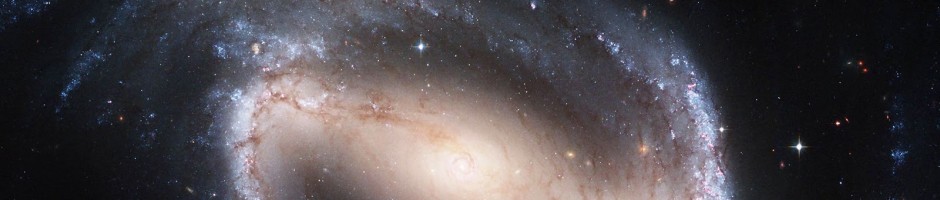
First look image showing the diversity of galaxies we can expect from the Vera C Rubin’s LSST survey.
The new workflow went live on the site just now, but with only 10,359 subjects it won’t stick around for long, so do jump in and get classifying. While the goal, as ever, is to understand the processes which shape the galaxies revealed by this new survey, we will also use the results from this project to help us decide which of the millions of galaxies that will be included in images from the Observatory’s upcoming Legacy Survey of Space and Time (LSST), which will start soon, should be classified. To this end, we’ve also included three different images of each galaxy, combining images taken with different filters (technically, these are ugri, riz, and gri images) so that we can see how classifications change if we include information from the ultraviolet (u band) and infrared (i and z bands).
These images were taken as part of the testing and commissioning the observatory teams carried out while preparing the telescope and camera for action. They are a little more rough and ready than those we will expect from the main survey, but they are just the start.
Once the main survey starts, Rubin will produce a spectacular treasury of galaxy images, and we’ve been looking forward to it for a long time. The first mention of the survey on this blog comes from 2008 (when we expected the start date to be, um, 2013, which may have been ambitious even then). Still, good things come to those who wait, and we’re excited to see what you make of these new images.
Chris & the Galaxy Zoo team.
A Galaxy Walks Into A Bar…

We are pleased to announce that a Galaxy Zoo project is one of the first projects built on the new Zooniverse! Several years ago we measured the lengths of galactic bars in relatively nearby galaxies in the Sloan Digital Sky Survey, and Ben Hoyle wrote an excellent paper presenting new an interesting results on how bars, which are a distinct feature caused by a change in the nature of the orbits of some of the stars in a galaxy, relate to other physical properties of the galaxy, such as color (indicative of recent star formation) and the nature of spiral arms or rings. That work showed the power of measurements like these, which are not always easy for computers to get right.
Today, we’re hoping you’ll help us extend that set of detailed galaxy measurements into the distant Universe, with measurements of bars in about 8,000 galaxies from our previous projects using Hubble Space Telescope data, including the AEGIS, CANDELS, COSMOS, GEMS and GOODS surveys.
We’ve deliberately been pretty broad in our selection of galaxies which may have a bar, so the first thing the project asks you is to confirm whether you think the galaxy does indeed have one. There are many examples of barred and not-barred galaxies (including examples of sort-of-looks-like-barred-but-actually-isn’t-and-here’s-why) included in the project, and you can access them anytime by clicking the “Need some help?” button.

We’ve also zoomed in on the central galaxy to make it easier to classify.
If the galaxy doesn’t have a bar, then you can move on to the next one. If it does, there are some follow-up questions about spiral arms and rings, and then we ask you to draw 2 lines on the image: one for the bar width and one for its length.
You can also join in the discussions after the classifications with our new Talk discussion tool, which is completely separate from the main Galaxy Zoo Talk (just like the rest of the project).
On a more personal note, this is a big step forward for the Zooniverse as a whole. The first draft version of this project came together in under 1 hour back in April. Afterward, we shared project links between science team members and iterated back and forth on the right questions to ask and the right data to use. This process would normally take at least 6 months and require a lot of one-on-one time with a Zooniverse developer. Instead, because the Zooniverse development team has done a brilliant job creating a Project Builder that’s flexible, powerful and also easy to use, we were able to create a new project in a way that’s analogous to, well, creating a blog.
In these early days of the new site’s release I’m sure there will be some bugs that need zapping, but even so the new capabilities of the Zooniverse are phenomenal. I suspect this is just the first of many new projects to be spun up in the New Zooniverse. (In fact, there are 3 more projects debuting alongside ours.)
Try it out here: Galaxy Zoo: Bar Lengths
Galaxy Zoo Quench – Experience the Full Scientific Process
Experience Science from Beginning to End! Classify, Analyze, Discuss, and Collaboatively Write an Article!
Galaxy Zoo and other Zooniverse projects have given thousands the opportunity to contribute to scientific research. It’s time to take the role of volunteers to the next level. For the next two months*, this new Galaxy Zoo Quench project provides the opportunity to take part in the ENTIRE scientific process – everything from classifying galaxies to analyzing results to collaborating with astronomers to writing a scientific article!
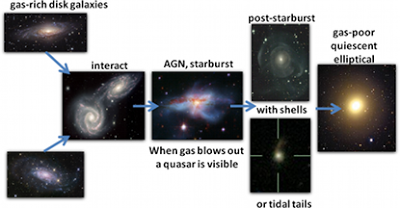
Galaxy Zoo Quench will examine a sample of galaxies that have recently and abruptly quenched their star formation. These galaxies are aptly named Post-Quenched Galaxies. They provide an ideal laboratory for studying how galaxies evolve from blue, star-forming spiral galaxies to red, non-star-forming elliptical galaxies. Using the more than a million galaxies in the Sloan Digital Sky Survey, we identified ~3000 post-quenched galaxies. By classifying these galaxies and analyzing the results, we will explore the mechanisms that quenched their star formation and investigate the role of post-quenched galaxies in galaxy evolution.
The entire process of classifying, analyzing, discussing, and writing the article will take place over an 8 week period*, beginning July 18th. After classifying the galaxies, volunteers will use the tools available within Zooniverse to plot the data and look for trends. Through reading articles and interaction in Talk, volunteers will gain background information. Throughout, they’ll discuss with the science team their interpretation of the results. At the end of the process, volunteers and the science team will collaboratively write a 4-page Astrophysical Journal article.
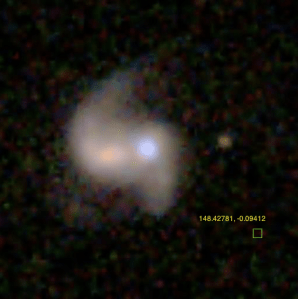
What causes the star formation in these galaxies to be quenched? How do interactions impact galaxy evolution? What is the fate of our Milky Way? Join us this Summer (or Winter if you’re below the equator!) in exploring these questions, being a part of the scientific process, and contributing to our understanding of this dynamic phase of galaxy evolution!
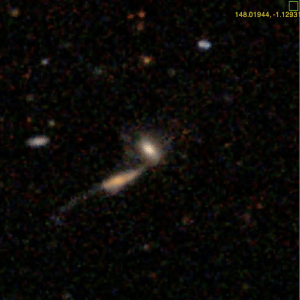
CLICK HERE TO PARTICIPATE!
We’ll be sharing more details about this project during the next Galaxy Zoo Hangout, on Monday, July 15th at 14:00 CST / 19:00 GMT / 20:00 BST. Have questions about the project? Post them here or tweet at us (@galaxyzoo). Just before the Hangout starts, we’ll embed the video here so you can watch from the blog.
The best way to send us a comment during the live Hangout is through twitter (@galaxyzoo). You can also leave a comment on this blog post, or on Google Plus, Facebook or YouTube. See you soon!
Update: here’s the hangout (and the mp3 version)!
*Note: science timelines often subject to a factor of two uncertainty. We’ll do our best to keep on track, at the same time expecting the unexpected (all part of the fun of doing science!).


