What if astronomers had Superman's X-ray vision?
Today’s guest blogger is Shanil Virani, a grad student at Yale who has been working on the X-ray follow-up of IC2497 & Hanny’s Voorwerp:
Most of you, if not all, are familiar with the story of Hanny’s Voorwerp — an unusual object found by the GZ team near the disk galaxy IC 2497. The optical spectrum of the object (taking the light and splitting it up into its “rainbow” of colors) suggests it was “lit up” by an active galactic nucleus in the nearby galaxy IC 2497. Active galactic nuclei, or AGN, are believed to be powered by supermassive black holes that reside in the centers of galaxies devouring the gas and dust that come within their reach. Every galaxy has one, including our own Galaxy! But how do you find something you can’t see? The best evidence for the existence of supermassive black holes actually comes from near-infrared observations of the orbits of stars right near the central black hole in our own Galaxy (see this short animated movie if you have never seen it before!). Simple application of Newtonian mechanics demonstrates that these stars orbit a central object whose mass is approximately 4 million times that of the Sun and is confined to a region roughly the size of our Solar System! The only physical object we know of with such properties is a supermassive black hole. However, with the launch of a new generation of X-ray observatories we now know that observations at X-ray wavelengths also provide definitive evidence of whether an object is a black hole as X-ray observations probe the extreme physical conditions in the immediate vicinity of a black hole. Recently, we have been awarded significant observing time with two space-based X-ray observatories — the primarily European XMM-Newton telescope and the Japanese/American Suzaku Observatory — to determine whether IC 2497 hosts an active supermassive black hole that can explain the mystery of what’s lighting up Hanny’s Voorwerp.
Since my Ph.D. dissertation involves X-ray astronomy, principally carrying out one of the deepest surveys of the X-ray sky performed to date (see my web site), Kevin and I thought it would be cool to blog about what X-ray astronomy is and how we do it since it is completely different than optical astronomy. In a second blog post later this summer, I will provide a more physical picture of what we think is going on in IC 2497 and how we are testing this hypothesis with data from these X-ray observations.
This year we are celebrating the International Year of Astronomy which in part commemorates the 400th anniversary of Galileo’s first astronomical use of the telescope. From 1609 to the present, we’ve seen a remarkable revolution in technology in optical astronomy that has allowed us to see deeper into the cosmos. X-ray astronomy, on the other hand, is a relative newcomer having only begun in the 1950s. X-ray photons are energetic enough to go through objects compared to optical photons but they are also easily absorbed. Only a few millimeters of bone or a few meters of air will stop them. The latter is critical for life to occur on the surface but it also means we need to get above the atmosphere if we wish to do X-ray astronomy. The former tendency, for X-ray photons to be absorbed, is what is exploited when we go to the doctor’s office and get an X-ray of our teeth or bones. In this case, a film is placed behind the object we are interested in (teeth in the case of a dentist) and X-rays are then shone on the patient. The teeth and bones easily absorb these X-rays while the tissue does not. The dentist then uses this image to identify cavities, etc. In the case of X-ray astronomy, however, we collect X-ray photons from celestial objects rather than exposing objects to human-made X-rays and taking a picture (like in the dentist example). This also means that the way in which X-rays are collected are fundamentally different than optical telescopes. In optical astronomy, we all have this picture in our mind of a large telescope tube at the back of which sits a large mirror to collect the light which is then focused onto an instrument. This prescription does not work in the X-rays because they are too energetic to be collected in this way — they would just be absorbed by the mirror. Instead, X-ray photons are softly deflected several times so that they can be focused directly onto the instrument. Think of skipping pebbles off the surface of the water at a beach. The image below (courtesy of the Chandra X-ray Observatory’s education web site) provides a good schematic of how modern X-ray satellites work. The more mirrors you have nestled together, the more collecting area you have, and therefore the more fainter you can go.

The data that come back from these observatories are also different then the kind of data that you are used to seeing from optical telescopes. For example, we are all amazed by the beautiful images produced the Hubble Space Telescope. It has produced some of the prettiest pictures such that even rock bands have used its images for album covers (see Pearl Jam’s Binaural for a great example!). This is the basic product, an image, that the HST produces and its observers analyze. Now, they also have more advanced facilities so that you can take a spectrum of a source but you generally can’t do both simultaneously. With X-ray instruments, you get imaging and spectroscopic data and timing data all in one go if your source is bright enough or if you stare at it long enough! It is exactly these attributes we intend to exploit in the data returned by our Suzaku and XMM-Newton observations of Hanny’s Voorwerp to determine if IC 2497 does indeed host a supermassive black hole! The imaging, spectroscopic and perhaps even the timing data will allow us to conclusively demonstrate if the black hole in IC 2497 is currently active enough to explain Hanny’s Voorwerp. If it is not, then that may even be more interesting as it would be providing us with a rough diary of what are the eating habits of the supermassive black hole! Either way, a great story is about to unfold and will reveal another level of detail about this exciting object.
Stay tuned for more details as the data begin to come in and are analyzed. In the mean time, if you are interested in learning more about the history of X-ray astronomy, check out this excellent page at the University of Cambridge.
Suzaku observations of IC2497/Hanny's Voorwerp completed
Following on from my earlier post, the updated log of Suzaku now shows that IC2497 has been observed. When will get get to see the data? That might take a while, as the mission support scientists check whether the data is OK and perform the first part of the reduction. This will take a few weeks, when the real fun – the data reduction proper – starts. Stay tuned….
The First Volunteer-inspired Galaxy Zoo Paper is Submitted!


At long last the ‘Peas’ have been submitted to MNRAS (The Monthly Notices of the Royal Astronomical Society,). The ‘Peas’ were discovered by users right here in Galaxy Zoo who noticed a strange class of small green galaxies at redshifts near z=0.2. A dedicated group of volunteered collected a sample of these galaxies. Then Kevin Schawinski found an astronomer (Carie [me :)]) to pull them together and look at them in detail.

We finally met at AAS (the American Astronomical Society) meeting this January at the Long Beach California convention center. Chris Lintott, Jordan Raddick, and Daniel Thomas and I sat down and discussed the paper draft. In the ensuing 3 months, I’ve been working hard at writing up all of our results with the help of all of the co-authors. The peer review process can take a while, but as the publication process goes forward we’ll keep you up to date.
Coming Soon: a new blog-post where will lay out the details of what makes the Peas so exciting.
Carie
More Comments about the Conference in Malaysia
I just wanted to give my two cents about the conference in Malaysia. As Steven mentioned, we attended the “Galaxy Evolution and Environment” conference in Kuala Lumpur at the beginning of April. It was a pretty large conference, with more than fifty speakers and more than fifty posters. There were a few common themes: environmental processes in galaxy clusters, the morphological evolution of galaxies in different environments, the growth of the red (color-luminosity) sequence, dusty star-forming galaxies, post-starburst galaxies, the role of galaxy mergers, differences between galaxy groups and clusters, and others. Most people presented new (or even cutting-edge!) results, and there were a few lively debates, such as about the effect of the small-scale and large-scale environment on certain types of galaxies. I think it would have been better if we had more time to discuss this and other issues (such as the differences between galaxy groups and true clusters), but we’ll leave that for the next conference…
Steven and I both gave talks, one after the other, about our recent Galaxy Zoo papers. People at the conference seemed to be excited about our results, and looking forward to what we all do next with the Galaxy Zoo. Read on for a description of my talk :
Where do you Zoo?
I thought I’d go for a slightly different top 10 this week. Zoo users are distributed all over the world – in more than 170 countries, in fact – but some places have more than others. I present, therefore, this week’s top 10 most zooite filled cities :
1. London – No surprise here given where the launch of both Zoo 1 and Zoo 2 took place
2. Manchester – Are the good folk at Jodrell Bank spending all their time on the Zoo?
3. Birmingham – Long running astronomy program the Sky at Night is based up here, so perhaps this is what they do the rest of the month.
4. New York – Now we know why the city never sleeps
5. Bristol – A sudden rush up the charts in recent weeks; I’m taking the credit as I talked there a few weeks ago. (Edit : Of course I should have mentioned the sterling efforts by Alice and Rick who gave talks there this year too.)
6. Portland – Why Oregon? I’m struggling here, because all I know about Portland is that it has a football team. According to Wikipedia, its nicknames include Stumptown.
7. Sydney – Our friends from Down Under are obviously taking a break from being unfeasibly good at sport
8. Glasgow – Being an astronomer in Glasgow must be tough with that climate. No wonder they turn to Galaxy Zoo
9. Orlando – Shouldn’t they be concentrating on building and launching spacecraft?
10. Colchester – Is this the place with the highest population of Zooites per capita? A town in Essex, Colchester was the capital of Roman Britain. They grow good oysters, too.
I have a confession…
What was the final Zoonometer™ count? You can find out here…
The millionth click
It’s been a great day – we sailed past our target of 1 million clicks in 100 hours late this Saturday morning. The site became a little sluggish as the couter got closer and closer to the 1 million mark, probably because everyone was hitting the refresh button (I know I was!).
Anyway, we made it and with plenty of time to spare. We’ll keep the Zoonometer™ until the end of the 100 hours to see how far we get – my bet is for something close to 1.5 million.
So I know you all want to know. Who made the 1 millionth click and what was the galaxy? The galaxy that received the 1 millionth click was this this gem SDSS J084054.83+422839.8:

The Zooite to make the 1 millionth click was jdavenport. jdavenport joined Galaxy Zoo back in August 2008 when the original Galaxy Zoo was still active. jdavenport has also classified a serious number of galaxies: 531! Thanks jdavenport for all of your help with Galaxy Zoo and thanks to all of you for helping us achieve 1 million clicks in (less than) 100 hours!
Greetings from Kuala Lumpur
A couple of members of the Galaxy Zoo team were in Malaysia over the last week at this conference, organised by the University of Nottingham:

On Friday morning Steven and Ramin gave talks featuring our results on how galaxy morphology changes depending on the environment where a galaxy lives, how that affect varies with how massive a galaxy is, and comparing with what we see in terms of galaxy colours. Galaxy Zoo’s clear indication that there is an important population of red spirals in dense environments tied in very well with the theme of the conference and the discussion we’ve had over the past week. Both talks were well received – everyone is really interested in the things we can do with the fabulous dataset you’ve all helped to produce. Our recent startling discovery also received a brief mention!
We’ve featured all this work on the blog before. You can read about it here, here and here.
Everyone agrees that it’s been a really excellent conference, full of interesting talks and useful discussions, and a very enjoyable social side too. We’re already looking forward to the next!
Halfway through, 700,000 galaxies done
We’re now 50 hours into the 100 hours of astronomy, and we’re well on course to hit Galaxy Zoo’s target of a million galaxies in 100 hours. The Zoonometer &trade clicked over 700,000 galaxies this morning which is an incredible response to our call – but not yet good enough!

Keep clicking to get us over the line…
20 Million
With all of the buzz about the Galaxy Zoo Zoonometer™ and our challenge to reach 1 million clicks in 100 hours it’s easy to forget that these 1 million clicks are just part of a much larger total.
Late yesterday afternoon we smashed through the 20 million mark and the Zooite who has the honour of the 20 millionth click is ‘cor riff’. ‘cor riff’ has so far classified 281 galaxies which makes them somewhat of a veteran.
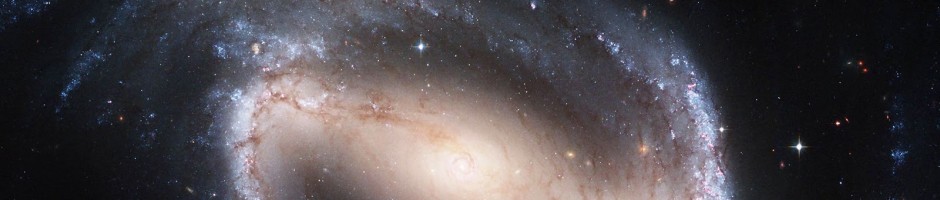
The Galaxy to receive the 20 millionth click? This rather nice (albeit fuzzy) barred spiral. SDSS J154503.53+142521.0

Thanks ‘cor riff’ and all of the other Zooites for your ongoing contribution to Galaxy Zoo. Now back to that Zoonometer™…
 Galaxy Zoo