Announcing the Galaxy Zoo iPhone App
Help us explore the universe from the park, the train, or the bath*.

Following a number of requests we are today releasing the first mobile Zooniverse application: the Galaxy Zoo iPhone app.
The app, which will run on iPhones, iPod Touches, and iPads, lets you classify galaxies from our Hubble Galaxy Zoo project from anywhere. It has a slick and simple iPhone interface and will challenge you with the same huge galaxy database as the galaxy zoo website.
If you have a long journey ahead and want to pass the time classifying, you can download a stockpile of galaxies via WiFi to keep you going the whole way. And if you run out you can download some more over the 3G or Edge networks.
You can find the app on iTunes, by searching for “Galaxy Zoo”, or with this direct link. You can find background information on the help page.
The app was developed by Oxford cosmologist Joe Zuntz, along with Arfon Smith and Stuart Lynn. They have a bet with Chris that you’ll be able to classify 1 million galaxies with it, and hope you’ll help them win it.
*Please don’t drop your phone in the tub.
Galaktyczne Zoo Hubble po polsku!
We have just started the Polish version of the Galaxy Zoo Hubble! To get to it, hover your mouse over the small flag icon in the upper left corner of the main page. It has been a major effort. Not only new sections added for Hubble have been translated, but the whole Polish text has been carefully revised.
Otworzyliśmy polską wersję Galaxy Zoo Hubble. Aby tam dotrzeć, trzeba przejechać myszką nad ikoną z angielską flagą w lewym górnym rogu strony głównej. Oprócz tłumaczenia nowych fragmentów związanych ze zdjęciami z teleskopu Hubble’a, przy okazji, przeredagowaliśmy całą dotychczasową zawartość strony.
We think, however, that it was every bit worth the effort! Galaxy Zoo is very popular in Poland and Hubble data opens completely new doors to the Universe, so we are very happy to open them a bit wider by providing the Polish language version :).
Sporo roboty, ale naszym zdaniem było warto! Galaktyczne Zoo jest popularne w Polsce a zdjęcia z teleskopu Hubble’a otwierają zupełnie nowe możliwości, dobrze więc było udostępnić je wszystkim :).
And many thanks to Robert for preparing the excellent configuration file for translation!
Serdeczne podziękowania należą się Robertowi za przygotowanie do tłumaczenia znakomitego pliku konfiguracyjnego.
BTW, Mergers and Supernovae are available in Polish as well!
Przy okazji warto wspomnieć że oprócz Hubble’a, także Mergers i SN Hunt mają swoje polskie wersje językowe!
Classification tree tweaks
Some of you may have noticed that on Thursday we made a couple of small changes to the flow of questions that are asked for each object in Galaxy Zoo: Hubble. Both of these changes relate to the set of additional questions which we introduced during the switch from Galaxy Zoo 2 to Galaxy Zoo: Hubble. As you will have certainly noticed, the new Hubble Space Telescope images contain many more galaxies with a clumpy appearance. This type of galaxy was very rare in the Sloan Digital Sky Survey images and doesn’t really fit into the classification tree we used for Galaxy Zoo 2. To obtain useful classifications for these objects in Galaxy Zoo: Hubble we therefore decided to add another branch of questions to the “classification tree”.
 During the first month or so of Galaxy Zoo: Hubble we have received a great deal of very useful feedback, particularly on the forum. In particular, two features of the new classification tree appeared to cause a fair bit of consternation amongst some of the Zooites. After considering your comments, and much deliberation, we decided to make a few changes.
Both points of contention related to the question asked after an answer had been clicked for ‘How many clumps are there?’. If the answer was anything except ‘one’, then we then asked ‘Do the clumps appear in a straight line, a chain, a cluster or a spiral pattern?’. Now, that’s a hard enough question to answer when there is only three clumps, but doesn’t make much sense at all when there are just two. We were trying to keep things simple but, to be perfectly honest, this wasn’t very sensible on our part. We have now changed the tree so that if the answer given is ‘two’, the question about how they are arranged is skipped.
The second issue was more interesting, because the frustration it caused told us something about the appearance of the clumpy galaxies which we hadn’t properly appreciated when planning the questions. New astrophysical insight before we’ve even collected enough clicks to start analysing! If the answer to ‘How many clumps are there?’ was ‘one’, the classification tree went back to the branch for ‘Smooth’ galaxies and asked ‘How rounded is it?’. Our thinking here was that a galaxy that was mostly just one clump would probably be an elliptical or maybe a bulge within a smooth disk galaxy.
It seems we both underestimated the discriminatory power of the Galaxy Zoo participants and how clearly different clumpy galaxies are from other types, even when there is only one clump. After having seen a few clumpy galaxies, it seems that many Zooites come to recognise that there are subtle features that set them apart from other types of galaxies. This suggests that single-clump galaxies really are a clearly different type of galaxy to the ellipticals and disks that are more common nearby. For single clump galaxies we now carry on asking the usual clumpy galaxy questions, skipping those that don’t make sense for only one clump.
Don’t worry – all your previous classifications of one (and two) clump galaxies are still safely stored away and will be very useful in helping us catalogue the subtle differences between the appearances of all these objects. Thank you, and keep clicking!
Voorwerp Web-Comic: Authors meeting at CONvergence

It came from the SDSS: The Voorwerp
Have you ever looked at the Voorwerp and said to yourself, “Doesn’t that look like the Swamp Thing?” Or maybe you’ve seen Kermit the Frog dancing, or a maybe you see foliage run amok. There is just something about the Voorwerp that make me, for one, want to anthropomorphize it as a monster, and I’m betting some of you have had the same moment of Pareidolia.
The neat thing about the Voorwerp is it not only looks like the character from a bad monster movie, but it is a real-life monster of a problem that has played a starring role in an intellectual adventure. While astronomy doesn’t normally get turned into summer block buster movies, this story just might make it with a rating of “S: Judged appropriate for people who contribute to science in their spare time.”
Image with me – you go into a movie theatre and hear booming from the speakers: “It came on the 13th; Monday the 13th. And one woman dared to ask ‘What is that stuff?'” Suddenly the camera zooms in on the Voorwerp. Then this imaginary movie trailer has us cutting between action adventure shots of astronomers racing for telescopes (you see a car racing across the desert with domes in the distance), the Swift space telescope repointing, and Zoo Keepers conferring in solemn tones as they gather around a computer. Bill Keel (played by Martin Sheen?) asks, “Can we get Hubble time?” and someone played by the Hollywood hunk of your choice responds in an overly dramatic tone, “I don’t know, but we have to try – I want answers – and we can handle the truth.”
Ok, so maybe the idea is pure cheese, and no Hollywood director (or college film major) is likely to shoot this flick, but there is still a story here that is worth sharing with the world.
And the STScI agrees with us. They’ve funded the creation of a digitized comic book (a web comic) to tell the story of Hanny’s discovery of the Voorwerp and the scientific adventure all of us have gone on as the truth has been sought in all sorts of wavelengths using a myriad of telescopes.
This comic is being written under the guidance of Kelly McCullough (author of the Ravirn series) by a team of volunteer writers at the CONvergence Con outside of Minneapolis, Minnesota, USA. The writers will work in close collaboration with Bill Keel and many other Zoo Keepers to make sure they get the story completely right.
Want to watch? Want to hang out with Zoo Keepers (list of attendees to come) at a cool event? Then join us in Bloomington, Minnesota, July 1-4, 2010. The event does cost money, unfortunately, and you have to register (My turn to bring the cookies). The cost of registration goes up May 15, so if you’re interested, please register ASAP for lowest prices.
We’ll be releasing the comic at Dragon*Con in the fall. We’d love it if you’d consider coming and being part of the celebration.
We’re going to work to keep you informed about everything that is going on. You can follow along at http://hannysvoorwerp.zooniverse.org, and in the webcomic thread on the forums.
Galaxy Zoo: Hubble

The Galaxy Zoo project has evolved once again – now we are classifying galaxies from the incredible Hubble Space Telescope! Galaxy Zoo: Hubble is the new incarnation of the Galaxy Zoo project and it continues to allow you to help astronomers with real scientific research by asking you to to visually classify galaxies online.
The original Galaxy Zoo and Galaxy Zoo 2 both used data from the Sloan Digital Sky Survey and recently, after reaching 60,000,000 classifications those projects began to wind down. The timing is excellent though and it allows Galaxy Zoo: Hubble to launch today, for the 20th anniversary of the space telescope. Images of galaxies taken using the legendary space telescope are there for everyone to classify and I recommend that you go and do just that.

A lot of the fainter galaxies look like those seen in the Sloan catalogue from Galaxy Zoo 2 (this is a good sign, since we don’t want galaxies to change wildly depending on what telescopes we use!) however in amongst these there are some real gems to be discovered in the Galaxy zoo: Hubble data. I just found a couple in my first tentative classifications, I’ve shown them here to whet your appetites.
Hubble has now been in orbit for 20 years. In that time it has helped us to understand the age of the Universe, to see more distant galaxies than ever before, to detect the presence of black holes in the centre of galaxies, to witness a comet collide with Jupiter, and much more!
Hubble has captured the imagination of people all around the world and it has given us some of the most iconic images of space that exists in the public consciousness. The image at the top of this post was taken during Servicing Mission 4, just after the Space Shuttle Atlantis captured Hubble with its robotic arm in May 2009, beginning the mission to upgrade and repair the telescope. Thanks to that upgrade, Hubble will continue to provide amazing images and science for many years.
So that’s enough chat from me – go and classify some Hubble galaxies!
60 Million Classifications
Well, you’ve done it, more quickly than we would ever have thought possible. We have now reached a critical point – 60 million classifications means an incredibly robust, well-defined and scientifically valid catalogue of Sloan Digital Sky Survey galaxies. Congratulations to those who won prizes, and thanks to everyone who took part.
So what happens now? The site is still here, as you can see, and every classification you make will still improve our results, and will be saved in our database. To encourage you to keep clicking, we’re still giving away individual prizes to one person at random for each collection of 250,000 classifications. To take part, all you have to do is what you do best – classify galaxies – and it will help if you make sure your Zooniverse email address is up to date so we can contact you if you’re a winner.
What 60 million really means is that we can move on to the next phase of the project – and you won’t have long to wait…
Zoonometer Approaches 60 million

Having only announced the race to 60 million, only ten days ago, the Zoonometer is showing that we are now making the final 500,000 classifications! The response has been quite incredible and you can now start to see the winners going up on the Zoonometer page. We are still contacting winners as the classifications are made.
There is still one more prize draw to be made, at the 59,750,000 mark – when one classification from the previous 250,000 will be selected at random. Beyond that we await our 60,000,000th galaxy classification. The lucky person that makes that fateful classification will win a cool bundle of prizes:
- An original Sloan Digital Sky Survey plate
- A Galaxy Zoo mug and mousepad
- A Zooniverse t-shirt
Those of you that are wondering what will happen to Galaxy Zoo after the 60 million mark need not worry. We have a nice surprise in store for everyone very soon, but classifications will continue beyond 60,000,000 in the meantime. 60 million marks our minimum, best database. Every galaxy classified afterwards is still just as valid and useful as the 60,000,000 that preceded it and thus Galaxy Zoo will continue.
So if you want to be in with a chance of winning our prize for the 60,000,000th classification then go forth and classify! Watch this blog for more news and updates on the future of the Galaxy Zoo project.
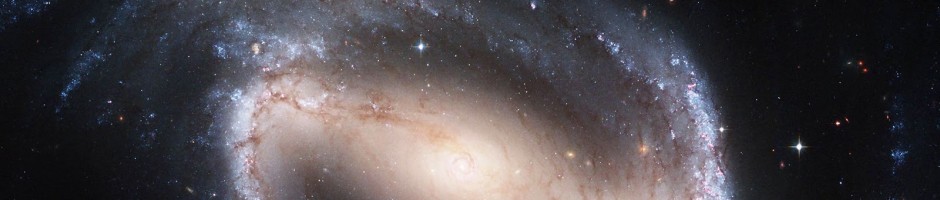
[Image credit: NASA, ESA, K. Sheth (Spitzer Science Center, California Institute of Technology), and P. Capak and N. Scoville (California Institute of Technology)]
60 Million Classification Giveaway
Yesterday, Galaxy Zoo launched a fun little competition to mark the approach of our 60,000,000th classification. This is the point at which we can create an amazing and powerful database from the Galaxy Zoo 2 data.
Galaxy Zoo’s ticking clock of classifications, The Zoonometer™, has been steadily ticking away, toward our target of 60 million classifications for a long time. We can hardly believe it, but we’re nearly there! To mark this historic moment in Galaxy Zoo’s history, we’re giving away prizes to the people that provide the clicks that take us to our target.
The person that makes the 60 millionth classification will receive a bundle of goodies, including a Galaxy Zoo t-shirt and mug, a Galaxy Zoo poster and an original Sloan Digital Sky Survey plate! As well as this, we’re giving away individual prizes to one person at random for each collection of 250,000 classifications.

The prizes kicked off with the 57,000,000th classification, which was achieved last night at about 2100 UT (see extremely geeky screenshot). One of the 250,000 classifications that led us to the 57,000,000 mark will now be selected at random to win a Galaxy Zoo mousepad. We will also be picking a winner from the 57,000,000 – 57,250,000 range as well. The winners will be posted on the Zoonometer™ page. We are appaoraching 57,500,000 as I type this.
If you want to take part, all you have to do is what you do best: classify galaxies! It will also help if you make sure you’re Zooniverse email address is up to date so we can contact you if you’re a winner.
60 Million Target Explained
With 60,000,000 classifications in the database, the Galaxy Zoo 2 project will have reached a critical point. 60 million classifications represents our minimum, ideal database. With that many classifications you, the participants, will have collectively classified every galaxy enough times to create an incredibly robust, well-defined and scientifically valid catalogue of Sloan galaxies. Beyond the 60 million classifications, every additional click still goes into the database – it just means that our minimum science goal is achieved.
What is an SDSS Plate?
The person who classifies the 60 millionth galaxy will win an original Sloan Digital Sky Survey plate. These plates are quite large and make amazing memorabilia, since they were actually used to observe galaxies by the SDSS. We are lucky enough to have one of these plates at Zooniverse HQ, to give away. 640 holes have been drilled into the plate, with each hole corresponding to the position of a selected galaxy, quasar or star in the sky. During observations, scientists plug the holes with optical fibre cables. The fibres simultaneously capture light from the 640 objects and record the results in CCDs. The plates are interchangeable with the CCD camera at the focal plane of the telescope. You can read more about how the SDSS performed observations on their own webpages.
Galaxy Zoo auf Deutsch!
Galaxy Zoo goes international. Nachdem unsere Webseiten schon seit einiger Zeit auf Polnisch zur Verfuegung stehen, haben wir jetzt endlich die langerwartete deutsche Version online. Saemtliche Links zur Zoo-Story, zur Zoo-Wissenschaft, und natuerlich zum Klassifizieren sind jetzt auch in deutscher Sprache vorhanden. Falls ihr euch nicht sicher wart, ob ihr die Kategorien alle richtig verstanden habt – klassifiziert die hundert tausend Galaxien doch einfach nochmal :-)! Und was viel wichtiger ist: jetzt koennen endlich eure Freunde und Verwandten mitmachen, die des Englischen weniger maechtig sind.
Ist die Galaxie strukturlos und rund, ohne Anzeichen einer Scheibe? Hat die Galaxie einen Bauch in ihrer Mitte? Wie rund ist die Galaxie? Gibt es Anzeichen fuer einen Balken der durch die Mitte laeuft? Gibt es Anzeichen fuer Spiralarme? Und viele Fragen mehr zu Galaxien, die euch sicher bekannt vorkommen – alles jetzt auf Deutsch. Also – viel Spass beim “clicken”!
Welcome to the Zooniverse
You’ll notice the blog looks more than a little different today; we’ve given it a more modern and flexible style and incorporated our twitter stream, so that you can keep up with all the news in one place.
The changes are part of the launch of the Zooniverse the new home for Galaxy Zoo and the other projects we’re developing. There won’t be any changes to Galaxy Zoo itself – apart from the small banner at the top of the page – so you’re welcome to just continue classifying galaxies, colliding galaxies, or hunting supernovae.
If you fancy a break, though, you can find the Zooniverse here, or read more about the launch on the new Zooniverse blog.
 Galaxy Zoo

