Zoonometer Approaches 60 million

Having only announced the race to 60 million, only ten days ago, the Zoonometer is showing that we are now making the final 500,000 classifications! The response has been quite incredible and you can now start to see the winners going up on the Zoonometer page. We are still contacting winners as the classifications are made.
There is still one more prize draw to be made, at the 59,750,000 mark – when one classification from the previous 250,000 will be selected at random. Beyond that we await our 60,000,000th galaxy classification. The lucky person that makes that fateful classification will win a cool bundle of prizes:
- An original Sloan Digital Sky Survey plate
- A Galaxy Zoo mug and mousepad
- A Zooniverse t-shirt
Those of you that are wondering what will happen to Galaxy Zoo after the 60 million mark need not worry. We have a nice surprise in store for everyone very soon, but classifications will continue beyond 60,000,000 in the meantime. 60 million marks our minimum, best database. Every galaxy classified afterwards is still just as valid and useful as the 60,000,000 that preceded it and thus Galaxy Zoo will continue.
So if you want to be in with a chance of winning our prize for the 60,000,000th classification then go forth and classify! Watch this blog for more news and updates on the future of the Galaxy Zoo project.
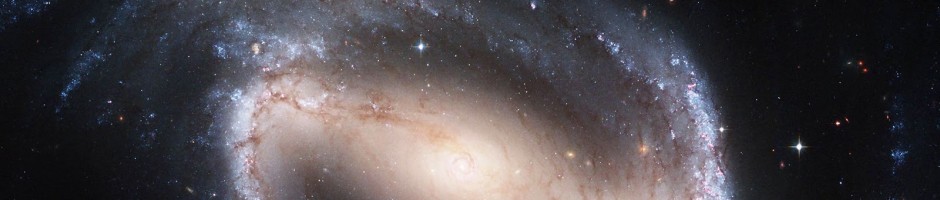
[Image credit: NASA, ESA, K. Sheth (Spitzer Science Center, California Institute of Technology), and P. Capak and N. Scoville (California Institute of Technology)]
60 Million Classification Giveaway
Yesterday, Galaxy Zoo launched a fun little competition to mark the approach of our 60,000,000th classification. This is the point at which we can create an amazing and powerful database from the Galaxy Zoo 2 data.
Galaxy Zoo’s ticking clock of classifications, The Zoonometer™, has been steadily ticking away, toward our target of 60 million classifications for a long time. We can hardly believe it, but we’re nearly there! To mark this historic moment in Galaxy Zoo’s history, we’re giving away prizes to the people that provide the clicks that take us to our target.
The person that makes the 60 millionth classification will receive a bundle of goodies, including a Galaxy Zoo t-shirt and mug, a Galaxy Zoo poster and an original Sloan Digital Sky Survey plate! As well as this, we’re giving away individual prizes to one person at random for each collection of 250,000 classifications.

The prizes kicked off with the 57,000,000th classification, which was achieved last night at about 2100 UT (see extremely geeky screenshot). One of the 250,000 classifications that led us to the 57,000,000 mark will now be selected at random to win a Galaxy Zoo mousepad. We will also be picking a winner from the 57,000,000 – 57,250,000 range as well. The winners will be posted on the Zoonometer™ page. We are appaoraching 57,500,000 as I type this.
If you want to take part, all you have to do is what you do best: classify galaxies! It will also help if you make sure you’re Zooniverse email address is up to date so we can contact you if you’re a winner.
60 Million Target Explained
With 60,000,000 classifications in the database, the Galaxy Zoo 2 project will have reached a critical point. 60 million classifications represents our minimum, ideal database. With that many classifications you, the participants, will have collectively classified every galaxy enough times to create an incredibly robust, well-defined and scientifically valid catalogue of Sloan galaxies. Beyond the 60 million classifications, every additional click still goes into the database – it just means that our minimum science goal is achieved.
What is an SDSS Plate?
The person who classifies the 60 millionth galaxy will win an original Sloan Digital Sky Survey plate. These plates are quite large and make amazing memorabilia, since they were actually used to observe galaxies by the SDSS. We are lucky enough to have one of these plates at Zooniverse HQ, to give away. 640 holes have been drilled into the plate, with each hole corresponding to the position of a selected galaxy, quasar or star in the sky. During observations, scientists plug the holes with optical fibre cables. The fibres simultaneously capture light from the 640 objects and record the results in CCDs. The plates are interchangeable with the CCD camera at the focal plane of the telescope. You can read more about how the SDSS performed observations on their own webpages.
Galaxy Zoo auf Deutsch!
Galaxy Zoo goes international. Nachdem unsere Webseiten schon seit einiger Zeit auf Polnisch zur Verfuegung stehen, haben wir jetzt endlich die langerwartete deutsche Version online. Saemtliche Links zur Zoo-Story, zur Zoo-Wissenschaft, und natuerlich zum Klassifizieren sind jetzt auch in deutscher Sprache vorhanden. Falls ihr euch nicht sicher wart, ob ihr die Kategorien alle richtig verstanden habt – klassifiziert die hundert tausend Galaxien doch einfach nochmal :-)! Und was viel wichtiger ist: jetzt koennen endlich eure Freunde und Verwandten mitmachen, die des Englischen weniger maechtig sind.
Ist die Galaxie strukturlos und rund, ohne Anzeichen einer Scheibe? Hat die Galaxie einen Bauch in ihrer Mitte? Wie rund ist die Galaxie? Gibt es Anzeichen fuer einen Balken der durch die Mitte laeuft? Gibt es Anzeichen fuer Spiralarme? Und viele Fragen mehr zu Galaxien, die euch sicher bekannt vorkommen – alles jetzt auf Deutsch. Also – viel Spass beim “clicken”!
Welcome to the Zooniverse
You’ll notice the blog looks more than a little different today; we’ve given it a more modern and flexible style and incorporated our twitter stream, so that you can keep up with all the news in one place.
The changes are part of the launch of the Zooniverse the new home for Galaxy Zoo and the other projects we’re developing. There won’t be any changes to Galaxy Zoo itself – apart from the small banner at the top of the page – so you’re welcome to just continue classifying galaxies, colliding galaxies, or hunting supernovae.
If you fancy a break, though, you can find the Zooniverse here, or read more about the launch on the new Zooniverse blog.
Hello From Palomar
I’m Robert, an astronomer at the California Institute of Technology working on thePalomar Transient Factory (PTF). I have arrived at the Palomar Observatory in anticipation of my two night run on the 5.1 meter Hale Telescope. The plan is to take spectra of new PTF discoveries to find out what they are, and maybe follow-up on some of the more interesting sources we’ve already identified.

The dome of the Palomar 5.1m Hale Telescope
As you can see from the photo, the mountain was dusted with snow a couple days ago, but it was quite nice out at my arrival. Hopefully the wet stuff will help clear up our ash problem left over from this summer’s wild fires. More rain and/or snow may fall in the next few days, but I’m hoping the skies will clear up enough at night so that I can get some observing in.
Our survey telescope, which is just a short walk from the Hale Telescope, has gathered some new images over the last few nights. These likely contain a few new supernovae which you can help us identify. If all goes well, I will make spectroscopic observations the next two nights of the best candidates found. These data will reveal what the candidates are. There’s always the chance of discovering something new, which makes this all very exciting!
So happy hunting, and look for updates throughout my observing run.
Galaxy Zoo: Supernova is back
After a couple of trial runs in August and October, the hunt for supernovae is now back – and we need your help again! As before, we’re supporting the Palomar Transient Factory in their search for supernovae, and we have an upcoming observing run, this time at the Palomar 200in telescope.
We are hoping to keep the supernova hunt website up for good now – no more trials! – and so no danger of you being cut off in a few days time.
A few pieces of news from the supernova hunt.
The first is that we would have been back sooner, but Palomar, the observatory at which PTF operates, has suffered unusual atmospheric conditions following the forest fires in Southern California over the summer. A build-up of ash and dust in the atmosphere has meant the number of nights on which the observatory has been open has been greatly reduced, and so the supernova search has been offline for much of the Autumn. Even now, the conditions are still unstable, so please bear with us if the number of candidates is very small!
The second is that in the near future we will have a website containing feedback on the classifications that you’ve all been doing. We’re also in the process of writing a scientific paper on the trial runs from earlier in the year.
Finally, we are planning to add other supernova searches to the hunt – so watch this space for more data.
That’s all for now. Good luck with the supernova hunting, and don’t forget to post questions or comments over in the forum!
Want to work with the Galaxy Zoo team?
The Zoo team is expanding once again, and we’re advertising jobs in Oxford and Chicago.
The Oxford job would be suitable for a postdoc who wants to do science with the Zoo, and get involved in the technical side of things. The job advert is here.
The two Chicago positions are for education researchers, based at the Adler planetarium. The adverts for these two positions are here.
Hope to be working with you soon…
Chris
Galaxy Zoo: Mergers – A personal perspective
Now that the launch of Galaxy Zoo: Understanding Cosmic Mergers has been completed, I wanted to give a personal perspective on this project.
For me, this project started twenty years ago when I was in graduate school. In my dissertation work, I modeling the tidal features of interacting galaxies. I wrote a Fortran code for doing some of this modeling work. You would set up a run, and then wait hours to see the result. If it didn’t match, you had to wait hours for the next attempt.

The worst part about the modeling process was getting the “final” result. Even if you got a close match, you never knew if you had actually found the best match. It was always possible that a completely different set of parameters was the real solution, and you had just made a mistake. Even with good fits, you couldn’t tell if you really had arrived at the ‘right’ solution.
Our understanding of galaxy collisions has been limited by the lack of dynamical models. For example, we know that some galaxy collisions have very high star formation rates. We also know that almost all extreme star burst galaxies (Ultra-luminous infrared galaxies) have undergone some type of collision. Why isn’t this sort of reaction the inevitable result of a merger? It seemed like the answer was always out of reach – unless we can understand the dynamics of lots of collisions.
The java applet developed for Mergers by Anthony Holincheck is the direct descendent of the old Fortran code. Now you can run the same kind of simulations I ran for my dissertation in fractions of a second. When Anthony and I first resurrected this code, we immediately tried using a Genetic Algorithm help us converge on the final solution. It didn’t work. We couldn’t reliably teach the computers how to recognize a good match. We could run a few hundred thousand simulations per day, but we never knew if we got the right results.
The idea of using volunteers to help us happened a few years ago. It was crazy and impractical to imagine volunteers helping out with a project like this. Even so, a group of us proposed to do. Of course, our proposal got shot down. After all, there was no way that this type of thing would work. How would you recruit such volunteers?
About a year later, I started talking with some of the team from Galaxy Zoo. You – the volunteers of Galaxy Zoo- have made the impossible possible. With your help, we can create the models we need to understand the histories of hundreds of galaxy collisions. These models will be more reliable than any a single scientist could create. This result alone would incredibly important. However, by carefully analyzing your inputs, we eventually hope to train the computers to do thousands of more models. This kind of man/machine partnership is being planned for a number of future data projects, where computers need help learning how to be scientists. We will never discover future Voorwerpen or new Peas without your help. However, in return, we will also never make you do busy work that a machine can do.
Your efforts on the Zoo projects have created a new the way to do science. This is nothing less than a transformation in how we look at data, analysis, and computing.
Of course, that’s just a personal perspective.
I just posted a new target for you to try. We are going to be doing updates at 1600 GMT everyday. even Thanksgiving. Of course, we will keep the old targets live for a week so you can go and revisit them. This one is a repeat from some of the beta tests. Getting a perfect model is hard, but getting close is easy. We didn’t want to make things too difficult – at least for now. Be assured, we will be kicking up a notch over the next days and weeks.
-John
Mergers Update
We have just changed the target on the Galaxy Zoo Mergers page (http://mergers.galaxyzoo.org). The new system has a broken ring and a nearby companion. It’s a very pretty system, and it seems to be a bit easier to model than the first one we posted. For all the systems we are putting up as challenges, we do a quick run ourselves to see if we can find any solutions that might be on-track. Although we found a few solutions right away, we don’t know if they are the best ones or if they are unique. Of course, that’s why we need your help.
We are going to be updating the target daily. Every day, we should will have a new cosmic collision for you to help us model.
If you can spend 10 minutes to quickly weed out the obvious bad ones on 20-30 screens, it would be a great help to us! The more clicks we have, the better we constrain the collision. Make sure you hit save when you are done looking at the images! Although we automatically back up some clicks, we don’t want to lose any of your data.
Thanks for all you do.
– John Wallin, Computational Scientist/Astronomer
Galaxy Zoo: Understanding Cosmic Mergers
Starting at midnight 11/24, our new site ‘Galaxy Zoo: Understanding Cosmic Mergers’ went on-line as a new project in Galaxy Zoo. In Mergers, we are working to understand the cosmic collisions that lead to galaxy mergers. Every day we will have a new target galaxy that we need your help to model. Based on the basic input parameters that we provide, a Java applet running in your browser will simulate some possible collision scenarios. Computers don’t do a good job comparing simulations and real astronomical images, so we need your help to find out which simulations are the most similar to the real galaxy collision.
Working on Mergers will require some patience. Some of the collisions we are trying to model are rarer than others, so don’t get discouraged. In some cases, you will need to look at a few hundred images to get your first close match. Just remember, you aren’t looking for perfection. Just try to find a simulation that has some of the unusual and unique tidal features of the target galaxy. When you found something close, you might want to go further and “enhance” the image to make even a better match. The more data we have on these galactic collisions, the more we can narrow down the input parameters that caused these systems to form. You can be the most helpful by looking at a lot of images and then select the best of the best through the evaluate mode of the applet. This will happen automatically when you have selected eight possible merger images.
My graduate student Anthony Holincheck and I have been working on this project for a long time, and are very excited to see it see it launch today. We want to thank all the Zooites that participated in our beta test. Zooites rock! Of course, thanks also go out to Arfon, Chris, Lucy, Nancy, Geza, and Mark in their work in the development. Without all of your help, this project would not be possible. Our team will be adding more features in the coming weeks and months, so please stay tuned.
As I write this blog, we are T-5 hours before the full launch of our site. I cannot help but be humbled by the incredible dedication of the Zooites. With your help, we are going to model the dynamics of hundreds of galaxy collisions. This effort will help us connect the dynamics of galaxy collision to the star formation rates in galaxies. Thank you for your on-going support Galaxy Zoo!
– John Wallin – Computational Scientist/Astronomer

