Galaxy Zoo and STAGES joint press release
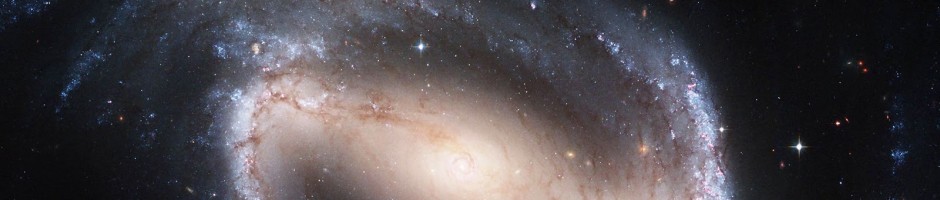
We have issued a press release describing the exciting simultaneous discovery of a significant population of red spiral galaxies by both the Galaxy Zoo and Space Telescope A901/902 Galaxy Evolution Survey (STAGES) projects. These unusual galaxies are found mainly in the outskirts of galaxy groups and clusters, and appear to be a missing link in the transformation of normal star-forming spirals to ‘red and dead’ early-types (lenticulars and ellipticals) in dense environments.You can see the press release here, and see the news on the BBC, and Wired.
Another Zoo paper submitted!
Hot on the heels of the acceptance of our initial paper looking at the environmental dependence of morphology and colour, here’s another one considering similar questions, but using a very different approach.

The first author is Ramin Skibba, a friend of the Galaxy Zoo team, who is an expert in a mysterious analysis tool called ‘mark correlation functions’. He’s calculated these using the Galaxy Zoo data and interpreted the results to help us understand how the morphology and colour of galaxies depend on their environment. This has confirmed many of the findings in our previous paper, and given us new insight into the processes responsible for transforming galaxies from blue to red and spiral to elliptical. Ramin will write a blog post, explaining his paper in more detail, soon.
The paper has just been submitted to our usual journal of choice, Monthly Notices of the Royal Astronomical Society. The submitted version will be available later in the week; we’ll post more then.
(For those counting, this is the 7th Galaxy Zoo paper to be submitted. So far, four have been accepted and we’re still working on the other two).
Fourth Galaxy Zoo paper accepted
The wheels of science sometimes seem to turn very slowly. It was back in May when, after several months of work, we submitted a paper which investigates how the morphology and colour of galaxies varies depending on where in the universe they live. Earlier this week, exactly six months later, the paper was finally accepted for publication in Monthly Notices of the Royal Astronomical Society (MNRAS).Along the way we have added a number of improvements requested during peer review, and others which were suggested to us by colleagues or we thought of after submission. The paper will now be sent to the publisher for typesetting, and should appear online before the end of the year (after we’ve given it a final proof read), and in print shortly after that.We wanted people to know about our work as soon as possible, both the Galaxy Zoo users and fellow astronomers, so we put the paper on a public scientific archive at the same time as submitting to the journal. We have updated that version to match the one which will appear in MNRAS. If you are feeling adventurous, you can get it here. A more approachable summary of the results can be found on this poster.
So why has it taken so long? Well, it hasn’t really. It usually takes at least a couple of months for a paper to go through the peer review process, and often longer for a lengthy paper like this one. This process involves the selection of an independent reviewer by the journal, who usually remains anonymous. They carefully read the paper and provide suggestions for changes to be made before publication. As the reviewer is usually very busy doing their own science, it generally takes a month before the reviewer sends their report. The authors then usually revise their paper based on the reviewer’s comments, and reply to the referee giving additional explanation and justification for any suggestions which were not acted upon. This exchange sometimes repeats a few times. If the reviewer recommends many changes, which take the authors a long time to get around to doing, a paper may spend over a year in review!
One unfortunate delay for our paper was that the first reviewer was rather more rigourously technical than most astronomers, and took a dislike to our slightly casual use of terms such as ‘independent’ in our title and abstract (the brief summary of the paper). This reviewer wanted us, unreasonably we believe, to rewrite our paper before they were willing to actually read it. Sometimes it happens that there is a mismatch between the paper’s intended readership and the chosen reviewer. We therefore asked the journal for a second opinion, to which they kindly agreed. The second reviewer was much more positive, and gave very useful suggestions for minor changes that have helped to improve the paper. We also made quite a few small changes that we had thought of while the paper was in review, and even tried to make the first referee happy by changing the title slightly. We are really happy with the resulting paper, but glad to have it finished with, so we can now concentrate on all the other exciting work we are doing. Stay posted!
Return to Kitt Peak
We’re halfway through our second observing run to follow up overlapping-galaxy pairs (and it is still a lot warmer than that picture from Spain looks in the last blog entry!) . Anna and I arrived yesterday at Kitt Peak National Observatory southwest of Tucson, Arizona. She got here at lunchtime, and I didn’t make it until just after sunset because of a committee meeting in town. We’re using the 3.5-meter WIYN telescope (Wisconsin-Indiana-Yale-NOAO – it takes more than a village to build an observatory!), located at Kitt Peak National Observatory. As we did last April, we’re using a camera called OPTIC, which can be temperamental in the software and networking departments but can deliver very sharp images through tracking of atmospheric image motions right on the chip during an exposure. We’ve gotten several images as sharp as 0.5 arcseconds, which is not much bigger than a single SDSS image pixel. The combination of a larger telescope and much longer exposures let us measure features that the SDSS survey images only hint at.

Observing, spanish style
More good news for the Zoo arrived this week. As Bill prepares for our next observing run on top on Kitt Peak in Arizona, we received an email that we’ve been awarded time on the giant 30m radio dish of the IRAM observatory above Granada for not one, but two Zoo projects.  The first is the beginning of our campaign to make use of the beautiful catalogue of merging galaxies the Zoo provides, led by Daniel Darg here in Oxford. The second is the project the Zoo was originally designed for, teasing out the effect of black holes in star formation in ellipticals. Kevin and I have already had great success doing this with IRAM, but the ability of the Zoo to find nearby blue ellipticals will be of enormous value.
In both cases, we’ll be looking for the signature of carbon monoxide (CO) in the galaxies. That might sound obscure, but CO is actually the second most common molecule in the Universe. The most common is just hydrogen, H2, but that’s hard to detect so instead we go after CO. Once you know how much CO there is, there’s a well-established formula that gives you the star formation rate, something which we need to know if we’re going to understand how the galaxies are evolving.
We’re waiting for the final schedules to be drawn up, but it looks like at least one Zookeeper will be spending New Year up a mountain. Watch this space.
Hunting Programs for all
I created the Merger Checking (which now has over a million clicks), three Pea Hunts (All finished) and now an unofficial irregular galaxy classification. What started as 80 lines of Perl code is now 800 (about 50 of the original 80 lines still survive), but can now support almost any Galaxy Zoo mini-project.These mini-projects will never be as pretty as the main GZ sites, but they are quick to build, modify and use.
The Road Show- catch it online!
A quick followup to last week’s announcement of my talk on the Zoo and Hanny’s Voorwerp – the PDF visuals and MP3 narration are now available online. Truth in advertising compels me to point out that we ended up not being able to record the talk live, so I redid the narration later. As best I can tell, this version was less entertaining than the one for a live audience (as well as being a good bit shorter). You also have to figure out when to page forward…
Spin paper accepted
Just a quick notice that our spin correlations paper was accepted by the Monthly Notices of Royal Astronomical Society (where all Galaxy Zoo papers go)
Zoo 2 arrives…
We’re now inviting our loyal blog and forum readers to give us a hand in testing Zoo 2, which is in beta as they say on the internet. To take part, follow this link to complete a short survey about your experiences with Galaxy Zoo so far. The whole thing shouldn’t take more than 10 minutes, and you’ll be rewarded with the link to our trial site for Galaxy Zoo 2. Once you’re classifying away, share your thoughts with us either here or in the forum.
The Hanny's Voorwerp Road Show – US Tour (part I)
For those Voorwerp aficionados (we decided on the Forum that these might collectively be known as a Vreemdelingen Voorwerp Vrienden Vereniging or something) living in the area, take note that I’ll be giving a presentation on the Zoo and especially Hanny’s Voorwerp next week in Birmingham (Alabama, not England, although steel production has been important in both). It will be at the meeting of the Birmingham Astronomical Society, 7 p.m. on Tuesday, October 21. The location will be in the planetarium on the campus of Samford University. Anyone interested is heartily invited to attend. For those not so close, I plan to post a PDF of the visuals later.In less pleasant news, the Hubble observations are obviously on hold, since the servicing mission by shuttle astronauts has been delayed. This is to allow time for mission planners to assess the failure of crucial electronics which format science data for relay to the ground, whether its backup system comes on line properly, and whether a replacement can be added to the mission’s already-crowded manifest. The mission has now been pushed into early 2009, and observations with the new and repaired instruments will be gradually phased in afterward.
 Galaxy Zoo