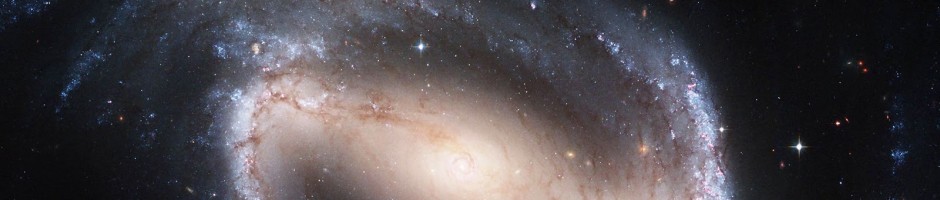
Your top ten galaxies…
The ‘Favourites’ feature in the new Galaxy Zoo; seems to have been rather popular in the site’s first week of existence.Everyone will have their own reasons for pressing the ‘Favourite galaxy’ button; whether it’s a galaxy to follow up on the forum, or to enjoy later. In any case, we present the first in a semi-regular series : Galaxy Zoo’s top ten favourite galaxies, in traditional reverse order. Read More…
A new Zoo world…
I wrote the following on my personal blog yesterday, but I thought you’d like a flavour of the first day of the Zoo.
It’s been 19 months since the launch of the original Galaxy Zoo. That week was ridiculous – my main memory is of incredulous laughter as the number of users and classifications climbed and climbed and I, and the rest of the team, realised what we had on our hands.
Since then, we’ve made a lot of use of the results, but I’ve also spent a lot of time talking to all sorts of people and plotting to expand the project way beyond its original scope. Real people are now employed to make this happen, and Galaxy Zoo 2 which launched on Tuesday is our first site to use a new, extremely flexible interface.
It’s all come together rather rapidly in the last few weeks. On Monday night, I talked to the University’s Space and Astronomy society and told them the launch was only an hour or two away. Opening my laptop and connecting to the net on the train, I saw the new site appear. By chance I’d logged on 20 seconds after the beginning. I wonder if I was the first to see it?
I stayed up for a couple of hours that night watching the forum and email to see how reactions were. People were positive, but it stayed quiet and there was no flurry of press attention to mark the end of our press release’s embargo.
I lay in bed that night wondering if we’d just lost a colossal gamble. Perhaps we didn’t understand what it was about Galaxy Zoo that attracted people. Perhaps it really was just a one-off. It still seemed quiet the next morning as I watch the first report on BBC Breakfast TV, at 6.20, but I didn’t have time to think before being picked up and whisked off to Television Centre for more interviews.
And then we were off. More breakfast tv at 7.20, upstairs to 5 Live with Annie, one of our users, for 7.55 before that got bumped. Then back downstairs for more TV at 8.20 (Annie was great!) and then, as she headed off to work upstairs again for Radio 4. Once more I was sitting opposite John Humphrys, and we had a lot of fun on Today getting more and more enthusiastic about the project.
Spat out in the corridor, I was grabbed by the World Service for a quick interview, by now working completely on automatic. Just as quickly I found myself in a cab and at Paddington, and on a train to Oxford had time to catch my breath.
The site was clearly struggling, but stayed up (which is more than we managed for Galaxy Zoo 1) which I think is a pretty impressive achievement. More importantly, we were busy which meant that people were interested, and would come back to the site. Galaxy Zoo 2 is going to work, and we are going to get the data we want. It’s an amazing feeling; a mixture of relief and excitement. Less incredulous laughter, more satisfied grinning, I suppose.
We’d scheduled a small celebration for 5pm in the department, but unfortunately Arfon our lead developer had a bright idea just as the clock ticked toward 5, and he spent the whole time typing frantically, champagne at his side.
Since then, traffic has refused to die (which is fantastic) and as I write we’re on the front page of Digg.com so that’s not going to change any time soon. Thanks for your efforts – and the more classifications you do the sooner you’ll see what we’ve got up our sleeves for our next trick.
My email inbox included a note from Steven last night beginning the preparations for the next set of things, so keep clicking and watch this space!
Our New Infrastructure
As some of you may already know I’m relatively new to the Galaxy Zoo team having joined in January. One of the main reasons I was brought on board the team was to help plan and implement a more scalable web architecture for the future.
Galaxy Zoo 2 launched on Tuesday and was our first live test of our new approach. I’m pleased to say that apart from a small hiccup with our database server on day two we’ve managed to collect 3.7 million classifications in just over three days – well done everyone!
*Warning here begins gory technical details!* You can safely stop reading here unless you are a techy.
Galaxy Zoo is now hosted on Amazon Web Services. We are using a combination of S3 (their storage solution) for hosting the galaxy images, EC2 (their compute service) for the Galaxy Zoo website (and our super-secret API) and EBS (Elastic Block Store) for instant backups of our databases. The great thing about Amazon Web Services is that you pay for what you use (by the hour) and more significantly you can scale up to as many servers as you like to handle the load you are experiencing when busy.
Those of you who are particularly observant may have also noticed that the Zoo 2 site is now written in the web framework Ruby on Rails. Rails is great fit for us, it’s a modern web framework that follows a great design pattern (MVC) and encourages best practice development.
For those of you who have found the last two paragraphs interesting, I’m going to find a place where I can write about what we are up to on the technical side of things. Watch this space!
Cheers,
Arfon.
'My Galaxies' is Back!
This morning we’ve added back in the ‘My Galaxies’ feature to the Zoo 2 site. The ‘My Galaxies’ page increases significantly the load on our servers and so we had to disable it very soon after launch due to the sheer number of people coming to the site. So that we can reintroduce ‘My Galaxies’ without risking slowing the site down too much, you will only be able to see the ‘My Galaxies’ page if you registered more than three days ago. This three day limit is a rolling time window, i.e. all Zooites from Zoo 1 will be able to access ‘My Galaxies’ now and new users will be able to access it three days after they registered.
At the moment ‘My Galaxies’ is only showing the 21 most recently ‘favourited’ galaxies. Don’t worry though, all of your favourites are being stored and soon you will be able to access them all. In addition you’ll soon be able to see your classification history and the classifications you made.
Cheers,
Arfon and the Galaxy Zoo Team.
This is my first time….
This is my first Galaxy Zoo blog posting and being one of the oldest members of the team (42!) I’m a bit lost with this new technology – sign of old age. Galaxy Zoo 2 was launched only a few days ago and Chris L rang me this morning to tell me we already have 2 million classification, so you guys are averaging a million galaxies a day.
That is staggering for us astronomers as we are usually expect our experiments to take a lot longer. For example, if one wants to use a telescope to study something in the sky, one must write a proposal 6 months in advance, submit it for scrutiny, and then await your allocation of time on a telescope. The process can take nearly a year and then after your night staring at the stars, it can take a further year to analyse the data (assuming it wasn’t cloudy!). Only then are we ready to ask questions of the data and test our observations against our original hypothesis written two years ago in a haste!
With the Zoo, it’s all a little too quick! For example, I can ask the question “how many galaxies have a bar through the middle of them” and typically I would embark on a career-long quest to answer this fundamental question. I may even recruit some poor graduate student to eyeball 50,000 galaxies to answer the question (like they did with Kevin!). But now, two days after the launch, we already have the data to address this question and it’s a little too fast for an old-timer like me. This story does however demonstrate the impact of technology on science. Thirty years ago the arrival of CCD digital detectors on telescope revolutionized the way we did astronomy. We could see deeper and faster than with photographic plates and surveys like the Sloan Digital Sky Survey (SDSS) became a reality. The internet is clearly the revolutionary technology of this generation of astronomer. Youngsters like Chris and Steven have embraced it and Galaxy Zoo is an amazing demonstration of how powerful this new tool can be used to address new questions.
The future does look bright as our ability to build bigger and better digital detectors allow us to scan the heavens faster and deeper. This year a new telescope called Pan-STARRS1 will start operations and will scan the northern hemisphere repeatedly looking for killer asteroids and supernovae. This new technological advance will open up the time-domain in astronomy and soon we maybe be showing you movies of each individual galaxy. How many galaxies change in time? Who knows… Therefore, science and technology are intimately linked. The desire of scientists to do better science drives technology, while new technologies open up new science capabilities. We need to fund both of these endeavours. I will end here with my thanks again for all your clicks and encourage you to keep going. You are part of a revolution and it’s a little scary, as all revolutions are.
This evening's downtime
Some of you may have noticed that we had some unscheduled downtime this evening. At about 18:40 our database server failed and due to the sheer number of classifications that you have all been making it took significantly longer than expected to restore the database from backup. I can assure you that we didn’t loose any of your classifications. Your hard work has not been wasted! I’m pleased to say that the site is now running well again and tomorrow I’m going to be working on making our database more resilient so that this doesn’t happen again. Happy classifying! The Galaxy Zoo Team
It's all happening (in the Zoo)
It’s been quite a day. I think – despite slowness at times – we’ve just about survived the onslaught so far. We’ll see what happens tomorrow – I don’t think we’re quite over the peak yet. The great thing about that is that the sheer levels of enthusiasm for the project, for the galaxies and for taking part in science should keep rising too. There will be more reflective posts, I promise, and lots more good stuff to come but I can’t resist linking to Sarah’s reworking of a Simon and Garfunkel classic.
It is, indeed, all happening (at the Zoo). Even if this Zookeeper’s favourite drink isn’t rum.
BUSY!
So Zoo 2 is live and we’re VERY busy at the moment – working on making things faster now….
We are back!
As promised, back almost straight away…
Site back very soon!
We’re having a great response to the launch of Zoo 2, so we are having to move to a more powerful computer. It’ll only take a couple of minutes, and then everything will work faster!
 Galaxy Zoo