Radio Galaxy Zoo: conferencing in Italy (Day 4)
Final day of the conference. Still pro-pasta, but may have hit my personal limit on gelato and/or red wine.
We had only a half day for the final day of the Bologna workshop on extragalactic radio surveys. After a tasty conference dinner at the historic Palazzo Re Enzo, we devoted the morning to AGN physics. This is the counterpart to the sessions we had on star formation in galaxies on Monday; almost all continuum radio emission that we detect in individual galaxies is either due to a thermal component from star formation or synchrotron and free-free emission that’s produced in some way by the central supermassive black hole, known as an active galactic nucleus (AGN).
Leith Godfrey (ASTRON) gave a really neat talk on “remnant” radio galaxies, which refers to galaxies that still have active radio emission from the heated plasma in distant lobes, but for which we don’t see the jet because the black has shut down its active phase some time ago (in our observed frame). We can identify these remnants both via morphology (big radio lobes with no jet or core) and through their radio spectra – energy losses from the particles cause a characteristic curved shape which you see if you plot frequency vs. radio flux density. Leith has been doing statistical studies of remnants, finding that less than 1% of bright radio sources are in a dying phase. This is interesting since the number of sources we observe constrains the timescales on which radio galaxies die. It also points toward certain physical properties – there are strong adiabatic losses after the jet switches off, but the lobes seem to remain very high-pressured compared to their environments right up until the end of their lives.
Marisa Brienza (ASTRON) gave the talk immediately following on a new remnant, named BLOB1, that she and her team just detected with LOFAR. LOFAR, a low-frequency array located in the Netherlands and other European countries, is just ramping up full operations, but will be a hugely powerful instrument for increasing the size of these samples over the next decade.

Example of a new radio remnant, named BLOB1, detected with the LOFAR telescope at 137 MHz. From Brienza et al. (2015).
After several more talks, Mike Garrett (ASTRON/Leiden) gave some closing remarks on the conference, including some summaries of what had been discussed and where he thought the future of extragalactic radio sources was going. I was really stoked that RGZ was one of the first results that he specifically cited as being important; Mike mentioned both citizen science and new distributed software routines as being crucial for dealing with the potentially billions of new celestial sources that telescopes will detect in the next decade. The role of citizen scientists in radio astronomy may change – I’ve talked to scientists at this conference about someday doing tasks other than morphology identification, for example – and we’ll definitely have to increase the interplay between the citizen science datasets and machine learning algorithms to maximize our survey results. But, as Mike said on his final slide, the present state of radio surveys is very bright indeed, and we have every reason to think that the best is yet to come.
It’s been a fantastic workshop, and I’m grateful to the conference organizers for accepting my talk and offering financial assistance, the American Astronomical Society for covering my travel costs, and the NSF for partially supporting my work on RGZ at the University of Minnesota. Looking forward to a day or so of sightseeing this weekend, but I’m inspired to get back to work next week and continue being part of such a vibrant scientific community.
Radio Galaxy Zoo: conferencing in Italy (Day 3)
75% done with the conference. Still not sick of pasta yet.
Day 3 of the Bologna workshop on extragalactic radio surveys started with a session on the most massive structures in the Universe: galaxy clusters. These collections of galaxies within massive dark matter haloes show up in radio surveys in several different ways: these include radio haloes, which are diffuse large-scale emission regions not associated with a particular galaxy; radio relics, which are similar features but found at the edge of clusters and likely driven by shock waves, and individual radio galaxies found within and nearby these clusters. Reinout van Weeren (Harvard/CfA) gave a really interesting talk on measuring the spectral index in radio relics; this means measurements of the ratio of the radio luminosity at different frequencies, similar to the way color is defined at optical wavelengths. Changes in the radio spectral index trace variations in turbulence in the intracluster medium, or possibly changes in magnetic fields; the fact that radio relics in many clusters have very different spectral index maps is a puzzle that makes it difficult to explain them with a single model.

A spectral index map of the “Toothbrush Relic” (1RXS J0603.3+4214) between frequencies of 610–325 MHz, taken with the Giant Metrewave Radio Telescope in India. From van Weeren et al. (2012).
We also had the second poster session of the conference, including another Radio Galaxy Zoo result! The poster was led by RGZ science team member Minnie Mao (Joint Institute for VLBI in Europe), titled “Here Be Spiral DRAGNs”. Jean Tate, Minnie Mao, and several RGZ volunteers and science team members have been using RGZ to search for radio-loud AGN whose host galaxy is a spiral.* The acronym “DRAGN” stands for “double-lobed radio source associated with galactic nuclei”. These are extremely rare objects – the number of confirmed spiral DRAGNs discovered so far can be counted on your fingers – but really interesting. The standard physical model for how double-lobed, powerful radio sources are generated are triggered by mergers between galaxies and ultimately their black holes. In the process, a major merger disrupts and destroys the disk of the galaxy, resulting in an elliptical – this theory would predict that we see double radio AGN exclusively in massive ellipticals. That’s mostly true, but the existence of exceptions are fascinating and force astronomers to consider alternatives or extensions to the merger driven hypothesis. Minnie and Jean are going through a sample preliminarily assembled in RGZ to try and identify more candidates like these.

Minnie Mao (left) loves explaining her research on spiral DRAGNs from Radio Galaxy Zoo.
One more day to go!
*Changed wording on 24 October 2015 to emphasize the roles played by both volunteers and the science team.
Radio Galaxy Zoo: conferencing in Italy (Day 2)
Yesterday was the second day of the workshop in Bologna on extragalactic radio surveys, where I’m attending and gave a talk on Radio Galaxy Zoo. We had three major blocks of talks yesterday: one on galaxy evolution, one on cosmology, and the final one on exploiting synergies between radio telescopes.
Galaxy evolution is a big topic, and one that drives a lot of the science behind both Galaxy Zoo and Radio Galaxy Zoo. Several of the talks really highlighted the importance of having multiwavelength data, in addition to what we learn from the radio (this is one of our main goals identifying the optical counterpart in our project). A couple of the most famous deep fields which have been studied in radio were discussed, including the VLA-COSMOS study, GOODS-North, and the Hubble Deep Field.
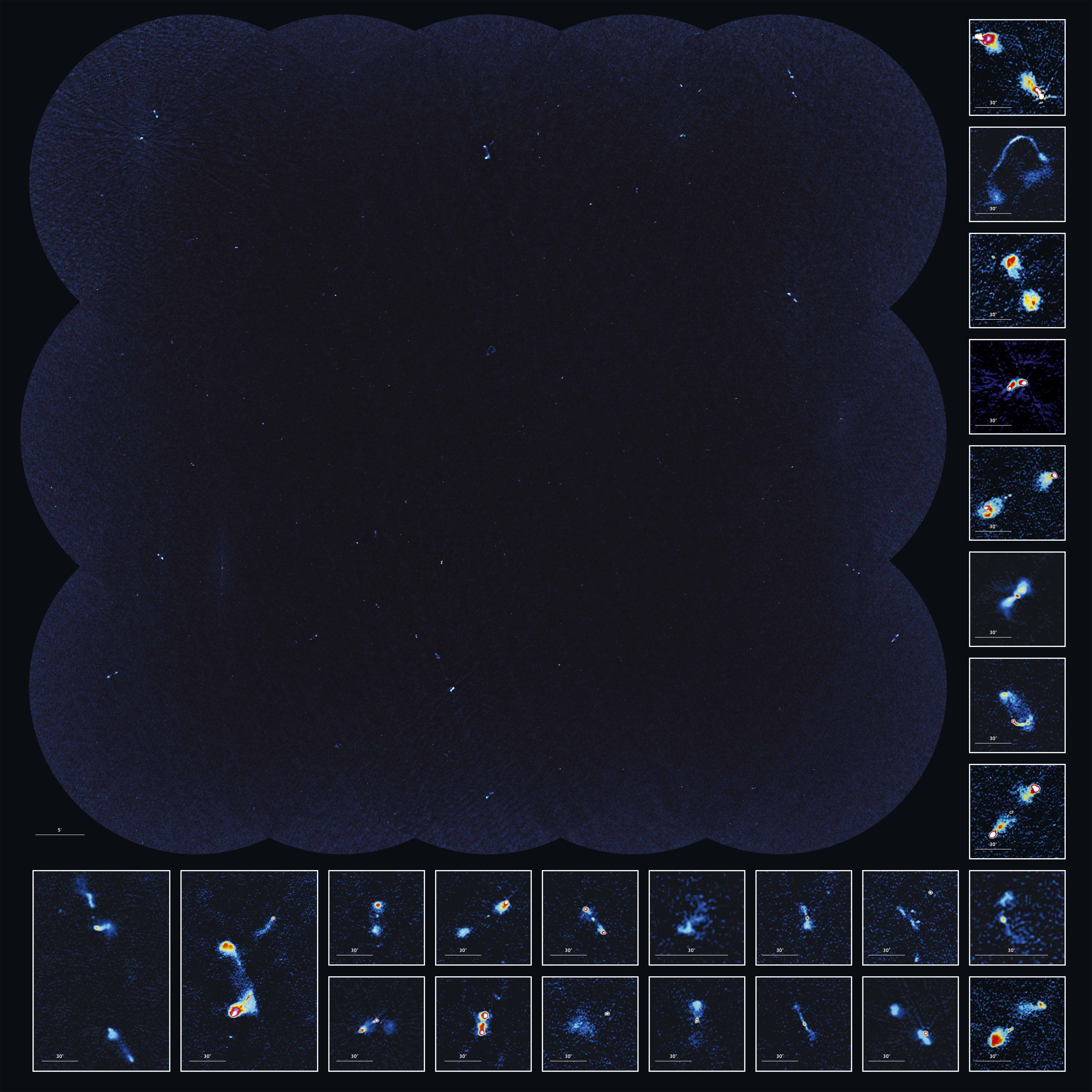
Poster showing the entire field and some zoomed-in radio sources from the VLA-COSMOS project. http://www.mpia.de/COSMOS/
Data from new telescopes, like the low-frequency LOFAR, are yielding some exciting results. One interesting result was the fact that lower-mass galaxies more commonly hosted active galactic nuclei (AGN) seen in the radio in the early Universe, at redshifts of 1 < z < 2. Galaxies with higher masses, however, had about the same fraction of radio-loud AGN at this time. It’s interpreted as being the result of more galaxies accreting matter in what’s known as “cold” or “radiative mode”, thanks to the increase in the supply of cold gas available to galaxies at earlier times (Wendy Williams, U. Hertfordshire).
Cosmology is probably being a bit underrepresented at this conference, since we only had three talks in this session. A lot of the focus was on how detecting very large samples of galaxies (both in radio continuum, like the FIRST and ATLAS surveys in RGZ data, as well as looking at spectral lines like the 21-cm hydrogen line) constrain our cosmological models. Different parameters for both dark energy and dark matter make specific predictions for how populations of galaxies evolve, including their numbers, distributions of sizes and masses, and geometrical arrangement. You can also test cosmology through gravitational lensing at radio wavelengths. It’s promising, but very challenging compared to how it’s done in optical wavelengths due to difficulties in fitting shapes in the raw visibility data (Prina Patel, U. Western Cape).
One of the talks I found really interesting (and new to me) was by Emma Storm, from GRAPPA/U. Amsterdam. She gave a great presentation on how radio observations explore the nature of dark matter. While we don’t know a huge amount about the nature of the dark matter particle, one prominent theory predicts that when they collide, the particles annihilate and produce other particles in the Standard Model that we can directly observe (like pions and gamma rays). If that’s so, then these annihilations would also produce charged particles like electrons and positrons; when those particles are accelerated in magnetic fields, they emit synchrotron radiation, which we detect in the radio. So by looking for radio emission in objects that we expect to be dominated by dark matter (like galaxy clusters), scientists can constrain the parameters of their dark matter models, particularly things like the cross-section. The signal this would produce is expected to be diffuse and weak, though; Emma’s work doesn’t detect radio emission in many clusters, but places important upper limits on the amount that could be there within the detection limits.

Limits on dark matter annihilation cross sections as a function of the particle’s mass. Each curve is an upper limit based on radio observations of a galaxy cluster (from Storm et al. 2013).
The last session of the day dealt with synergy and commensality. I normally hate things that sound like business-speak buzzwords, but in this case it is really important – we have a number of new radio telescopes coming online now or in the next several years, such as ALMA in Chile, LOFAR in Europe, and the Square Kilometer Array in Australia and South Africa. It’s quite important to plan the capabilities and designs of each so that we don’t repeat work unnecessarily, maximize the scientific output, and try to make the data and results available to as many people as possible.
Halfway over already! You can also follow what some of the other people have been discussing at the conference at the hashtag #radsurveys15.
Radio Galaxy Zoo: conferencing in Italy (Day 1)
One of the best things about being a scientist is the opportunity to attend conferences – you get to visit a new place, meet your colleagues in person, learn about what they’ve been doing, and get a chance to share your exciting research with them. I’m lucky (through the assistance of the American Astronomical Society, the Italian National Institute for Astrophysics, and the University of Minnesota) to participate in a conference this week on the future of extragalactic radio surveys in Bologna, Italy. I’m getting my first chance to share results from Radio Galaxy Zoo and to learn about other, new results in the area of extragalactic radio science!
The conference is four days, from Tuesday – Friday; I’m going to try to make a blog post each day. I’m going to try give a quick overview of all talks/posters on the day, as well as more details on talks which I thought were particularly interesting. I know I won’t do justice to many of the interesting research topics being presented, but I won’t have time to give every topic the breadth they deserve.
The first day of the workshop started with several talks covering current and upcoming surveys in radio astronomy. These include radio telescopes in the Northern Hemisphere. The two main telescopes discussed were the Very Large Array (VLA) in New Mexico, USA, which will run surveys like VLITE (a low frequency survey which will run constantly on the telescope in parallel with other observations), and VLASS, a new all-sky survey with many similarities to the current FIRST data in Radio Galaxy Zoo. LOFAR is a low-wavelength radio telescope with stations centered around Europe; it will open up similar resources, but at significantly lower frequencies than the VLA and thus probing different physical phenomena. In the Southern Hemisphere, the EMU survey in Australia and the MIGHTEE survey in South Africa will carry out similar responsibilities.
I gave a talk at the end of this session on Radio Galaxy Zoo, covering our first accepted paper and some of our early science results. If you’re interested, I’ve put my talk online here.

Example slide from Kyle Willett’s talk on Radio Galaxy Zoo at the Bologna workshop.
The afternoon had two sessions on science: one on radio continuum and star formation, and one on radio observations of the transient universe.
I think after the first day that I’m filled with a great sense of optimism about radio astronomy. We’ve got a fantastic new telescope being built in the next several years: the Square Kilometer Array. It’ll be the largest telescope ever built, addressing a huge number of scientific questions. We’re currently in the stage of building prototype telescopes, but those telescopes are already producing useful science – some of which I learned of today. We have a reasonable understanding about how things like magnetic fields affect both the formation and evolution of galaxies. Radio observations have a unique way of detecting and leveraging these detections; through polarization of the radio signal, we can measure the magnetic field and directly probe (through its signal) the interactions with matter between its source and our telescopes. New phenomena like fast radio bursts are, I think, a really neat way of measuring both the amount and distribution of matter in the Universe – this has implications for everything from star formation to cosmology.
Really excited for the rest of the week (including more Radio Galaxy Zoo results) – will post again tomorrow!
First Radio Galaxy Zoo paper has been accepted!
The first Radio Galaxy Zoo paper has been accepted by the Monthly Notices of the Royal Astronomical Society (MNRAS) and is available today on astro-ph. The paper entitled “Radio Galaxy Zoo: host galaxies and radio morphologies derived from visual inspection” outlines the project and provides the first look into some of the science that has come from Radio Galaxy Zoo.
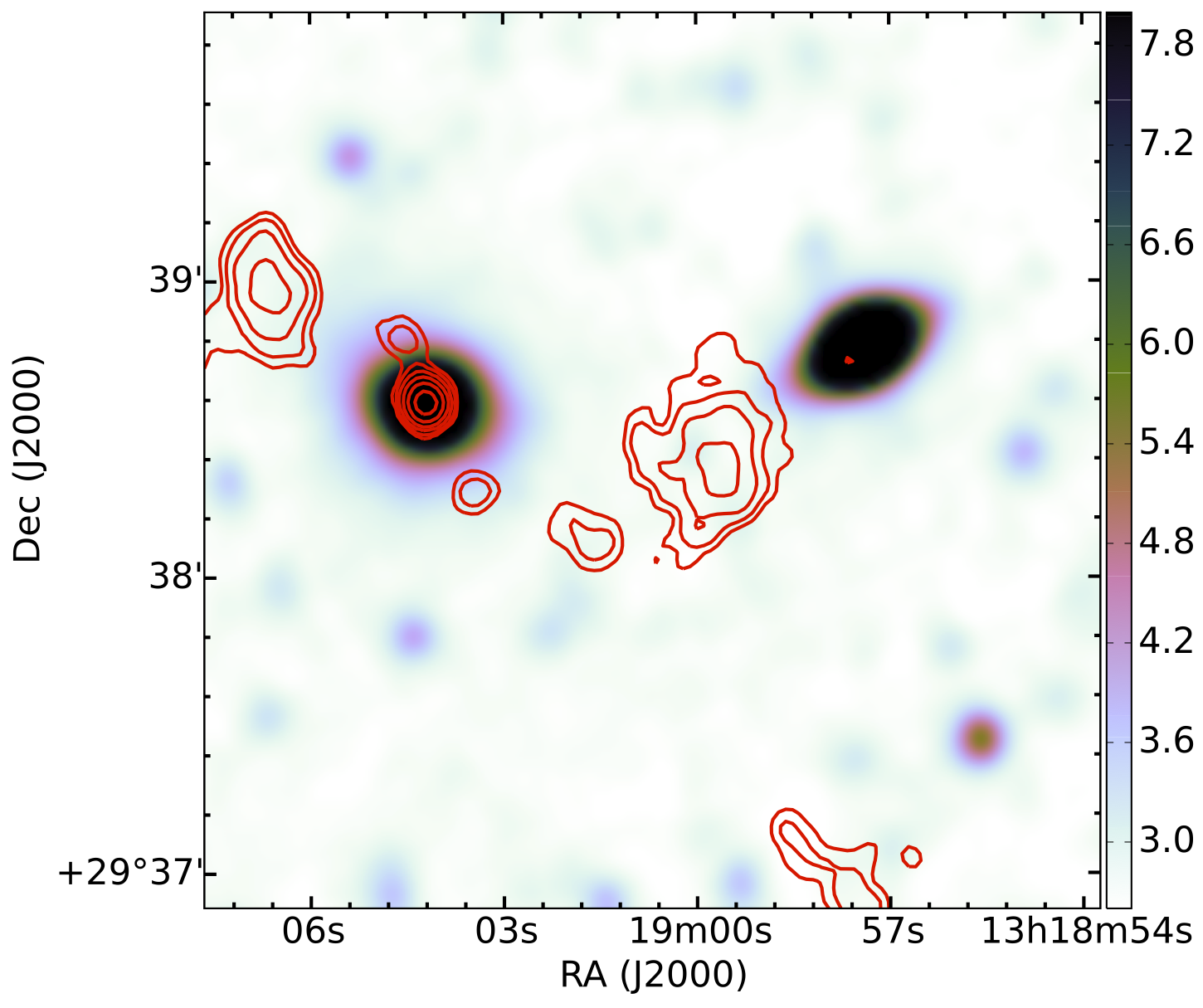
Fig. 1. An example of a galaxy where visual identification of the radio components is necessary. the automated algorithms would have classified the non-core emission as independent sources, whereas RGZ volunteers (in agreement with the science team) find all five radio emission components in the upper half of the image to be related to the same source.
As mentioned in our previous article about the paper, we find that the RGZ citizen scientists are as effective as the RGZ science team in identifying the radio sources and the host galaxies. The project now has over 7500 citizen scientists and their contributions are individually acknowledged at http://rgzauthors.galaxyzoo.org
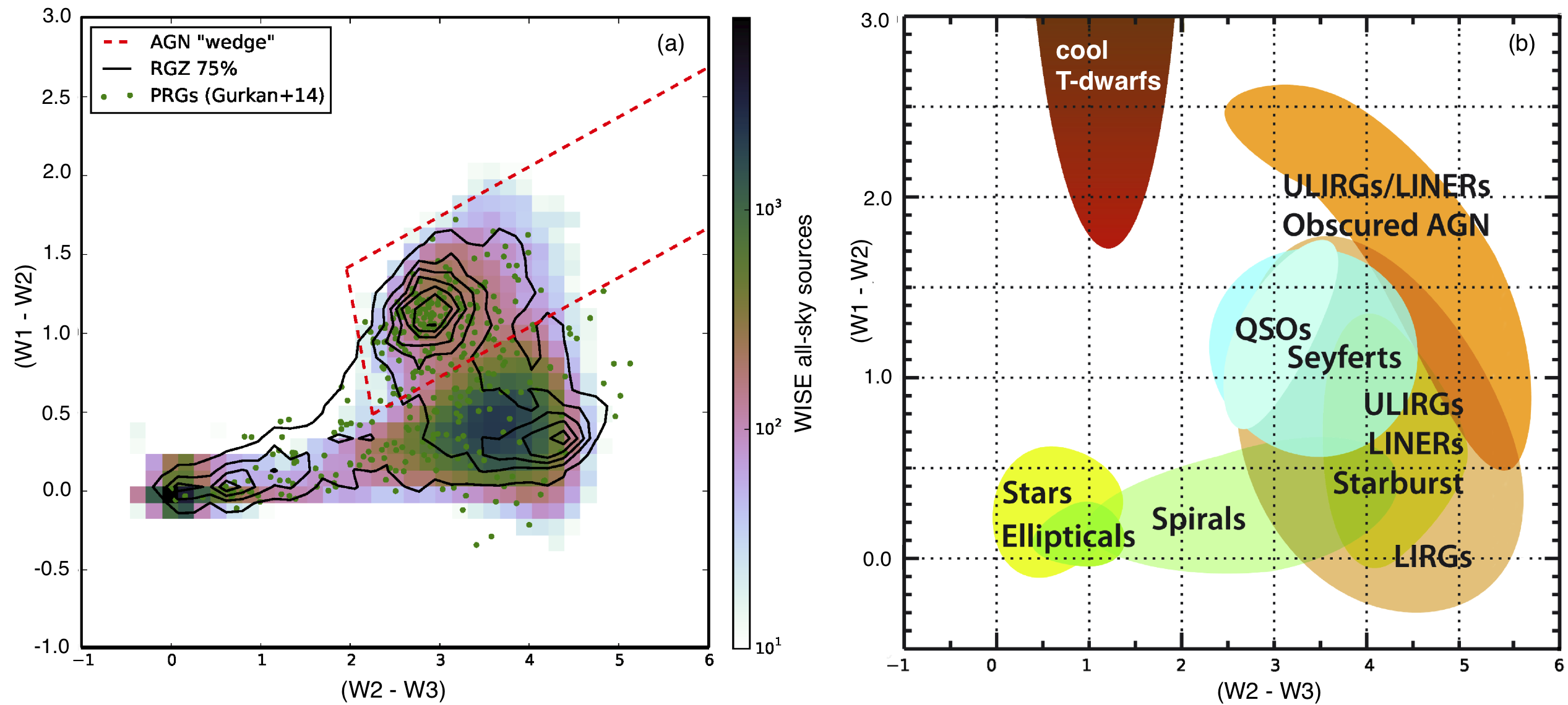
Fig. 2. (a) WISE colour-colour diagram showing approximately 100,000 WISE all-sky sources (colourmap), 4614 RGZ sources (black contours), and powerful radio galaxies (green points). (b) WISE colour-colour diagram showing the locations of various classes of astrophysical objects from Wright et al. (2010).
Using the classifications of the WISE infrared host galaxies, we find that the majority of the host galaxies are located in the WISE colour space consisting of elliptical galaxies, quasi-stellar objects (QSOs), and luminous infrared radio galaxies (LIRGs) – see Fig. 2. Upon closer examination of the RGZ objects that are identified as elliptical galaxies in the WISE W1-W2< 0.5 colour space we note that our current sample shows a possible large population of star-forming galaxies and/or ellipticals with enhanced dust – see Fig. 3.
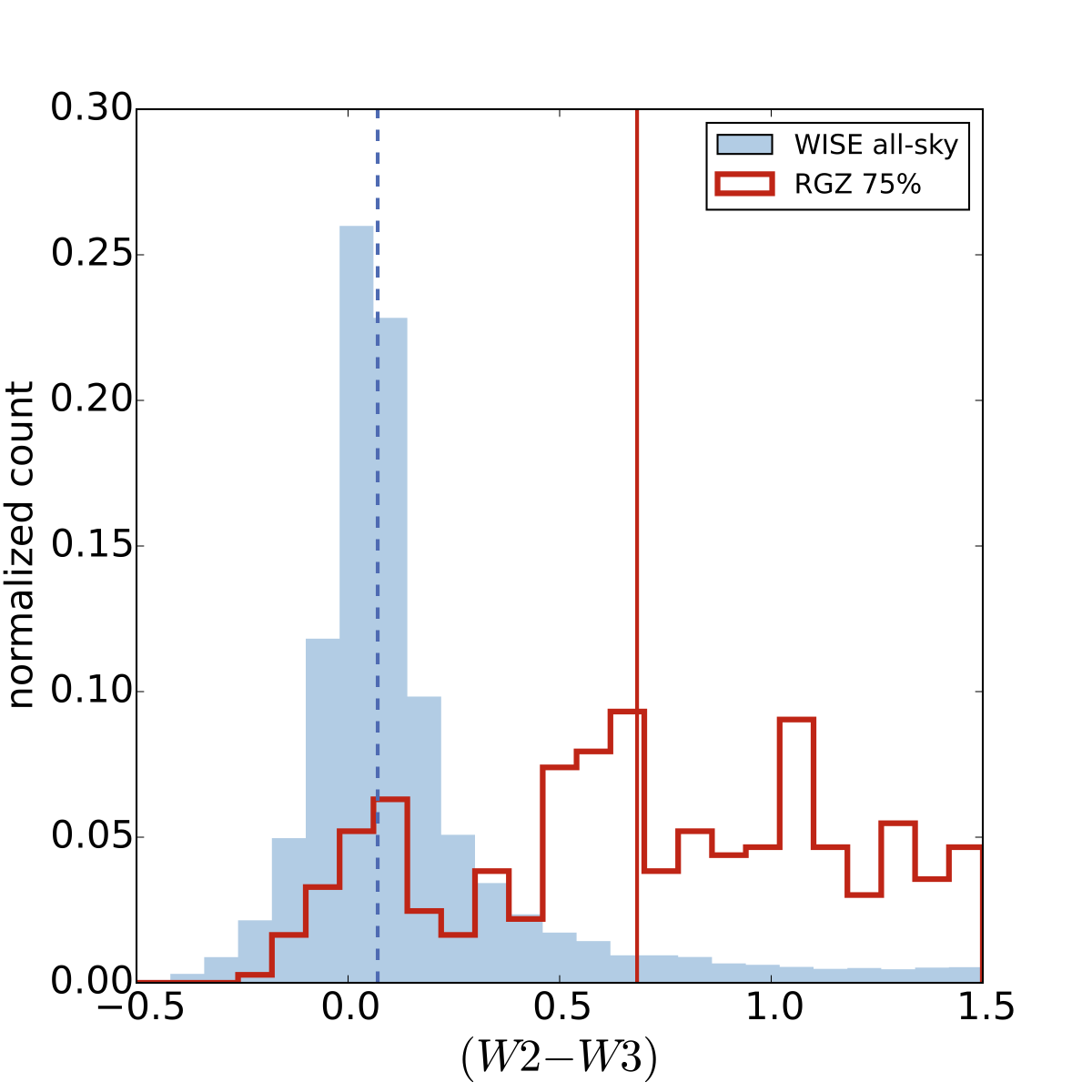
Fig. 3. Distribution of (W2 – W3) infrared colours for objects near the region identified as elliptical galaxies (W1 – W2) < 0.5. Solid and dashed vertical lines show the median colours of the all-sky and RGZ sources. While sources randomly selected from the WISE all-sky sample peak near (W2 – W3) = 0, our current RGZ sample shows a large population with significantly redder colours – possibly from star-forming galaxies and/or ellipticals with enhanced dust.
We still have a lot of radio sources in our project that need classification and we hope to continue the great work from all our citizen scientists and science team. Don’t forget to head over to Radio Talk for interesting discussions on objects or some of the science in general.
Thank you once again for your hard work and support throughout the first years of Radio Galaxy Zoo!
Radio Galaxy Zoo searches for Hybrid Morphology Radio galaxies (HyMoRS): #hybrid
First science paper on hybrid morphology radio galaxies found through Radio Galaxy Zoo project has now been submitted!
 In the paper we have revised the definition of the hybrid morphology radio galaxy (HyMoRS or hybrids) class. In general, HyMoRS show different Fanaroff-Riley radio morphology on either side of the active nucleus, that is FRI type on one side and FRII on the other side of their infrared host galaxy. But we found that this wasn’t very precise, and set up a clear definition of these sources, which is:
”To minimise the misclassification of HyMoRS, we attempt to tighten the original morphological classification of radio galaxies in the scope of detailed observational and analytical/numerical studies undertaken in the past 30 years. We consider a radio source to be a HyMoRS only if
(i) it has a well-defined hotspot on one side and a clear FR I type jet on the other, though we note the hotspots may `flicker’, that is their brightness may be rapidly variable (Saxton et al. 2002), and, in the case the radio source has a very prominent core or is highly asymmetric,
(ii) its core prominence does not suggest strong relativistic beaming nor its asymmetric radio structure can be explained by differential light travel time effects. ”
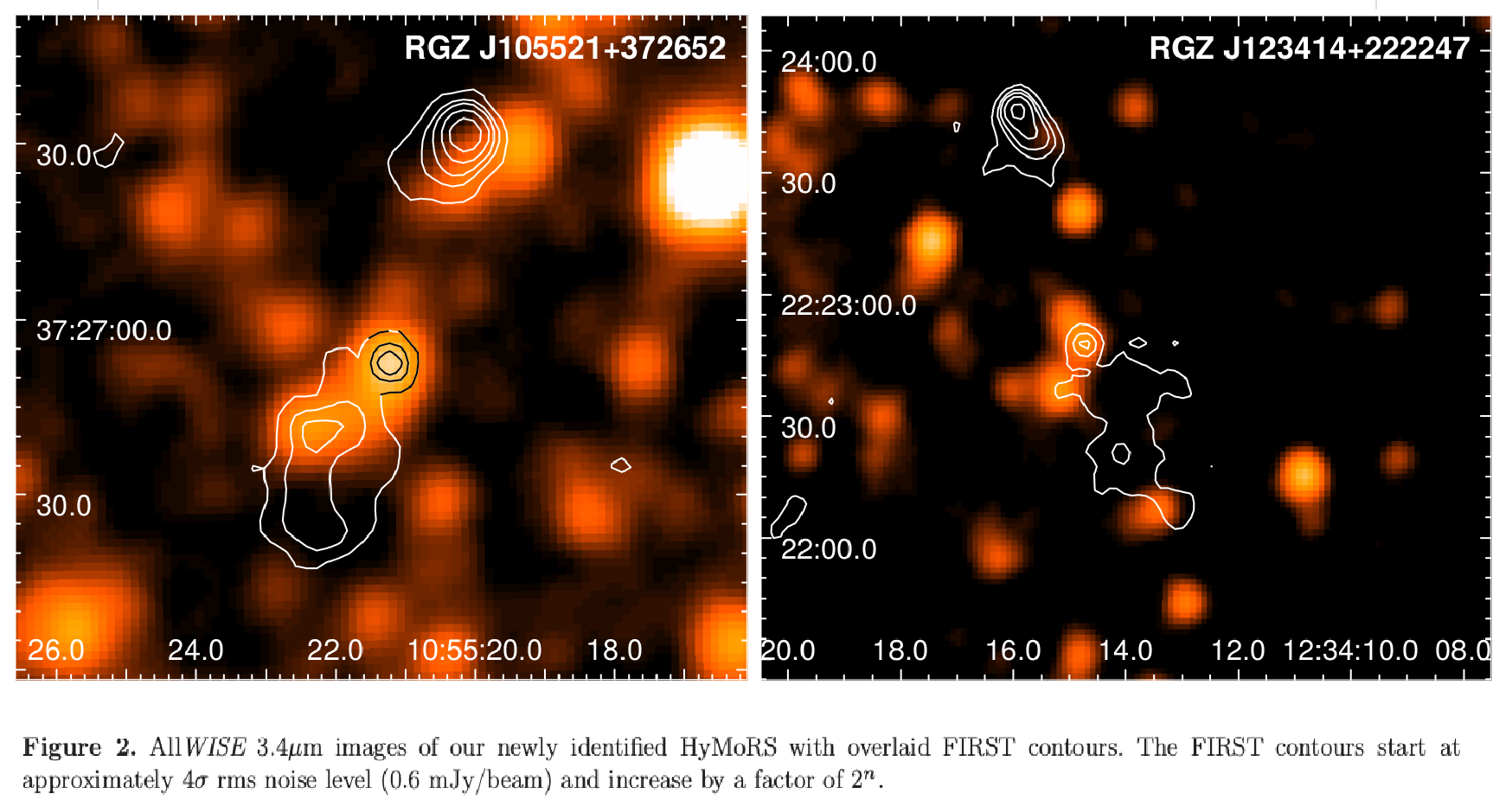
Based on this we revised hybrids reported in scientific literature and found 18 objects that satisfy our criteria. With Radio Galaxy Zoo during the first year of its operation, through our fantastic RadioTalk, you guys now nearly doubled this number finding another 14 hybrids, which we now confirm! Two examples from the paper are below:
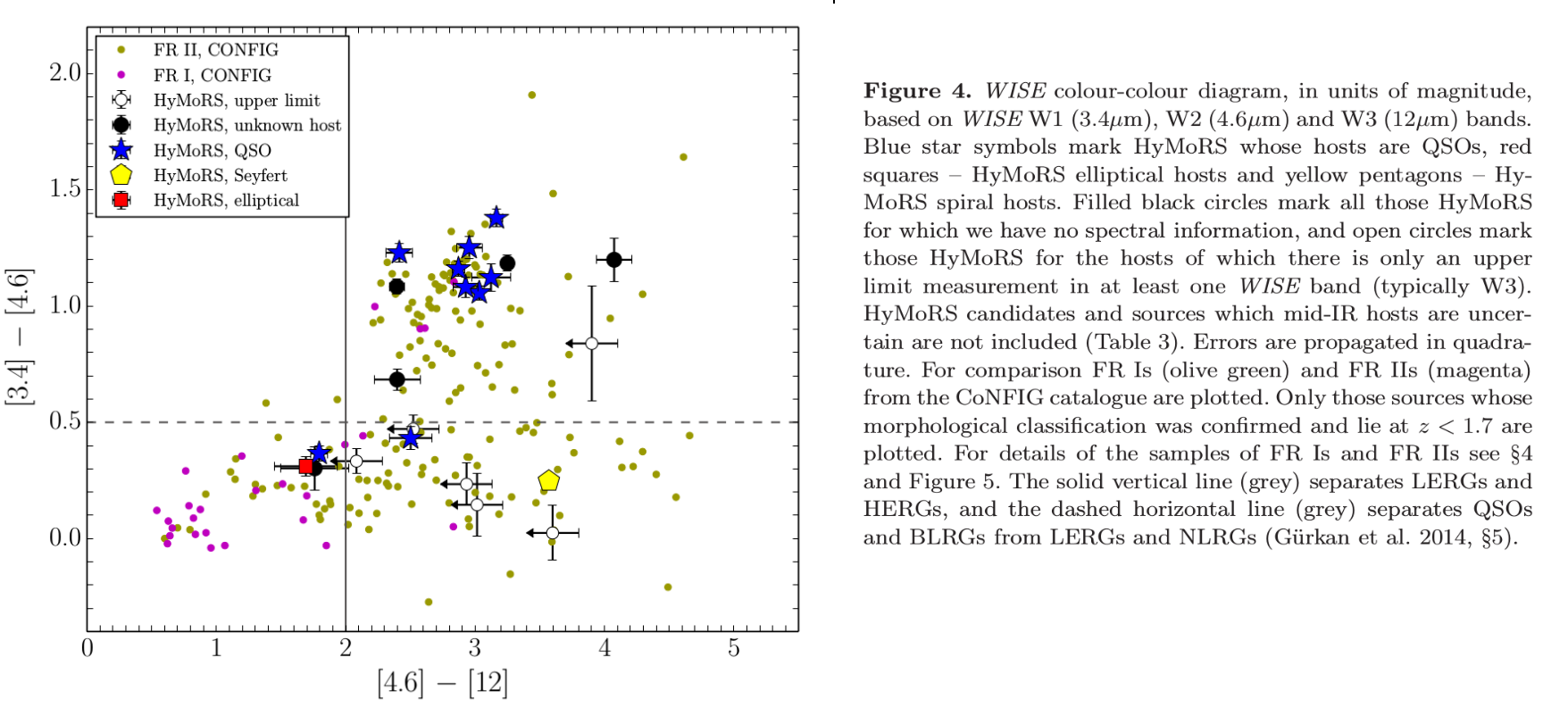
We also looked at the mid-infrared colours of hybrids’ hosts. As explained by Ivy in our last RGZ blog post (https://blog.galaxyzoo.org/2015/03/02/first-radio-galaxy-zoo-paper-has-been-submitted/), the mid-infrared colour space is defined by the WISE filter bands: W1, W2 and W3, corresponding to 3.4, 4.6 and 12 microns, respectively.
The results are below:
For those of you interested in seeing the full paper, we will post a link to freely accessible copy once the paper is accepted by the journal and is in press! 🙂
Fantastic job everyone!
Anna & the RGZ science team
First Radio Galaxy Zoo paper has been submitted!
The project description and early science paper (results from Year 1) for the Radio Galaxy Zoo project has been submitted!

 We find that the RGZ citizen scientists are as effective as the science experts at identifying the radio sources and their host galaxies.
Based upon our results from 1 year of operation, we find the RGZ host galaxies reside in 3 primary loci of mid-infrared colour space. The mid-infrared colour space is defined by the WISE filter bands: W1, W2 and W3, corresponding to 3.4, 4.6 and 12 microns; respectively.
Approximately 10% of the RGZ sample reside in the mid-IR colour space dominated by elliptical galaxies, which have older stellar populations and are less dusty, hence resulting in bluer (W2-W3) colours. The 2nd locus (where ~15% of RGZ sources are found) lies in the colour space known as the `AGN wedge’, typically associated with X-ray-bright QSOs and Seyferts. And lastly, the largest concentration of RGZ host galaxies (~30%) can be found in the 3rd locus usually associated with luminous infrared galaxies (LIRGs). It should be noted that only a small fraction of LIRGs are associated with late-stage mergers. The remainder of the RGZ host population are distributed along the loci of both star-forming and active galaxies, indicative of radio emission from star-forming galaxies and/or dusty elliptical (non-star-forming) galaxies. See the figure below for a plot of these results.
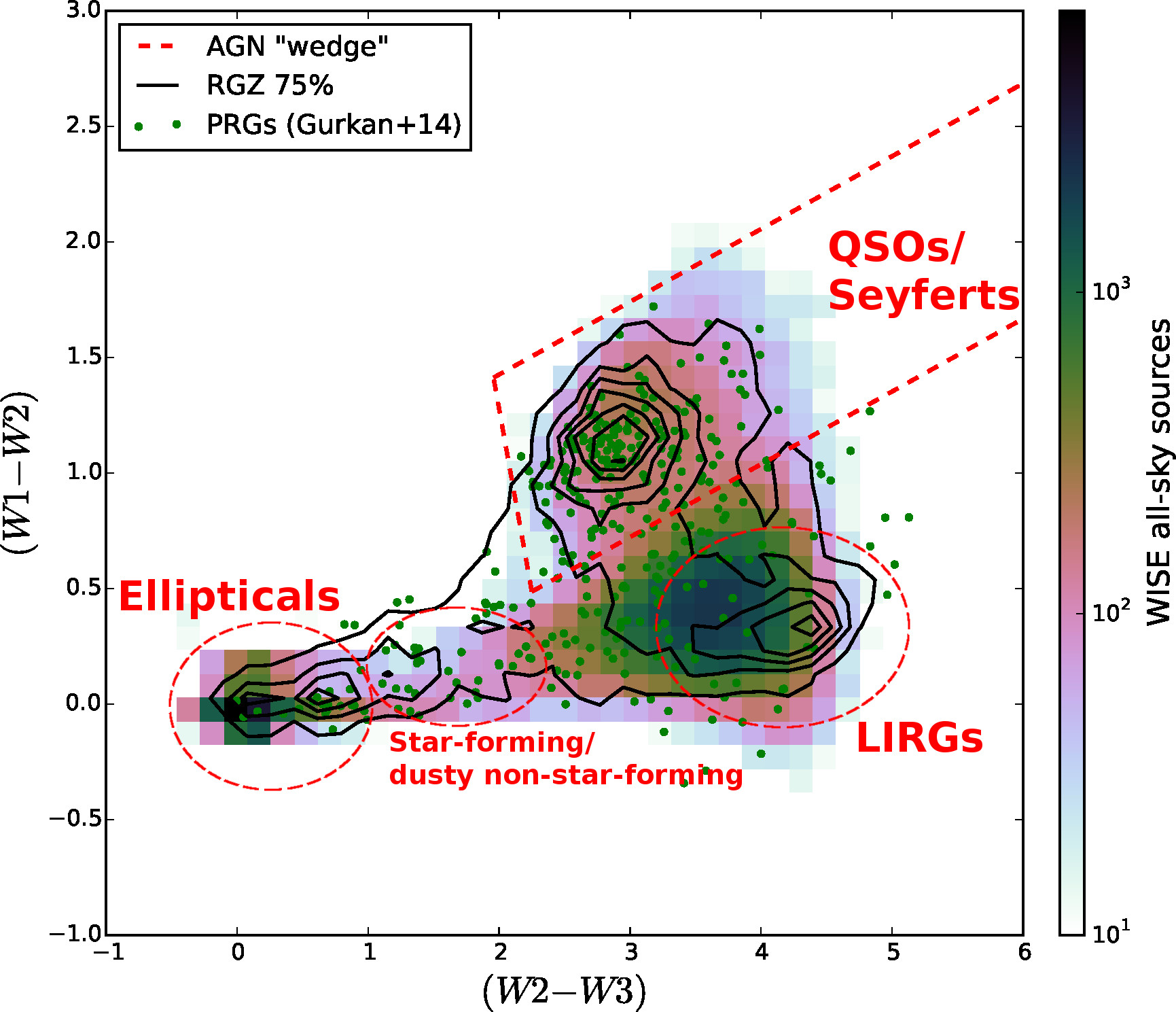 Caption to figure: WISE colour-colour diagram, showing sources from the WISE all-sky catalog (colourmap), 33,127 sources from the 75% RGZ catalog (black contours), and powerful radio galaxies (green points) from (Gürkan et al. 2014). The wedge used to identify IR colours of X-ray-bright AGN from Lacy et al. (2004) & Mateos et al. (2012) is overplotted (red dashes). Only 10% of the WISE all-sky sources have colours in the X-ray bright AGN wedge; this is contrasted with 40% of RGZ and 49% of the Gürkan et al. (2014) radio galaxies. The remaining RGZ sources have WISE colours consistent with distinct populations of elliptical galaxies and LIRGs, with smaller numbers of spiral galaxies and starbursts.
In addition, we will also be submitting our paper on Hybrid Morphology Radio Sources (HyMoRS) in the next few days so stay tuned!
As always, thank you all very much for all your help and support and keep up the awesome work!
Cheers,
Julie, Ivy & the RGZ science team
ATLAS data and Radio Galaxy Zoo: more details
(This post was co-written with Minnie Mao, an RGZ science team member and postdoc at the National Radio Astronomy Observatory in New Mexico.)
Thanks again for starting your work on the new images from the ATLAS survey! We wanted to talk more about how/why these images differ from the existing FIRST images, including details on the telescopes, survey data, and our science goals.
1. What kind of telescopes are used to take the new images?
The radio data in the new images is from the Australia Telescope Compact Array (ATCA), which is located in rural Australia outside the town of Narrabri. The ATCA has 6 separate radio dishes, each 22 meters in diameter. The Very Large Array (VLA), which took the FIRST images, has 27 dishes which are each 25 meters apiece; this means that ATCA has about 1/5th the collecting area of the VLA, and is less sensitive overall. The ATCA can still detect very faint radio objects, but they typically have to take longer exposures (integrate) than the VLA does.

The six radio dishes of the ATCA, located outside of Narrabri, NSW, Australia. Image courtesy CSIRO/Ettore Carretti.
The size of the arrays for the two telescopes is also different. The ATCA has a maximum baseline of 6km, which means that at 20cm (the wavelength used in RGZ images) you have a resolution of ~9 arcsec. This sets the smallest size of structures seen in the radio contours. The VLA has a longer maximum baseline of 36km, which means at 20cm you have a resolution of ~1.2arcsec. The configuration used for the FIRST images in RGZ has a resolution of about 5 arcsec, which is about twice as small as that in the new ATLAS data.
Finally, one of the biggest differences between the two telescopes comes from the arrangement of the dishes, not just their maximum size. The VLA is in a Y-shape which means imaging can be done in relatively short exposures, called ‘snapshots’. The ATCA is in a linear configuration running from east to west. Imaging with the ATCA requires observations over a large range of times so that observations are taken at a variety of earth rotation positions (filling the uv-plane). A full synthesis image with the ATCA requires 12 hours of observing.
The infrared data comes from the SWIRE survey carried out with the Spitzer Space Telescope. Spitzer is an infrared observatory launched by NASA in 2003 and is still operating today. One big difference between Spitzer and WISE is their relative sensitivities and field of view; Spitzer has a bigger mirror than WISE, but a much smaller field of view. Spitzer was designed mostly to study individual objects in detail and at very high sensitivity. WISE, on the other hand, was a survey telescope designed to sweep across the entire sky several times and detect all the infrared objects it could. So instead of mapping the whole sky, Spitzer carried out smaller observations of specific fields.
Spitzer had cameras that could image at a wide range of infrared wavelengths; the new images use Spitzer’s lowest-wavelength filter (3.6 microns) on the IRAC camera. This is almost exactly the same wavelength used for the WISE images (3.4 microns), so these are directly comparable. These near-infrared wavelengths are sensitive to emission from older/cooler stars, warm dust, and light from accretion disks that may surround black holes within galaxies.
2. Where in the sky were these new images taken?
The new images come from two fields in the Southern Hemisphere, called the Chandra Deep Field South (CDF-S) and the European Large Area ISO Survey South-1 (ELAIS-S1). If you know your constellations, these lie near Fornax and Phoenix, respectively.
These fields were chosen specifically so there weren’t bright radio sources in/near the fields. Moreover, these fields have tonnes of ancillary data! The CDF-S is one of the most intensely observed fields in the sky, with deep data from world-class telescopes from radio to gamma-ray! The CDFS (proper) is actually a MUCH smaller region than the ATLAS project observed… but the generally larger field-of-view from the radio telescope enabled a decent chunk of sky to be observed. This is critical to avoid problems such as cosmic variance.

A panoramic view of the near-infrared sky shows the distribution of galaxies beyond the Milky Way. SWIRE covers six small fields; two at the bottom right (Chandra-S and ELAIS-S1) are the ones now included in Radio Galaxy Zoo. Image courtesy NASA/T. Jarrett.
Deep fields like CDF-S and ELAIS-S1 enable statistical properties of galaxies to be determined over cosmic time, and of course understanding how galaxies have formed and evolved is probably the most important extragalactic astronomy question 🙂 These sorts of wide + deep observations also are great for discovering the ‘unknown’… 🙂
3. Why do these images look different than the ones already in RGZ?
This one is fun!! Mostly due to the VLA’s Y-shaped configuration, image artefacts tend to be hexagonally shaped (like a six-sided snowflake). Conversely, ATCA artefacts tend to look like radial spokes.
The ATLAS images also have ~10 arcsec resolution whereas the FIRST images have 5 arcsec resolution so the FIRST images might appear more ‘detailed’.
Both the ATLAS and SWIRE data are much more sensitive than the FIRST/WISE data because the telescopes integrated on this small part of the sky for much longer.
4. Why does the RGZ science team want to cover these fields?<
One reason is that ATLAS is what's called a "pathfinder" mission for an upcoming survey called EMU. EMU will use another telescope in Australia, named ASKAP, to do a deep survey over the entire sky. This is the best of both worlds, combining the sensitivity of ATLAS with the sky coverage of FIRST, and will provide ~70 million radio sources! A pathfinder mission like ATLAS is a smaller version which tests things like hardware, data reduction, and feasibility of larger surveys. We plan on asking citizen scientists to help with the EMU data as well, and so starting on the ATLAS images is a critical first step.
Since the area covered in these images is also much, much smaller than the FIRST survey, it was possible for small groups of astronomers to visually go through and cross-match the radio and IR emissions. Those results were published several years ago (led by RGZ science team member Ray Norris). Getting your results for the same set will help us to calibrate the new data from FIRST, which has many more galaxies and for which we don’t have the same information yet. We also want to see what new objects are left to be discovered in ATLAS (giant radio galaxies, HyMORS, WATs, etc.) that astronomers may have missed!
1 million classifications and beyond!
Huzzah! We have now broken through the 1 million mark with Radio Galaxy Zoo as of January 16, 2015. It has taken all of you ~13 months to do 40 years worth of cross-identifications. Well done and a huge thank you to every single one of you out there who helped us along.
A big shout-out to the winners of our 1 millionth classification milestone competition. The winners are: @planetari7, @ChrisMolloy, @leonie van vliet, @antikodon, @BOSSARD louis michel and @JF45456. I will be e-mailing each of you soon.
My biggest thank you to every single Radio Galaxy Zooite who helped us get this far. We really could not have done this without you.
Sincerely,
Ivy, Julie & the entire RGZ team
New ATLAS images for Radio Galaxy Zoo
Dear Radio Galaxy Zoo volunteers,
Thanks again for all your help so far in classifying radio galaxies through RGZ. We’re rapidly approaching our 1 millionth classification, probably by the end of this week (Jan 15-17) at the current rate. Don’t forget that we’ll be awarding prizes!
In the meantime, we’re excited to announce that we’ve just finished processing a new set of images for RGZ. There are 2,461 new images in total: the radio images are from a survey named ATLAS, carried out by the ATCA telescope in Australia. The corresponding infrared images come from the Spitzer Space Telescope as part of a survey named SWIRE.
Due to the differences in telescopes (ATCA has fewer dishes and a different arrangement of them than the VLA, while Spitzer has a much bigger mirror than WISE) and the depths of the two surveys, the data will look a little bit different. If you’ve done lots of classifications on Radio Galaxy Zoo already, you may notice more elongated radio beams in the ATLAS data, as well as a slightly larger size of the smaller unresolved noise spots. ATLAS can also detect fainter objects than the FIRST survey.
The new SWIRE infrared images have about twice the angular resolution of WISE (it can separate objects down to 3 arcseconds apart) and are more than 20 times as sensitive. That means you’ll likely see more infrared objects in the new images, and might have more choices for likely host galaxies for radio emission.

An example of one of the new ATLAS/SWIRE images for Radio Galaxy Zoo, as seen in Talk. From left to right: radio contours, infrared overlaid with radio, infrared only.
Since the images are mostly similar, the task for RGZ hasn’t changed (in fact, the original tutorial image was from ATLAS data). We’re still asking you to pick out individual radio components (or groups of components) and match them to their IR host galaxies. The new images will be randomly mixed in with the older images; you should see an ATLAS image every 6th or 7th classification, on average. If you’re curious whether a galaxy you’ve just classified is in ATLAS, the easiest way is to look at it in Talk: the new galaxy names will begin with a “C” (eg, “CI3180”) and will have declinations that are negative (eg, -27.782) showing that they’re in the Southern Hemisphere.
We’ll post a longer blog post very shortly with more information on ATLAS, SWIRE, and what we’re hoping to learn from these new images. In the meantime, please post here or on Talk if you have any questions!
And keep up the classifications in the next few days — hopefully you can be our 1 millionth image!
 Galaxy Zoo
