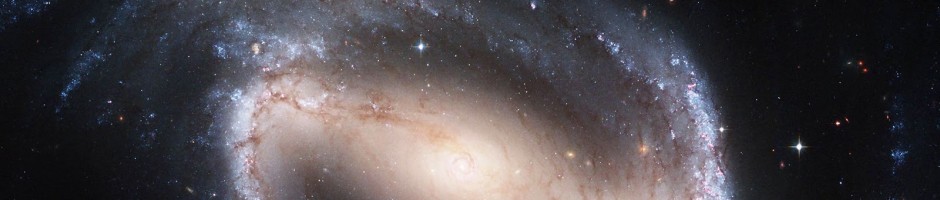
Second paper accepted
Just a quick note to let you know that the second Galaxy Zoo paper has been accepted by the journal, Monthly Notices of the Royal Astronomical Society. This is particularly important as it’s the paper which contains the description of our technique and analysis, so getting this peer reviewed is immensely important.
Hopefully, we’ll be able to write more about what the referee wanted, but in any case I’ll get the new version online later this week. Coming up this week, our 1st birthday – details of Zoo 2 and our plans for the future, some exciting news about lenses and more about Alice’s trip to Oxford.
Chris Meets the Zoo
Galaxy Zoo Get-Together No. 4 – Chris’s RAS Lecture in London
Greetings to all looking forward to Zoo II, and welcome to a taste of its progress. I’d like to invite you on a journey with me in spirit, to Oxford, where I went on Wednesday 11th June. I visited Chris and Kevin at their zookeeper headquarters and had a go at classifying galaxies with a lot of bits of paper and some very thought-provoking buttons.
Public talk – online
I’m giving a public talk about Galaxy Zoo and citizen science tomorrow (Monday) night. If you happen to be in or near Southern Illinois then you can find details here. Otherwise you can watch online either below or, if that doesn’t work, here. It kicks of at 7pm Central time, which is 1am BST or 12pm GMT. http://www.ustream.tv/flash/live/222488Streaming Video by Ustream.TVhttp://www.ustream.tv/IrcClient.swf
Fourth Paper Submitted: Lots of Blue Ellipticals!

Hi all,
The fourth Galaxy Zoo paper has now been submitted for peer review to the Monthly Notices of the Royal Astronomical Society. The paper describes a sample of blue early-type galaxies (ellipticals) found by you guys and compares them to their much more common red counterparts. We’ll make the paper available for download as soon as possible. Since the paper contains some interesting results, we would like to wait until we get the first referee report before making the draft available to the community.
In the meantime, have a look at the footnote on page 1:

Now we have to wait for MNRAS to send the paper to a referee and await her/his report.
In other news, we’ve gotten back the referee report for the second paper (Lintott et al.), which has been very kind and we’re currently discussing the revised version. Hopefully that’ll mean that the second Galaxy Zoo paper will be accepted soon!
Hanny's Voorwerp is Astronomy Picture of the Day (APOD)
Great news, Hanny’s Voorwerp, the mystery blob found by Hanny, has made it to Astronomy Picture of the Day!
http://apod.nasa.gov/apod/ap080625.html
This is a fabulous success for all of us as the Voorwerp continues to intrigue…
Hanny's Voorwerp gets Slashdotted
This is now the second time that Galaxy Zoo got slashdotted. Hooray!
Overlapping galaxies in color and in detail
We’re making progress in working on the Kitt Peak images of overlapping galaxies (encouraged by recently learning that we have 3 more nights this November, so keep those candidates coming in!). Now that various meetings and proposal deadlines are over, there’s some time to show off color composite images and point out some of the things we’re looking at. For most of these galaxies, we took images in two filters – the B band (blue), which lies between the SDSS u and g filters, and the I filter, which used to stand for infrared but nowadays (with the proliferation of genuine infrared imagers at much longer wavelengths) we think of as a red just a bit too deep for our eyes to see. Making a color image takes three filters, not just two. Fortunately, the colors of most galaxies are so well-behaved that we can synthesize the middle filter (green) from the two we have; this is something done pretty often with Hubble images as well. I then pasted the three colors together using a brightness mapping that is logarithmic starting slightly below the sky-brightness level and consistent across the various galaxies – this ends up much like the familiar SDSS color display. But enough of the details – let’s get to the galaxies.
Classifying Ring Galaxies
My name is Ciaran O’Hare, I’m a sixth form student at The Cherwell School in Oxford and I came to the Oxford University Astrophysics department as part of my work experience for Year 12. I was set a task to complete of the course of the week, to sort through hundreds of e-mails from from the users of Galaxy Zoo about the unusual ring galaxies.
Galaxy Zoo Meet-up on Tuesday
Just a reminder (in the absence of the forum) that there’s a Galaxy Zoo meet-up in London this Tuesday. It’ll follow a lecture I’m giving as part of the Royal Astronomical Society’s Lunchtime Lecture Series at their apartments in Burlington House, Picadilly (look for the Royal Academy of Arts). The lecture begins at 1, although you might want to turn up a bit earlier to make sure you get a seat, and we’ll gather in the courtyard outside the RAS at 2 and then go and find somewhere for a late lunch. Hope to see you all tomorrow. Chris
10 JUNE: RAS LUNCHTIME LECTURE: HUBBLE, BUBBLE, TOIL AND TROUBLE: A BRIEF HISTORY OF THE MOST FAMOUS TELESCOPE EVER MADE: BURLINGTON HOUSE, LONDON
Dr Chris Lintott, postdoctoral researcher at the University of Oxford, STFC Science and Society Fellow and co-presenter of the BBC ‘Sky at Night’ will tell the story of the NASA / ESA Hubble Space Telescope (HST), in orbit since 1990. This autumn, astronauts aboard the space shuttle Atlantis will carry out one of the most difficult repairs in history, with the aim of restoring the HST to full working order. Dr Lintott’s lecture will tell the HST story, and look forward to the discoveries still to be made.
The lunchtime lectures are open to everyone and take place in the newly-refurbished Burlington House, the headquarters of the RAS off Piccadilly in central London. The lectures take place at 1pm on the first Tuesday of each month from September to June and the audience can take their seats from 12.45.
The biggest astronomical collaboration in history… just how big?
Chris and I are at the AAS meeting in St. Louis. Chris has been keeping up with the meeting on his blog, and we’ve both given talks about Galaxy Zoo. Everyone here is really excited about what we’ve been able to do with Galaxy Zoo – great job, everyone!

