Greetings from Kuala Lumpur
A couple of members of the Galaxy Zoo team were in Malaysia over the last week at this conference, organised by the University of Nottingham:

On Friday morning Steven and Ramin gave talks featuring our results on how galaxy morphology changes depending on the environment where a galaxy lives, how that affect varies with how massive a galaxy is, and comparing with what we see in terms of galaxy colours. Galaxy Zoo’s clear indication that there is an important population of red spirals in dense environments tied in very well with the theme of the conference and the discussion we’ve had over the past week. Both talks were well received – everyone is really interested in the things we can do with the fabulous dataset you’ve all helped to produce. Our recent startling discovery also received a brief mention!
We’ve featured all this work on the blog before. You can read about it here, here and here.
Everyone agrees that it’s been a really excellent conference, full of interesting talks and useful discussions, and a very enjoyable social side too. We’re already looking forward to the next!
Halfway through, 700,000 galaxies done
We’re now 50 hours into the 100 hours of astronomy, and we’re well on course to hit Galaxy Zoo’s target of a million galaxies in 100 hours. The Zoonometer &trade clicked over 700,000 galaxies this morning which is an incredible response to our call – but not yet good enough!

Keep clicking to get us over the line…
20 Million
With all of the buzz about the Galaxy Zoo Zoonometer™ and our challenge to reach 1 million clicks in 100 hours it’s easy to forget that these 1 million clicks are just part of a much larger total.
Late yesterday afternoon we smashed through the 20 million mark and the Zooite who has the honour of the 20 millionth click is ‘cor riff’. ‘cor riff’ has so far classified 281 galaxies which makes them somewhat of a veteran.
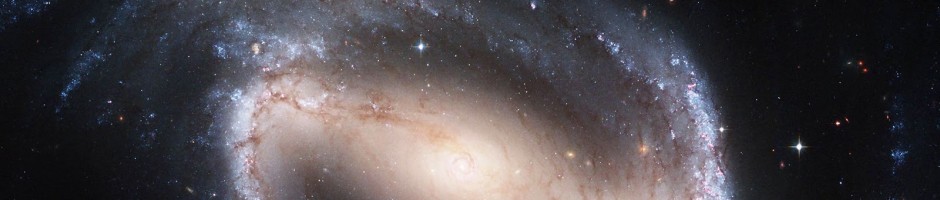
The Galaxy to receive the 20 millionth click? This rather nice (albeit fuzzy) barred spiral. SDSS J154503.53+142521.0

Thanks ‘cor riff’ and all of the other Zooites for your ongoing contribution to Galaxy Zoo. Now back to that Zoonometer™…
Mergers Update
Two recent things:
1) Owing to the poor weather, we’ve had to put in another application to the 30m dish this summer. I shall be sure to track down the fox’s lair with the snow gone in search of my lost champagne. We’ve also submitted a sample of spiral-spiral mergers to be viewed by the William Hershel Telescope on the Canary Islands as part of a ‘Do spirals survive mergers’ project. Should lead to some stunning images if succesful.
2) The original merger paper got split into two because there was so much in it! These were recently placed on Astroph for the whole scientific community to see. You can find them here and here here.
Hopefully the referee will give the go ahead soon for their full publication in the journal MNRAS. We’ll keep you posted!
Hey why does the total keep changing?!
So we’re well on our way now to our target of 1 million clicks in 100 hours. Not that we want to get complacent though – keep classifying everyone!

Being part of Galaxy Zoo gives me the opportunity to combine web technologies with science, a perfect mix! When we came up with the idea of the Zoonometer™ we decided that if possible we’d like the total to update in near-relatime. We launched the Zoonometer™ with it auto-updating every 10 seconds but quickly realised with the sheer number of people coming to Galaxy Zoo, this continual refreshing was causing the database to get pretty slow. So onto version 1.1 of the Zoonometer™. We’re now caching the count and recalcualting the total every minute and I’m pleased to say we’ve significantly lowered the load on the servers.
One side effect of this caching however is that if you refresh the browser you might hit one of the other webservers which has its own internal cached value. There’s nothing funny going on I promise but you sometimes might see the Zoonometer™ jump around a little.
Cheers
Arfon
24 hours in, 76 to go
After the first day of Galaxy Zoo’s 100 hours of astronomy challenge, the response has been excellent. The Zoonometer ™ stands just short of 330,000, so we’re on course and nearly a third of the way there. Of course, the first part is easy, but how will you all do over the long haul?

1 million classifications in 100 hours?
During the lifetime of Galaxy Zoo, we’ve been continually stunned by the response from you, the Galaxy Zoo community, to our requests for help. That said, we thought it was about time we raised the bar and gave you an actual target to aim for, and the International Year of Astronomy’s showpiece event, the 100 hours of Astronomy is the perfect excuse.We’re challenging you to complete 1 million clicks in Galaxy Zoo 2 during the 100 hours. They actually started at midday Greenwich Mean Time, so we’re already underway – as you’ll see if you go to the site to observe our new Zoonometer ™ So if you need a little extra excuse to spend more time on the site this weekend, to drag your friends to Galaxy Zoo, or just a little extra motivation (watching the classifications tick up is very relaxing) then you now have no reason to wait. Get clicking!
Galacticats?
Shortly after the Galaxy Zoo Forum was launched, Vanny diagnosed a serious condition among many users: Galaxyzooitis. Symptoms include red eyes and tiredness, a lack of interest in the real world, expecting to see mergers, asteroids and satellites in the sky, seeing galaxies whenever the eyes are closed, an inability to stop talking about galaxies (a secondary symptom of this is incomprehensibility and a new reputation for nerdiness in the family), and, finally, an enhanced ability to see (and classify!) galaxies in Earthly phenomena such as clouds, writing and coffee.
This led to a collaboration between myself and NGC3314, Georgia, Archi, Caro, Infinity, Milk_n_cookies, Paddy, Pat, Scaryitalian, Sophie 378 and Thornius, all of the Galaxy Zoo Forum. We have discovered a new class of galaxy, namely the Galacticat.
A startling discovery in the latest paper from the Zoo
This morning the latest paper from Galaxy Zoo appeared on astro-ph — “Galaxy Zoo: an unusual new class of galaxy cluster”. Authored by two of the Galaxy Zoo team’s newest recruits, Marven F. Pedbost and Trillean Pomalgu, this four-page paper presents a remarkable new discovery, which may require us to revise our fundamental ideas about either our place in the universe or the occurrence of unlikely events. The abstract gives a concise summary:
We have identified a new class of galaxy cluster using data from the Galaxy Zoo project. These clusters are rare, and thus have apparently gone unnoticed before, despite their unusual properties. They appear especially anomalous when the morphological properties of their component galaxies are considered. Their identification therefore depends upon the visual inspection of large numbers of galaxies, a feat which has only recently been made possible by Galaxy Zoo, together with the Sloan Digital Sky Survey. We present the basic properties of our cluster sample, and discuss possible formation scenarios and implications for cosmology.
To find out more, you can download a pdf file of the paper here.
A visit to Apache Point
Last week, I had the opportunity to visit Apache Point Observatory, where the photons providing data for the Sloan Digital Sky Survey are gathered safely to Earth and their final digital form. The observatory is situated at the edge of a ridge in the Sacramento Mountains of New Mexico, near the solar observatory complex at Sunspot. (Back when that was built, the astronomers obviously had a hand in picking the route number of the highway leading from the town of Cloudcroft – spectrum aficionados will recognize the New Mexico highway number). At its elevation of 2800 meters (9200 feet), there were still patches of snow despite being able to look out across desert below. The steep western face of the mountains looks out across the White Sands, both the gypsum-rich dune field and the historic rocket test range of the same name (and the landing strip once used by a space shuttle when the weather was terrible on both coasts of the US). Read More…
 Galaxy Zoo