New Galaxy Zoo Paper Accepted For Publication!
A paper that uses Galaxy Zoo: Hubble to study whether supermassive black holes are fueled by galaxy bars beyond the local universe has recently been accepted! The paper will be published in MNRAS, but for a short summary, here is the original blog post.
Radio Galaxy Zoo: “gold standard” images and improving our calibration
First off, the science team for Radio Galaxy Zoo wants to thank our volunteers for their continued clicks, discussion on Talk, and continued participation in the project. As of today, we have 892,582 classifications on RGZ and over 45,000 subjects completed from the FIRST-SDSS sample. We absolutely could not do this without you, and we’re working hard on turning the data into interesting science.
We want to let you know of some particular galaxies that will be appearing slightly more often in the interface. One of the things I’ve been working on for Radio Galaxy Zoo over the last month is finding better and smarter ways of combining clicks from independent classifiers into the “final answer” for each galaxy. For past Zooniverse projects, we’ve been able to do this using relatively simple methods – users are weighted a little bit by their consistency with other volunteers, but the final data product is mostly just the vote fractions for various tasks. However, the task in RGZ is a bit more complex, and the simpler methods of combining classifications are proving very difficult. In order to accurately combine the information each volunteer gives us, we need to establish a bit more common ground than we currently have.
To calibrate the clicks across all citizen scientists, we need to look at galaxies that the same people have done. The science team has started this by labeling the correct morphologies (to the best of our abilities) for a smaller, “gold standard” sample. We use these as seed weights in our data reduction – that lets us calibrate users who have done the gold standard galaxies. These results are propagated outward to the full sample by looking at other galaxies done by both calibrated and uncalibrated users, and so on. Kind of like pulling ourselves up by the bootstraps. 🙂

Result of the science team classification of a small sample of 100 RGZ galaxies. The height of the bar represents how well a particular science team member agreed with the others. As a group, the results show very good consistency overall, near 90%. Using the results from this sample, we can apply similar calibrations to the tens of thousands of galaxies that RGZ citizen scientists are helping us with.
What we’re missing right now, though, are galaxies that lots of citizen scientists have jointly classified. Since each galaxy is retired after 20 people classify it, the chances of seeing a particular galaxy is pretty low. Some members of the science team, including myself, recently sat down with a sample of 100 galaxies taken from a combination of random selection and ones you’ve identified on Talk as having interesting or non-trivial morphologies (bent jets, triple systems, giants, no IR counterparts, etc). These is what we’d like to use for calibration. However, only about a dozen users so far have done enough of this sample to give us enough data for calibration.
So, in order to help the accuracy of the data pipeline, we’ve chosen 20 “gold standard” galaxies that will eventually be shown to all volunteers. They won’t all be in one bunch (you should see one every five subjects or so) and you shouldn’t see any galaxies that you’ve classified before. We’ll label the galaxies on Talk – look for the hashtag #goldstandard. I hope that another positive outcome will be users getting to discuss interesting features in galaxies that they haven’t come across before. After you’ve done all 20 galaxies in the sample, your future classifications will be randomly selected as usual.

ARG0001e8e – a very nice core + hotspot system, and slightly challenging morphology to classify. This is one example of the 20 “gold standard” galaxies we’re trying to have everyone in RGZ classify.
Please let us know on Talk if you have any questions about this, and I’ll be happy to discuss it further. Thanks again for all of your help – we hope this will let us produce a more accurate RGZ product and science papers in the coming year!
RGZ Team Spotlight: Minnie Mao
Meet Minnie Mao, leading the study of spiral double radio lobe AGNs (or S-DRAGNs) for Radio Galaxy Zoo.
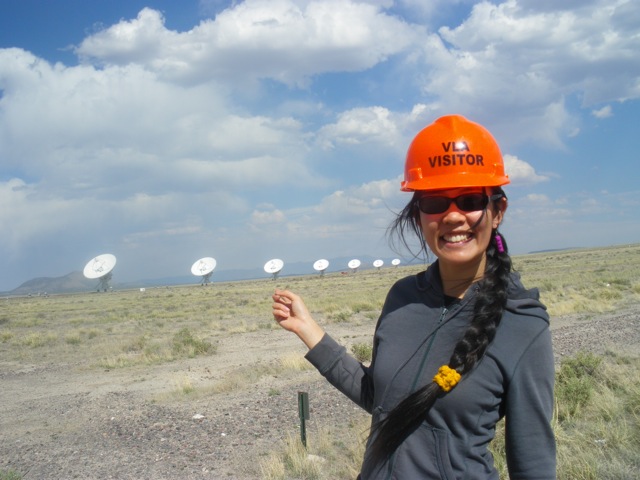 Hello! My name is Minnie and I am a VLA postdoc at NRAO in Socorro, NM. Astronomers use a lot of acronyms, and often are not very creative with telescope names/ VLA stands for ‘Very Large Array’, which is where some of the Radio Galaxy Zoo radio images come from!
I did my PhD at the University of Tasmania with Ray Norris (yup, THE Ray Norris), Jim Lovell, and Rob Sharp. We used optical data cross-matched with radio data from the ATCA (Australia Telescope Compact Array, where the rest of the RGZ radio images come from) to determine how galaxies have changed across cosmic time. A large chunk of the PhD was spent staring at images of radio galaxies, classifying their morphology, and determining their counterparts in optical/infrared images. While this can be a lot of fun, the Universe is rather large so I am glad I can now share this job with the wonderful zoo-ites!
One of my primary reasons for being involved in RGZ is because I am excited for the day when radio images become as familiar to people as optical images. To this end I hope you enjoy RGZ, because really, what is more fun than peering far back into the nether-reaches of the Universe?
Galaxy Zoo: Are Bars Responsible for the Feeding of Supermasssive Black Holes Beyond the Local Universe?
Supermassive black holes are thought to reside in the centers of most galaxies. These massive objects can produce powerful jets of energy that may significantly influence the evolution of their host galaxies. While we believe that black holes have an important role in galaxy evolution, a crucial unknown aspect about black holes is how they are fueled and turn into active galactic nuclei (AGN).
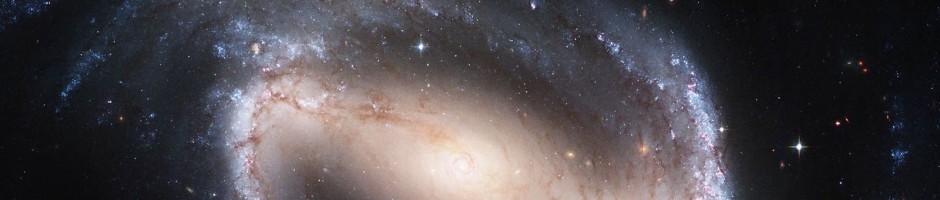
Among the proposed black hole fueling processes, bar-driven secular evolution is among the most popular. Bars are linear structures of stars that stretch across the centers of galaxies. They are theorized to fuel black holes by driving gas from the outskirts of galaxies into the very centers, where supermassive black holes lie.
Previous studies have tested whether bars can fuel black holes by examining whether there is an excess of bars among AGN hosts compared to non-AGN hosts. For the most part, those works found that there was not a significant enhancement of bars among AGN hosts, leading them to conclude that bars do not fuel black holes. But almost all these previous works were limited to the local universe, i.e., in the present, where the number of AGN is the lowest across cosmic time.
In this work, we investigate whether there is an excess of bars among AGN hosts beyond the local universe, i.e., in the distant past, up to 7 billion years ago. In this epoch, the number of AGN hosts is much higher, giving us a better glimpse of the identity of the black hole fueling mechanism. To conduct this experiment, we created two samples: 1) a sample of AGN hosts and 2) a carefully constructed control sample of non-AGN hosts that are matched to the AGN hosts. In order to create the largest samples possible, our experiment utilized three of the most popular extragalactic surveys: AEGIS, COSMOS, and GOODS-S. With these samples, we used the Galaxy Zoo: Hubble bar classifications to identify barred galaxies. Below is a gallery of 6 sets of AGN and their corresponding control galaxies, 2 sets from each survey.

Our main results are shown in the figure below. We have two probes of bar presence—bar fraction (left) and bar likelihood (right)—for the AEGIS, COSMOS, and GOODS-S surveys.

We find no statistically significant enhancement in the bar fraction or the bar likelihood in AGN hosts (green squares) compared to the non-AGN hosts (purple triangles). Our results, combined with previous works at the local universe, indicate that bars are not the primary fueling mechanism for supermassive black hole growth for the last 7 billion years. Moreover, given the growth of supermassive black holes over cosmic time, our results imply that bars are not directly responsible for the buildup of at least half the local supermassive black hole mass density.
Therefore, although among the most popular fueling mechanisms, it seems that bars do not fuel black holes. However, this result does narrow the search for the real black hole fueling mechanism.
The Hunt Is On
One of our scientists Prof. Ray Norris put the call out to the Radio Galaxy Zoo community for a hunt on spiral galaxies hosting powerful radio sources. The first known galaxy of this type is 0313-192, a galaxy much like our Milky Way and has left astronomers baffled.
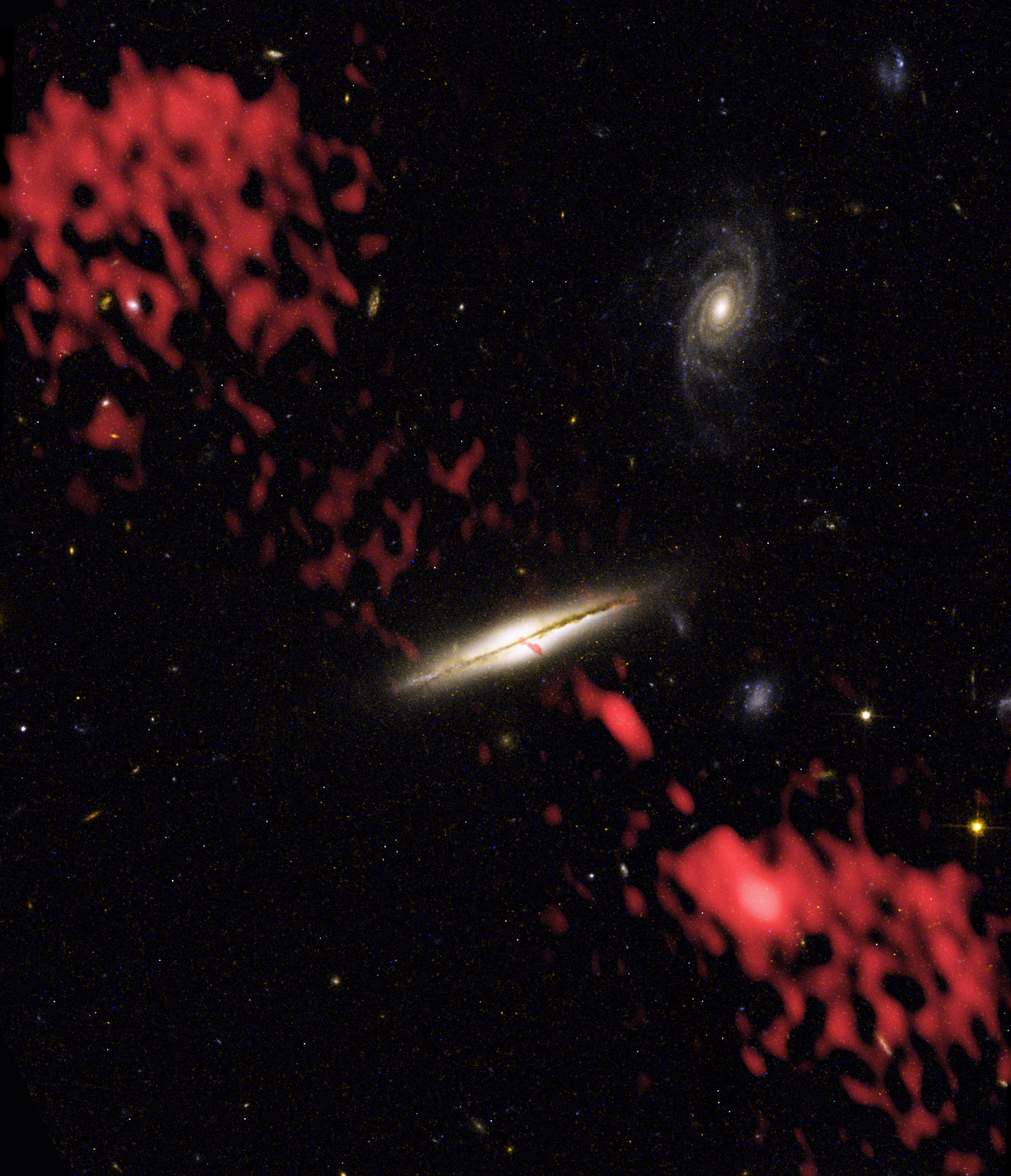 Figure 1: 0313-192 The wrong galaxy from the Astronomy Picture of the Day. Credit: W. Keel (U. Alabama), M. Ledlow (Gemini Obs), F. Owen (NRAO, AUI, NSF, NASA.
Here is Prof. Norris’ post:
Keep an eye out for any hourglass sources that seem to be hosted by galaxies that look spiral in the infrared. These objects are incredibly rare in the local Universe (only 2 or 3 known) and we may not see any in Radio Galaxy Zoo, but if someone does find one, that would be worth writing a paper about (with the discoverer as co-author, of course). The rarity of radio-loud spirals is thought to be because the radio jets heat up and disrupt the gas in the spiral, switching off star formation, and turning the galaxy into a “red dead” elliptical. But we might find one or two where the jets have only just switched on and haven’t yet destroyed the spiral. See The radio core of the Ultraluminous Infrared Galaxy F00183-7111: watching the birth of a quasar for another example of this process in its very early stage. So keep your eyes peeled and yell out (very loudly) if you find one!
We are pleased to announce that the Radio Galaxy Zoo community has identified over a dozen potential candidates and we are in the process of following these up.
Have you seen any? Head over to Radio Galaxy Zoo to join in on the hunt and let us know what you find.
RGZ Team Spotlight: Julie Banfield
Meet Julie (aka @42jkb on RadioTalk), a project scientist on Radio Galaxy Zoo!
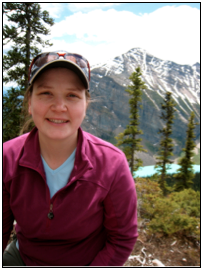 I’m a postdoctoral fellow at CSIRO Astronomy and Space Science in Australia. This is my first position after obtaining my PhD from the University of Calgary, Canada working on magnetic fields of radio galaxies. My first memories of astronomy and the wonders of the Universe were spending summer nights outside at campfires with my family staring up and counting the number of “shooting stars” we could see. It wasn’t until my second year of undergraduate studies at Western University in Ontario Canada that I considered doing astrophysical research; I was actually going through to be an airline pilot! I haven’t looked back at my decision to change into physics and astronomy and everyday I am amazed at the complexity and beauty of the Universe.
I spend my time researching magnetic fields and how important they are to radio galaxies. You can usually find me at the Australia Telescope Compact Array taking observations of all types of radio galaxies, sitting in front of a computer doing the exact same thing as Radio Galaxy Zoo, learning about life from my daughter, and educating myself on the wonderful country I now live in. I am excited about what Radio Galaxy Zoo has to offer the astronomical community and what the Universe will unfold for us through this project. Thank you for taking part!
Thanks for the photons Hawaii – Last night of the CSO run

Image Credit: Caltech/CSO
Hi, I’m Meg Schwamb (normally from Planet Hunters and Planet Four), but not to fear, I’m not here to talk about planets. With the Oxford Galaxy Zoo Team, I’ve been helping to observe on the Caltech Submillimeter Observatory on Mauna Kea. Chris blogged about our first night. I thought I’d give a quick update, before final preparation for the start of tonight’s observing.
It’s been quite a world-wide effort. I’m currently based in Taipei, Taiwan. So I’m remotely logging into the telescope and instrument controls from home while Chris, Brooke, and Becky have been logging in remotely from Oxford Zooniverse HQ. Then we’re in a Skype call, so we can communicate and know who’s commanding the telescope and helping support the person running the observation.
Chris and the Zooniverse’s Rob Simpson talked more about the details of why we’re observing with the CSO these past few nights and what the experience has been like on their latest episode of Recycled Electrons, which you can find here.
The weather the past few nights hasn’t been great, we were closed Sunday night in Hawaii, we opened part of the night last night and closed due to high humidity in the middle of the night and never reopened. A few hours ago, the primary observers whose time this is, made the call that the conditions are not good enough for their project, but they are good enough for us to observe. Since I’m 7 hours ahead of the UK, one of my tasks is to be checking the Mauna Kea weather reports and waiting for the decision from the lead observer of the primary program. So about an hour ago, I phoned to start waking up the Oxford team.
The conditions are looking pretty good on the mountain. So I think we’ll have a smooth night in turns of humidity and wind. The optical depth is looking as good as our first night. I’m off to start my final checks and preparations, as I’m the lead observer of tonight’s observers (which includes Becky and Brooke in Oxford), so I make the calls of when to open, close, when we move to the next target.
If things are moving smoothly, we’ll try and update the blog occasionally. In the meantime, enjoy the view of sunset from of the CFHT webcams on the submit of Mauna Kea.

Image Credit: CFHT webcam http://cfht.hawaii.edu/webcams/index.php?cam=c4
9:42pm Hawaii time – We’re all pointed on source and taking data. Been on there observing for about an hour now. We”ll move off soon to do a pointing check on a carbon star and then back integrating on our target galaxy. (Meg)
1:03am Hawaii time- We’re still on the same target. We were thinking of maybe moving off, but decided to stay on to see what some other features in the data look like with more time. We’ll be moving to our end of night source in about 40 minutes, and sit on that for the next several hours. Becky and Brooke are driving the telescope (Meg).
2:49am Hawaii time – Weather continues to about the same. We’re on to another source. Below here’s an image of the spectrograph data GUI windows that we see. The telescope has two spectrographs that simultaneous take data on the source. The bottom one FFTS2 covers a broader range and is higher resolution than the top spectrograph (FFTS1)

Live Output from the Spectrographs We’re Using Tonight
4:05 am – We’ve decided to stay on the same source for the rest of the night. So we’re just going to be sitting and taking observations on source then a system temperature calibration and then back to observing on source for the rest of the night. We shut an hour before sunrise so around 4:42am Hawaii local time (Meg).
Sunset in Hawai’i

Hello from the summit of Mauna Kea, Hawai’i! We’re here to follow up on a host of Galaxy Zoo blue ellipticals, trying to use the Caltech Submillimeter Observatory to catch the signature of Carbon Monoxide – gas which might provides the fuel for star formation.
Sadly, we’re not in Hawai’i – I’m in the office in Oxford (my sunrise is below), Becky is in Bristol and we’re joined by Meg Schwamb from Planet Hunters on her first extragalactic observing run. Conditions look good, if a bit windy, and I’ll try and keep you informed as the night wears on.

Chris
EDIT: We have an open dome and the weather is looking good. Here’s a dark webcam image you can squint at to pick out a telescope and sky.

And first observations for calibrations are on Mars! Here’s an excitingly noisy spectrum with a nice broad absorption line in the middle – you’re looking at CO (carbon monoxide) in the atmosphere of Mars. The width can even tell you about the current wind speed on Mars. From Oxford to Hawaii to Mars to back to you at home.

Becky
EDIT : Well, that was interesting. It turns out it helps if you know a telescope – none of us have used the CSO before and it’s been quite hard work to get our heads round the right software. Still, we successfully observed our first target – an unprepossessing, rather distant blue elliptical by Sloan standards (see below) and on first glance didn’t quite see anything. It set before we could quite confirm that there was nothing there to see, and we’ve moved on to a second galaxy, stopping off on the way by a cool star in order to calibrate the system.

EDIT : End of a long night. One disadvantage of observing remotely is that we have to be very cautious, so we’re commanded to shut the telescope an hour before sunrise. We got data, certainly, but it’s not one of those nights in which wonderous things are apparent immediately. We have more chances for the rest of the week if the weather cooperates, so watch this space.
A perfect woollen gift for the SEVENTH anniversary
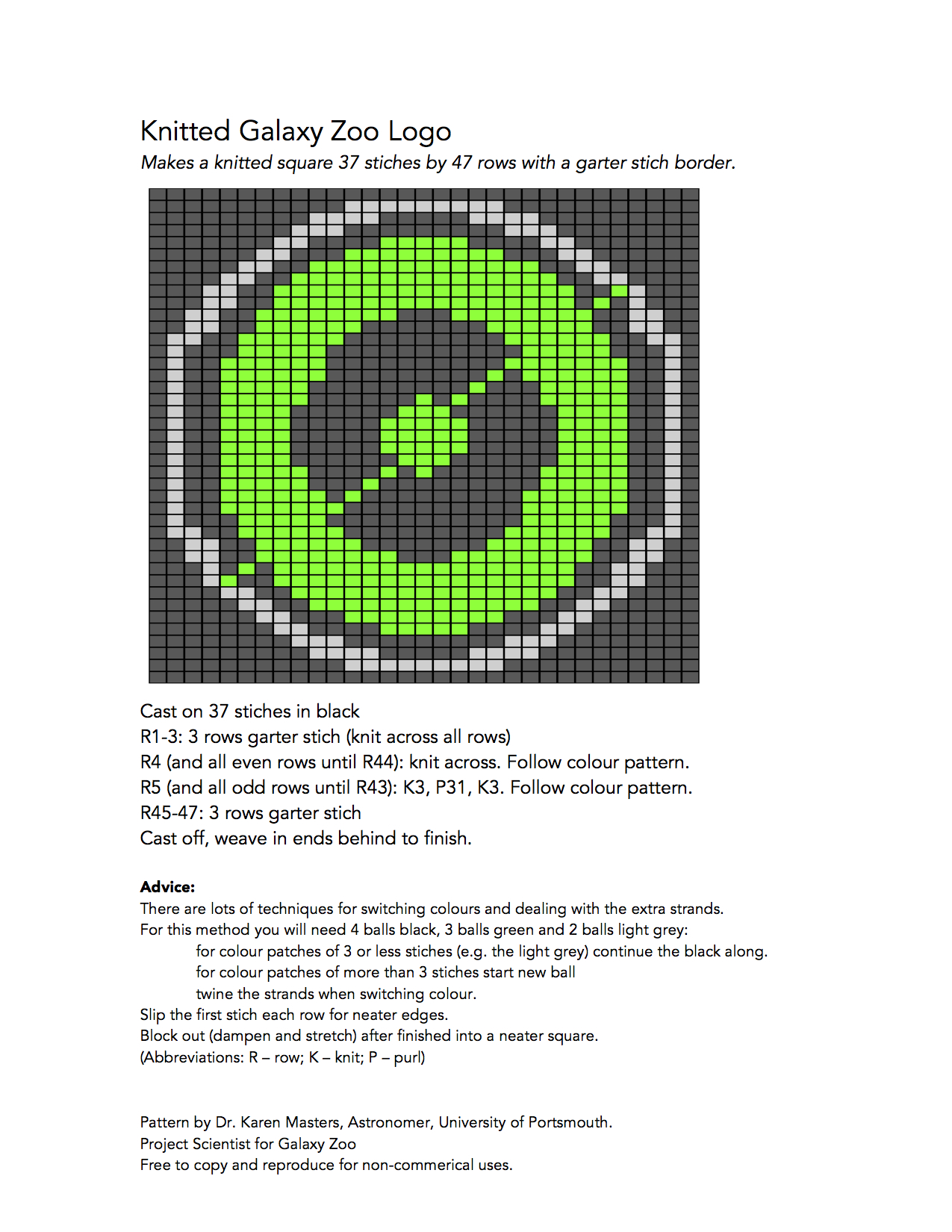
In the UK on a seventh anniversary the traditional gift is one made of wool. So considering it’s the SEVENTH anniversary of Galaxy Zoo TODAY (July 11th) our very own, super talented Karen Masters has knitted us the Galaxy Zoo logo!
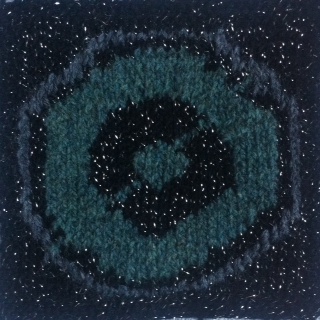
If you feel like getting your astronomical knit on for this momentous occasion, here’s a few inspirational photo’s.
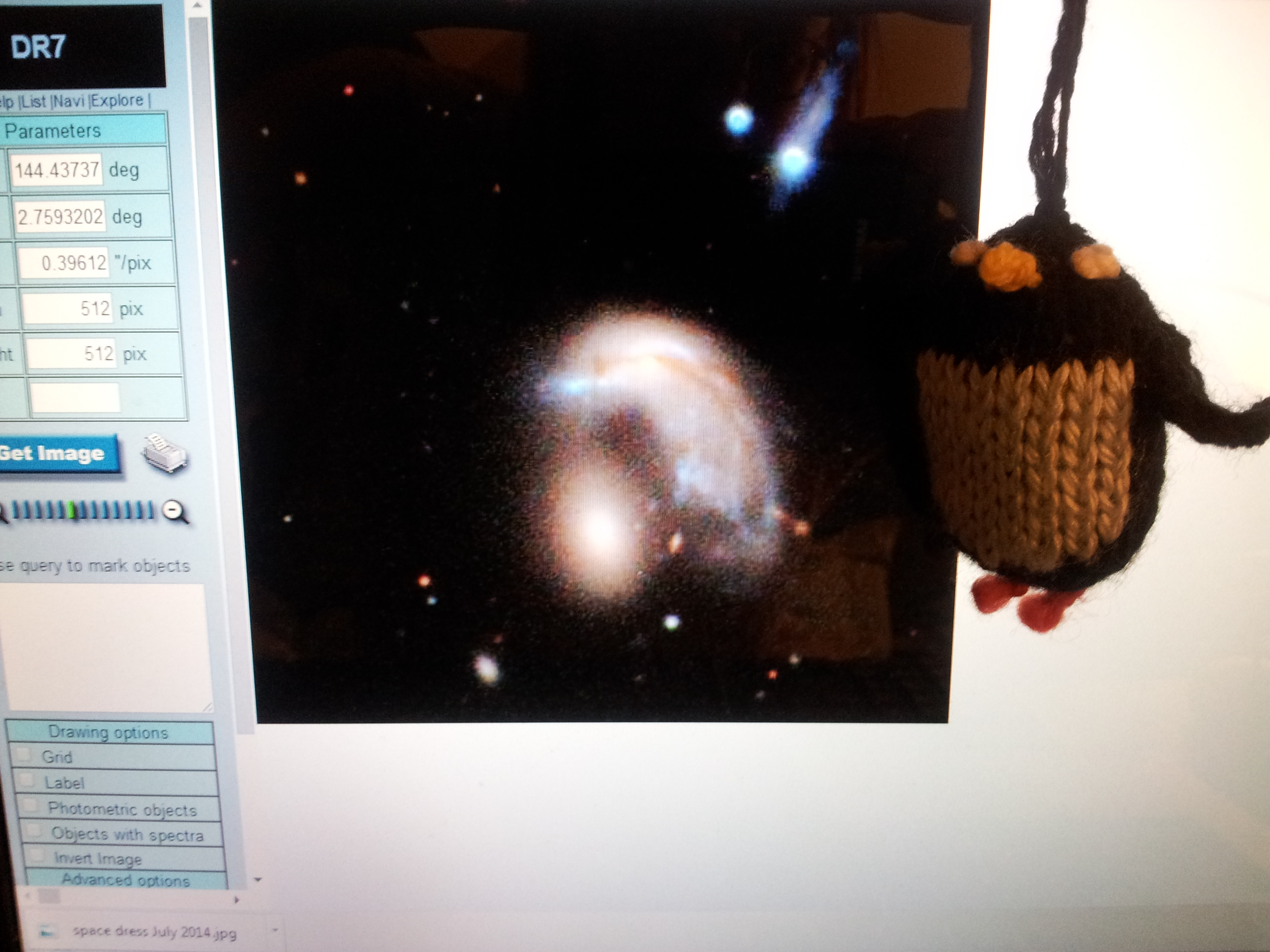
Karen also knitted our favourite Penguin Galaxy as a birthday present for the lovely Alice :
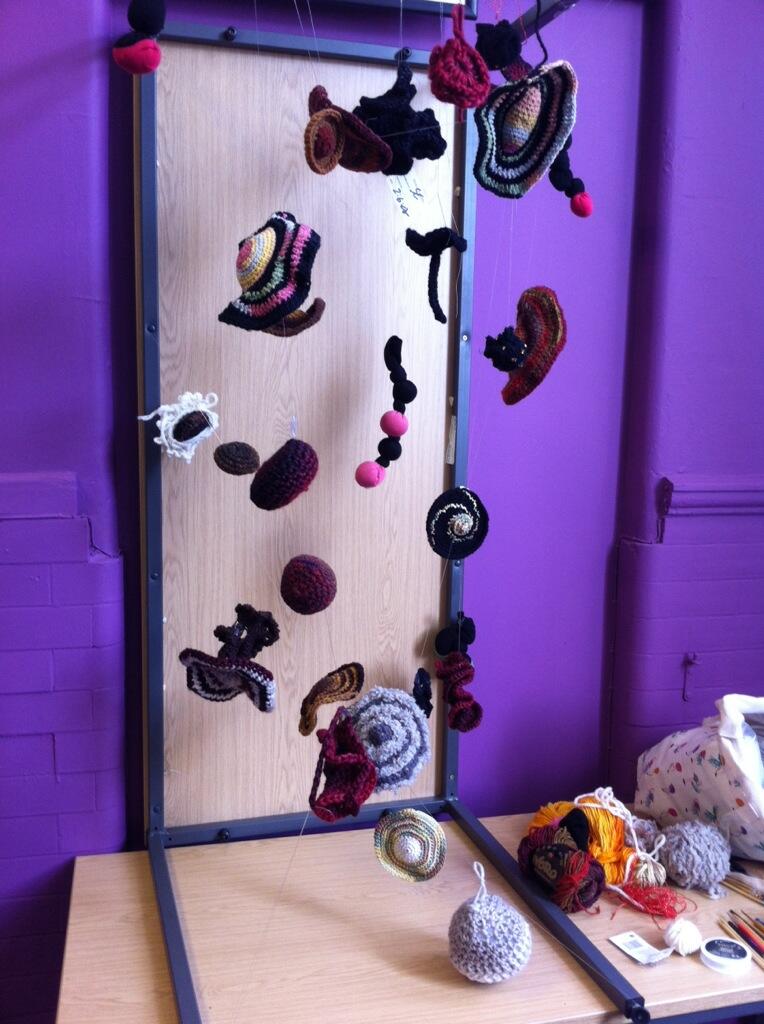
And check out the skills of Jen Greaves and the NAM Knitters who knitted a WHOLE GALAXY CLUSTER at this year’s National Astronomy Meeting in Portsmouth:
For those of you itching to stretch your creative muscles but haven’t been struck by that bolt of inspiration yet, here’s a KNITTING PATTERN (a first I believe for the Galaxy Zoo blog) for the Galaxy Zoo logo to keep you busy…
Our SEVEN Favourites
To honour the SEVENTH anniversary of Galaxy Zoo (July 11th) we’ve put together a gallery of the Science Team’s favourite images from the site (and why) for your visual pleasure…
Chris’s favourite: I love the flocculent spiral galaxies. The ones you can stare at and still have no idea how many spiral arms they have.
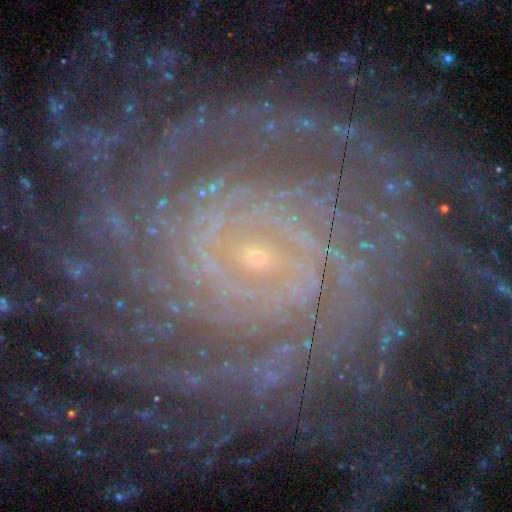
Karen’s favourite: I’m a sucker for merging galaxies, despite the fact that I work on barred galaxies mainly! This one which looks like the yin-yang symbol (or maybe a heart) is a particular favourite. It’s amazing that the Universe can be so vast that we can find galaxies in so many different shapes.

Kevin’s favourite: The penguin galaxy shows the power of human pattern recognition – and a crucial stage in galaxy evolution!

Brooke’s favourite: when the latest Galaxy Zoo launched, the volunteers made a find almost right away that turned out to be a very rare kind of object called a gravitational lens. I love this image because it shows not just the variety of things that are out there in the Universe — in this case the very distant universe — but also the rare place that Galaxy Zoo itself occupies. It’s a diverse community and diverse images like this are part of the reason why.

Kyle’s favourite: did you know that we can spell Galaxy Zoo out of galaxies? The users originally started collecting a list of galaxies that look like letters and now we have writing.galaxyzoo.org thanks to Steven. Since it’s the anniversary, here’s my favourite letter G.
Bill’s favourite: Hanny’s Voørwerp really started something – the blue stuff in the image – other teams are now finding similar objects at smaller and larger distances too.

Becky’s favourite: this amazing image has SO much going on in it – mergers, interactions, spirals, bars, ellipticals, grand designs, foreground stars etc. It feels like a visual representation of thoughts in my head at times, which is clearly why I love it.
BONUS:
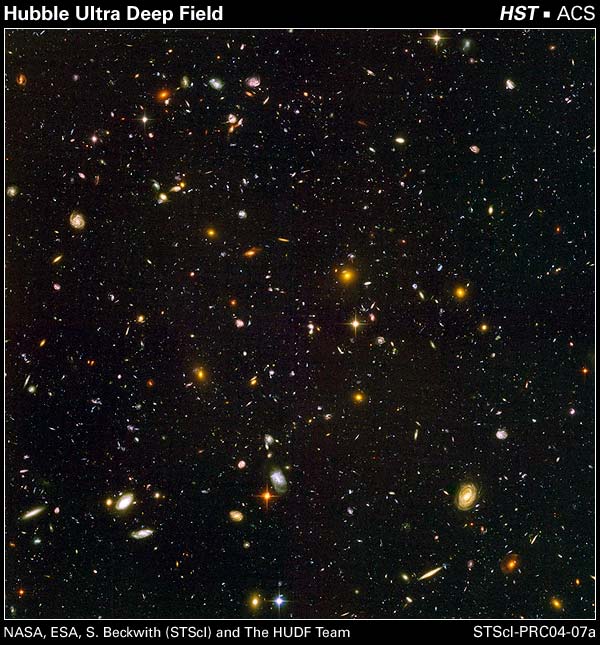
The Hubble Ultra Deep Field!!!! Just to remind us all why we’re all here. Every single thing you can see in this image is a galaxy – even the most minuscule of dots. And the size of the image on the sky is about 1/20 the size of the Full Moon… Let’s just all take a minute to let that sink in as we stare and wonder...