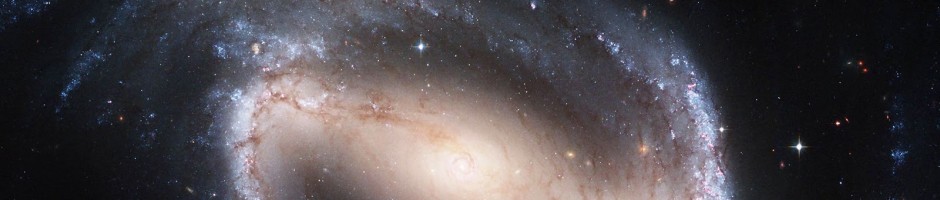
Black holes – why do galaxies care, anyway?
Now that our paper on AGN host galaxies (galaxies whose black holes are feeding) is out, I will write a few blog posts about what we found with your help. But before we start, a little background.
Why do black holes matter? We now believe that at the centers of most, if not all galaxies, there is a supermassive black hole. We call these black holes “supermassive” to distinguish them from stellar mass black holes that were formed in the deaths of massive stars. These supermassive black hole can be as heavy as a million or even a billion solar masses.
So you might think that these enormous black holes can wreak havoc in their host galaxies. However, galaxies are even bigger, much bigger than these black holes. In general, the black hole makes up about 0.1% of the mass of its host galaxy making really just a drop in the bucket.
In fact, their gravitational sphere of influence is tiny compared to the size of the whole galaxy and so they generally don’t affect anything but their immediate surroundings. As far as the galaxy as a whole is concerned, the supermassive black hole at its center might as well not be there.
But why is the mass of the black hole always some fraction of the galaxy mass (or to be more precise, bulge mass)? How does the black hole even know how big the galaxy is? Why does the mass of the black hole correlate with the mass of the galaxy bulge (the M-sigma relation)? It’s almost as if they somehow grew together….
Bar drawing project complete!

GZ2 Galaxy with Bars drawn by users.
Bar project stage 1 complete!
Dear all, we’d like to thank everybody for making the bar drawing project such a success. We now have enough data to perform some reliable, new & very exciting science.
The site will remain open (for future inspection), but the votes will no longer we recorded. We’d like to take this opportunity to draw your attention to other interesting galaxy zoo and zooniverse projects.
We’ll keep you posted about future publications.
Once again, we’d like to thank you all!
Best Regards,
Ben [and on behalf of Karen and Bob with the bar drawing team]
Finishing off the Peas Documentary
Dear all,
Many moons back, a large group of Zooites travelled to Oxford to make nearly all of a documentary about Galaxy Zoo, and especially peas, with PulseProject. It was a terrific success, and there’s just one more thing they’d like to do before it’s ready. Can you help?
Colin, who interviewed us all, wants to make a montage of about 30 zooites from around the world. He’d like you to Skype him, or to send him a brief video recording of yourself, along with your latitude and longitude. All you need to say is your name, and that you’re a zooite. For example, “My name is X and I classify galaxies at Galaxy Zoo” or “My name is Y and I am a zooite”. (Either your real name or your zoo name is fine.)
When you connect to him, you’ll get a blank screen – he may need to text you to let you know that he’s there watching. It’s so that his part doesn’t interfere with the recording. His Skype name is colincmurphy and his e-mail is colin@pulse-project.com. He’d love to hear from you.
You don’t have to have come to Oxford for that meet-up or to have had any particular involvement with the peas. Being a zooite is the main thing!
There is a copy of this message on the zoo forum if you’d like to see more discussion. Please let me know of any questions, and I’ll answer them if I can and contact Colin if I can’t.
I hope to see our peas, Oxford and the wonderful science of Galaxy Zoo in PulseProject’s documentary soon – and you as part of it!
Alice
Galaxy Zoo paper on AGN host galaxies accepted!
Dear all,
I am happy to tell you that after a lot of work and a long peer review process, the Galaxy Zoo paper on AGN host galaxies (galaxies whose supermassive black holes are feeding) has finally been accepted by the Astrophysical Journal.
I’ve blogged about it before when we submitted it last year. The paper itself has gotten a lot longer than I initially thought it would be because the morphologies we got out of all your clicks revealed quite a few things that we really didn’t expect, and that we weren’t sure how to explain. I’ll keep this blog post short, but I’ll try and follow it up with more details on what your clicks enabled us to to find, and (maybe also) what it means about growing black holes and how they affect the galaxies that they live in.
One of the more interesting things we found were these galaxies whose black holes are growing. In many ways, these galaxies resemble our own Milky Way…

In the meantime, you can get a PDF copy of the paper here, or off astro-ph when it appears there tomorrow night (January 19th).
"Sie ist eine Astronomin": Vardha Nicola Bennert
Our final entry (for now) in the series of foreign language translations of She’s an Astronomer posts – here it is: Vardha’s Interview auf Deutsch!

Vardha Nicola Bennert am Meer in Santa Barbara (5 Minuten Fussweg von ihrem Büro), Mai 2009
Dr. Vardha Nicola Bennert ist als Wissenschaftlerin (“postdoc”) an der Fakultät für Physik und Astronomie an der Universität von Kalifornien (UC) in Santa Barbara tätig. Ursprünglich kommt sie aus dem Ruhrgebiet in Deutschland und hat 2005 auf dem Gebiet der Astrophysik von aktiven Galaxien an der Ruhr-Universität Bochum promoviert. Sie hat danach ihre erste Postdoc-Stelle an der Universität von Kalifornien in Riverside in den USA angenommen, bevor sie 2008 nach Santa Barbara gegangen ist.
Das wissenschaftliche Hauptinteresse von Frau Dr. Bennert ist die zentrale Region von “aktiven Galaxien” (dem schwarzen Loch und den sogenannten “narrow-” und “broad-line regions” direkt um das schwarze Loch herum) und ihre Beziehung zur Muttergalaxie.
Sie arbeitet gerne in der wissenschaftlich-stimulierenden Umgebung der UCSB und genießt es, in Santa Barbara zu leben – besonders weil die Sonne immer scheint und das Meer so nah ist! Aber sie vermisst auch ihre Freunde und Familie in Deuschland. In ihrer Freizeit erkundet sie die Natur Südkaliforniens, aber sie ist auch auf einer inneren Reise, in der sie Meditation in ihr tägliches Leben integriert.
- Wie haben Sie vom Galaxien Zoo gehört?
Durch Zufall! Ich war an der UC Riverside und hatte einen Beobachtungsaufenthalt am 3m Shane-Teleskop des Lick Observatoriums, als Professor Bill Keel meine Chefin, Professor Gabriela Canalizo, fragte, ob wir bei der Gelegenheit ein Spektrum von “Hanny’s Voorwerp” aufnehmen könnten. Ich willigte ein, ging beobachten, hatte mehrere klare Nächte und konnte ein Spektrum des Objekts aufnehmen. Ich war sofort von dem Objekt beeindruckt, weil mir das Spektrum sehr bekannt vorkam – ähnlich den “narrow-line regions” von aktiven Galaxien, die ich intensiv während meiner Doktorarbeit studiert hatte, nur dass es bei diesem Objekt keinen Hinweis auf einen aktiven galaktischen Kern im Zentrum gab!
- Wie sind sie hauptsächlich im Galaxien-Zoo-Projekt involviert?
Ich habe bei der Reduktion, Analyse und Interpretation der spektroskopischen Daten geholfen, die in der Entdeckungsveröffentlichung des “Voorwerps” integriert wurden. Später, durch einen weiteren Zufall, hat das Team nach jemandem gesucht, der Erfahrung in der Reduktion von HST Bildern hat, welche ich habe. Deshalb habe ich HST Bilder von sogenannten “grünen Erbsen” reduziert und analysiert, die im Galaxien-Zoo-Projekt entdeckt wurden. Dies wurde ein Teil einer weiteren Veröffentlichung, bei der ich bei der Interpretation der Ergebnisse geholfen habe.
- Was mögen Sie am Meisten am Galaxien-Zoo-Projekt?
Es ist großartig, dass so viele Amateurastronomen involviert sind und dass das Projekt so eine starke Komponente der Öffentlichkeitsarbeit hat. Für mich ist Öffentlichkeitsarbeit nicht nur eine Pflicht als Wissenschaftlerin, da ich im Wesentlichen durch Steuergelder bezahlt werde, sondern auch eine Tätigkeit, die mir sehr viel Spaß macht. Ich liebe es zu sehen, wie Menschen sich für Astronomie und die Wissenschaft begeistern, mit der ich mich beschäftige.
- Was ist Ihrer Meinung nach die interessanteste astronomische Fragestellung, die das Galaxien-Zoo-Projekt helfen wird zu beantworten?
Das Galaxien-Zoo-Projekt hat seinen Wert darin bewiesen, dass es seltene und interessante Objekte wie das Voorwerp findet, durch visuelle Inspektion von Bildern – ein grosser Vorteil von Menschen verglichen mit Robotern! Ich denke, das ist es, was der bleibende Wert des Galaxien-Zoo-Projektes sein wird, nicht die Antwort auf eine spezielle Fragestellung, für die das Projekt ins Leben gerufen wurde. Diese seltenen Objekte haben das Potential, uns neue und überraschende Einsichten zu geben.
- Seit wann interessieren Sie sich für Astronomie?
Schon als Kind liebte ich es, die Sterne zu betrachten und war fasziniert von den Büchern von Professor Stephen W. Hawking, auch wenn ich zu der Zeit nicht allzu viel davon verstand… Jedenfalls hielt mich das nicht davon ab, eine wissenschaftliche Karriere auf diesem Gebiet zu verfolgen. Im Gegenteil, ich fand es immer spannend, an die Grenzen meines Verstehens zu kommen und ständig neue Dinge zu lernen.
- Was (wenn überhaupt) denken Sie sind die wesentlichen Barrieren für Frauen in der Astronomie?
Mir gefällt die konkurrenzbetonte Art nicht, in der wissenschaftliche Ergebnisse dargestellt werden. Ich persönlich denke, dass es für Frauen schwierig sein muss, Kinder zu haben, während sie eine astronomische Karriere verfolgen, da beide Aufgaben sehr viel Zeit verlangen. Aber natürlich gibt es viele Frauen in der Astronomie, die bewiesen haben, dass es geht.
- Haben Sie irgendwelche Vorbilder in der Astronomie?
Mein Doktorvater, Professor Hartmut Schulz, hat mich sehr beeinflusst. Ich sah in ihm immer einen dieser “altmodischen” Professoren, die nicht nur viel über Astronomie wissen, sondern auch sehr fundierte Grundkenntnisse haben und immer großen Wert darauf legen, selber zu denken. Leider verstarb Professor Schulz im August 2003. Ich erinnere mich gerne an ihn als meinen “Doktorvater” im wahrsten Sinne des Wortes.
Mein derzeitiger Chef an der UCSB, Professor Tommaso Treu, inspiriert mich ebenfalls ständig auf vielfältige Weise – er ist nicht nur sehr klug und effektiv, sondern auch immer fröhlich, voller Energie, und hilft seinen Studenten, ihr Potential voll auszuschöpfen.
This post is part of the ongoing She’s an Astronomer series on the Galaxy Zoo Blog is support of the IYA2009 cornerstone project of the same name (She’s an Astronomer). We are listed on the She’s an Astronomer website in their Profiles.
- Zooites:
- Hanny Van Arkel (Galaxy Zoo volunteer and finder of Hanny’s Voorwerp). Hanny’s interview in het Nederlands.
- Alice Sheppard (Galaxy Zoo volunteer and forum moderator).
- Gemma Couglin (“fluffyporcupine”, Galaxy Zoo volunteer and forum moderator).
- Aida Berges (Galaxy Zoo volunteer – major irregular galaxy, asteroid and high velocity star finder). Entrevista de Aida en español.
- Julia Wilkinson (“jules”, Galaxy Zoo volunteer. Frequent forum poster, and member of irregular and HVS projects).
- Els Baeton (“ElisabethB”, Galaxy Zoo folunteer. Frequent forum poster, and member of most of the spin-off projects!). Els’s interview in het Nederlands.
- Researchers:
- Dr. Vardha Nicola Bennert (researcher at UCSB involved in Hanny’s Voorwerp followup and the “peas” project). Vardha’s Interview auf Deutsch.
- Carie Cardamone (graduate student at Yale who lead the Peas paper).
- Dr. Kate Land (original Galaxy Zoo team member and first-author of the first Galaxy Zoo scientific publication; now working in the financial world).
- Dr. Karen Masters (researcher at Portsmouth working on red spirals, and editor of this blog series.)
- Dr. Pamela L. Gay (astronomy researcher and communicator based at Southern Illinois University).
Still to come in the series – a few more Galaxy Zoo volunteers and researchers. We’re not quite done yet!
This German translation is of course part of our effort to be international!
Bars side project
Dear Zooniverse users,
We’d like to re-draw [no pun intended!] your attention to the GalaxyZoo Google-powered Bar drawing website: http://www.icg.port.ac.uk/~hoyleb/bars/ simply log in with your Zooninverse username and password. Please note, this site works best using FireFox.

GZ2 Galaxy as seen in Google Maps
In this project, we ask for more specific observations and even drawing to be performed on a selection of galaxies. The sample size is relatively small, and 8000 [of the 8400] galaxies have been classified 5 times. The remaining 400 have been examined 6+ times.
We are starting to collate votes, for example we see some excellent agreement between users, e.g. See the picture below, which shows the bars as drawn on the above galaxy by different users, but we still need a few more classifications for each galaxy, to really be able to produce science.
One such science question we’d like to answer is, “How does the presence of a bar, affect the galaxies properties?”. GZoo allows us to study this question with 20- times more data than previously possible.
GZ2 Galaxy with Bars drawn by users.
We’d also like to thank the GZ users for the hard work they have put into the site since it’s launch in October.
Regards,
Ben Hoyle, on behalf of the GZ-bar drawing team
Galaxy Zoo: Dust in Spirals – accepted to MNRAS
My Galaxy Zoo paper on the dust content of spiral galaxies was accepted for publication in the Monthly Notice of the Royal Astronomical Society this morning, and will be available here on the ArXiV server after 1am GMT tomorrow (Wed 13th Jan 2010).
You can read about the work that went into this paper and our main results in my previous blog posts on its submission, about a scientific poster on the work, and finally my very first blog post here: “Blue Skies and Red Spirals”.
Happy reading, and thanks again for all the spirals!
She’s an Astronomer: Els Baeten

Els Baeten
Els’s interview in het Nederlands
Els Baeten (ElisabethB) lives in Belgium, in the old university town Leuven. She studied medicine for a few years, but then decided that it was not what she really wanted to do. She now works as a secretary in an SEO company.
When she isn’t busy doing anything Zoo-related she can be found at festivals, concerts, exhibitions and the theatre. She also loves reading and spending time with her family, friends and their children.
- How did you first hear about Galaxy Zoo?
In July 2007 I was browsing the site of New Scientist and I came across an article about a new Internet based project called Galaxy Zoo. I immediately thought: this has to be good! At the first look I got hooked and I have been actively involved in most parts of the project ever since.
- What has been your main involvement in the Galaxy Zoo project?
I’ve been involved in most of the projects. First of all classifying galaxies in Galaxy Zoo 1 and 2 of course, and I also really like the special hunts for mergers, peas and voorwerpjes.
My contribution to the Peas paper was finding lots of them. And it was really great to see my name mentioned in that paper! I’m also rather fond of Gravitational Lenses and if we could get some of them confirmed that would be great news indeed. For the moment I’m having a lot of fun with Merger Zoo and the Barred Spirals. And when I really want to relax I go asteroid-hunting. Wouldn’t it be great to have an asteroid named Galaxy Zoo!
- What do you like most about being involved in Galaxy Zoo?
I love the fact that people from every background are able to make a real contribution to scientific research. It’s also great to be part of a team of enthusiastic people from all over the world.
And I’d never expected to meet so many new friends.
- What do you think is the most interesting astronomical question Galaxy Zoo will help to solve?
I think there will be lots of questions solved with the results of Galaxy Zoo. Especially questions that nobody thought of in the first place, questions that pop up when a large amount of curious people sift through large amounts of data. In this respect Galaxy Zoo also offers new perspectives for other areas of scientific research.
- How/when did you first get interested in Astronomy?
When I was young I saw all around me that science was a part of everyday life. Both my grandfathers were avid readers who loved sharing their knowledge about nature and everything with their grandchildren. I watched the first moon landing in my pyjamas together with my entire family. My sister, brother and I had a really big book with the history of the earth and also with lots of pictures of the solar system and the stars. I also have fond memories of watching Cosmos with Carl Sagan with my family. And our parents let us stay up very late during clear summer nights to watch the stars and the occasional meteor.
So stars and planets and everything that is out there have always been a part of my world.
- What (if any) do you think are the main barriers to women’s involvement in Astronomy?
In my school, a traditional all girls school, I never had the impression that science and maths weren’t for girls. They were just subjects some of us were good at. But in general, a scientific career or any career for that matter, is still more difficult to achieve for a woman.
But as you can see with the Galaxy Zoo community there are lots of women involved of all ages and backgrounds. So I think we’re getting there, eventually.
- Do you have any particular role models in Astronomy?
I don’t think I would use the word ‘role model’ but I really admire the Zookeepers and other astronomers involved for coming up with this great idea and continuously thinking of new ideas and projects. I especially admire the way they share their knowledge with us and the value they attach to our efforts.
Finally I’d like to thank my sister, Veerle, for helping me out with this blog post and Edd for the pictures.
Els’s interview in het Nederlands
This post is part of the ongoing She’s an Astronomer series on the Galaxy Zoo Blog is support of the IYA2009 cornerstone project of the same name (She’s an Astronomer). We are listed on the She’s an Astronomer website in their Profiles.
- Zooites:
- Hanny Van Arkel (Galaxy Zoo volunteer and finder of Hanny’s Voorwerp). Hanny’s interview in het Nederlands
- Alice Sheppard (Galaxy Zoo volunteer and forum moderator).
- Gemma Couglin (“fluffyporcupine”, Galaxy Zoo volunteer and forum moderator).
- Aida Berges (Galaxy Zoo volunteer – major irregular galaxy, asteroid and high velocity star finder). Entrevista de Aida en español
- Julia Wilkinson (“jules”, Galaxy Zoo volunteer. Frequent forum poster, and member of irregular and HVS projects).
- Researchers:
- Dr. Vardha Nicola Bennert (researcher at UCSB involved in Hanny’s Voorwerp followup and the “peas” project).
- Carie Cardamone (graduate student at Yale who lead the Peas paper).
- Dr. Kate Land (original Galaxy Zoo team member and first-author of the first Galaxy Zoo scientific publication; now working in the financial world).
- Dr. Karen Masters (researcher at Portsmouth working on red spirals, and editor of this blog series.)
- Dr. Pamela L. Gay (astronomy researcher and communicator based at Southern Illinois University).
Still to come in the series – more Galaxy Zoo volunteers and researchers, it might be December 2009 – but we’re going to keep going for a few months more!
Zij is een astronoom: Els Baeten
Our first She’s an Astronomer translation posted at the same time as the interview! Thanks Els.

Els Baeten (ElisabethB) woont in België, in de oude universiteitsstad Leuven. Ze studeerde enkele jaren geneeskunde maar besloot uiteindelijk dat dit toch niet echt was wat ze wou doen. Ze werkt nu als secretaresse in een herverzekeringsmaatschappij.
Wanneer ze niet bezig is in de Zoo kan je haar vinden op festivals, concerten, tentoonstellingen of in het theater. Ze houdt ook van lezen en brengt veel tijd door met haar familie, vrienden en hun kinderen.
- Waar hoorde je het eerst over Galaxy Zoo ?
In juli 2007 zag ik een artikel op de site van New Scientist over een nieuw internet project : Galaxy Zoo. Mijn eerste reactie was : Dat ziet er goed uit ! Vanaf het eerste moment was ik helemaal verkocht en ik ben sindsdien actief betrokken bij de meeste projecten.
- Wat zijn je belangrijkste verwezenlijkingen binnen Galaxy Zoo?
Eerst en vooral natuurlijk het classificeren van sterrenstelsels in Galaxy Zoo 1 en 2. En ik vond de speciale zoektochten naar botsende sterrenstelse (mergers), Peas en Voorwerpjes heel leuk om te doen.
Mijn bijdrage aan het Peas paper was dat ik er een heleboel gevonden heb. En je naam vermeld zien staan in een wetenschappelijk paper doet je toch wel wat.
Ik ben ook erg geïnteresseerd in zwaartekrachtlenzen en ik hoop echt dat enkele van onze vondsten the real deal zullen zijn!
Voor het ogenblik heb ik het naar mijn zin met Merger Zoo en de Barred Spirals (balkspiralen). En als ik echt wil ontspannen ga ik op asteroïdenjacht. Zou het niet geweldig zijn : een asteroïde die Galaxy Zoo heet!
- Wat vind je het leukste aan Galaxy Zoo ?
Ik vind het fantastisch dat mensen van totaal verschillende achtergronden kunnen bijdragen aan wetenschappelijk onderzoek. Het is ook geweldig om deel uit te maken van een team van enthousiaste mensen van alle uithoeken van de wereld. En ik had nooit gedacht dat ik zo veel nieuwe vrienden zou vinden.
- Wat is de meest interessante astronomische vraag die Galaxy Zoo zal kunnen oplossen ?
Ik denk dat er een groot aantal vragen beantwoord zal worden dankzij de resultaten van Galaxy Zoo. En dan vooral vragen waar niemand ooit aan gedacht had. Vragen die opduiken wanneer heel veel nieuwsgierige mensen enorme massa’s gegevens doorzoeken. Galaxy Zoo gooit zo ook de deur open voor andere gebieden van wetenschappelijk onderzoek
- Hoe en wanneer kwam je voor het eerst in contact met astronomie?
Als klein kind zag ik overal rondom mij dat wetenschap bij het leven van iedere dag hoorde. Mijn twee grootvaders waren gretige lezers die hun kennis over en liefde voor de natuur met veel enthousiasme met hun kleinkinderen wilden delen.
Ik zag de eerste maanlanding in mijn pyjama, samen met de hele familie. Mijn zus, broer en ik hadden een heel groot boek over de geschiedenis van de aarde, ook met een gedeelte over het zonnestelsel en de sterren. Ik heb ook hele mooie herinneringen aan Cosmos van Carl Sagan waar we met de hele familie naar keken.
En op heldere warme zomerdagen lieten onze ouders ons heel laat opblijven om te kijken naar de sterren en een toevallige meteoor.
Sterren en planeten en alles wat er rondom ons bestaat zijn altijd een deel van mijn wereld geweest.
- Wat zijn de (eventuele) obstakels voor de deelname van vrouwen in de astronomie ?
Toen ik naar school ging, nochtans een traditionele meisjesschool, had ik nooit het gevoel dat wetenschappen en wiskunde niets voor meisjes waren. Het waren gewoon vakken waar sommige meisjes goed in waren. Maar in het algemeen is het toch nog steeds moeilijker voor vrouwen om een wetenschappelijke carrière, of eender welke carrière, uit te bouwen.
Maar zoals je kan zien zijn er in de Galaxy Zoo heel wat vrouwen van alle leeftijden en achtergronden. Dus zullen we er wel komen, uiteindelijk.
- Heb je rolmodellen in de astronomie ?
Ik zou het woord rolmodel niet echt gebruiken maar ik bewonder de Zookeepers en de andere betrokken astronomen voor het bedenken van dit geweldige idee en de manier waarop ze telkens weer nieuwe projecten aanreiken. Ik bewonder heel speciaal de manier hoe ze hun kennis met ons delen en het belang dat ze aan onze bijdragen hechten.
Tenslotte zou ik nog graag mijn zus Veerle willen bedanken voor haar hulp bij het schrijven van deze blog post en Edd voor de foto.
This post is part of the ongoing She’s an Astronomer series on the Galaxy Zoo Blog is support of the IYA2009 cornerstone project of the same name (She’s an Astronomer). We are listed on the She’s an Astronomer website in their Profiles.
- Zooites:
- Hanny Van Arkel (Galaxy Zoo volunteer and finder of Hanny’s Voorwerp). Hanny’s interview in het Nederlands
- Alice Sheppard (Galaxy Zoo volunteer and forum moderator).
- Gemma Couglin (“fluffyporcupine”, Galaxy Zoo volunteer and forum moderator).
- Aida Berges (Galaxy Zoo volunteer – major irregular galaxy, asteroid and high velocity star finder). Entrevista de Aida en español
- Julia Wilkinson (“jules”, Galaxy Zoo volunteer. Frequent forum poster, and member of irregular and HVS projects).
- Researchers:
- Dr. Vardha Nicola Bennert (researcher at UCSB involved in Hanny’s Voorwerp followup and the “peas” project).
- Carie Cardamone (graduate student at Yale who lead the Peas paper).
- Dr. Kate Land (original Galaxy Zoo team member and first-author of the first Galaxy Zoo scientific publication; now working in the financial world).
- Dr. Karen Masters (researcher at Portsmouth working on red spirals, and editor of this blog series.)
- Dr. Pamela L. Gay (astronomy researcher and communicator based at Southern Illinois University).
Still to come in the series – more Galaxy Zoo volunteers and researchers, it might be December 2009 – but we’re going to keep going for a few months more!
Welcome to the Zooniverse
You’ll notice the blog looks more than a little different today; we’ve given it a more modern and flexible style and incorporated our twitter stream, so that you can keep up with all the news in one place.
The changes are part of the launch of the Zooniverse the new home for Galaxy Zoo and the other projects we’re developing. There won’t be any changes to Galaxy Zoo itself – apart from the small banner at the top of the page – so you’re welcome to just continue classifying galaxies, colliding galaxies, or hunting supernovae.
If you fancy a break, though, you can find the Zooniverse here, or read more about the launch on the new Zooniverse blog.
 Galaxy Zoo