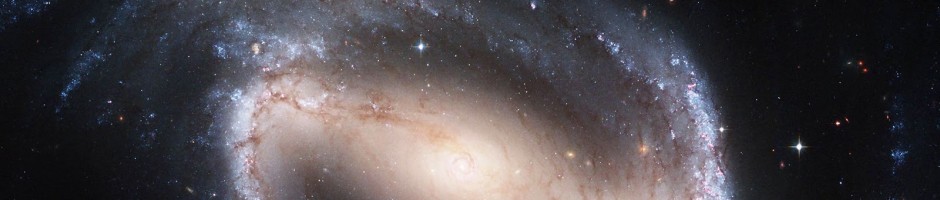
Make your own tours with Galaxy Zoo and Google Earth
You’ve classified the galaxies, listened to the experts and watched the Galaxy Zoo – Google Earth Tours, now it’s your turn. We have made a web page which allows you to make tours of your “favourited” Galaxy Zoo galaxies, and describe how to record your voice/audio over the top. We will even have a prize for the best tour; The winner will be able to choose who on the Galaxy Zoo team you would like to narrate your tour. This even includes Sir Patrick Moore.
Winners will be chosen by Arfon, Ben, Bob and Chris. Simply go to http://tours.galaxyzoo.org/ and enter your email address. Your favourite galaxies will then be displayed allowing you to construct a tour to your specifications. The tour files are playable in the latest version of Google Earth. On the same page there are links to documentation and videos showing you how to record audio over your tour or hard code the tour file.
Upload your edited tours to the forum to share with your friends and to be in with a chance of winning a prize.
Good luck,
Ben.
New hunt – help uncover AGN clouds!
Attention cloud hunters! With a lot of input and assistance from laihro, waveney, and ZookeeperKevin, I am pleased to announce a new specialized galaxy hunt, targeted at galaxies with active nuclei to pull out the ones with bright clouds in an organized way. At
http://wavwebs.com/GZ/voorwerpje/Hunt.cgi
you can go through SDSS images of known AGN and help us tell which ones are most likely to have the kind of gigantic ionized-gas clouds which can tell us about the history of the active nucleus and its surroundings. First you’ll see an introduction to why the problem is interesting, and offering some examples of what we’re looking for and some kinds of imposters we want to weed out. You can use existing logins from the merger and irregular classification projects if you have one – otherwise, feel free to join in. The more the merrier – or at the very least, the more, the faster and more statistically robust. And keep visiting – we’ll be augmenting the galaxy list with more AGN that are known but don’t have SDSS spectra, but it will take a little more time to get those identifications fed into the list.
Whence the web name? These clouds have a lot in common with Hanny’s Voorwerp, but are much smaller – so we go with the Dutch diminutive form “voorwerpje”. We do know of more than one, so “voorwerpjes” would also make sense.
More peas

Back in March I was speaking to a colleague of mine in Nottingham, Seb Foucaud, about the Galaxy Zoo Peas, and showing him Carie’s paper. Seb works primarily on very distant (high redshift) massive galaxies, often using data from the UKIDSS Ultra Deep Survey. He quickly noticed that the way Carie selected Peas from SDSS data was very similar to the way they select high redshift galaxies, except that the exact colours used were different, as more distant galaxies are redder.
The Story of the Peas: writing a scientific paper
Writing the Peas paper has been a great experience for me. I’m still new to the process; its only my 3rd paper and my first with Galaxy Zoo. Kevin and Jordan suggested that I use my experience here to talk a little bit about the process of writing a paper. Every time a paper is written the stages you go through can vary, but I’ll try to describe what we’ve been doing with the Peas paper over the last year. This is a separate perspective from the one Alice is putting together giving the history of the Peas on the Galaxy Zoo Forum.
A Busy Galaxy Zoo Day
Sometimes in scientific research opportunities collide and lead to rather busy days. Yesterday I had such a day, and since it involved me giving two presentations about Galaxy Zoo I thought you might be interested to hear about it.
In the morning I gave a talk “Galaxy Evolution in the Galaxy Zoo” at the “Unity of the Universe” conference in Portsmouth, a conference celebrating the opening of the new Dennis Sciama Building for the Institute of Cosmology and Gravitation (ICG, where I and several other “Zoo Keepers” work). This talk was aimed at summarizing for astronomers and cosmologists at the meeting the exciting results on galaxy evolution which have come out of Galaxy Zoo. Many researchers in astronomy are aware of Galaxy Zoo, and in general are very interested in it, but they tend to think of it more an an opportunity for outreach with the interested general public and less in terms of the exciting science which can come out of it. The point of my talk was to say that it should in fact be viewed as both. It seemed to go over well.
Over lunch I took a train to London where in the afternoon I was interviewed by an esteemed panel of scientists (including Baroness Susan Greenfield, Director of the Royal Institution, and Prof. Alec Boksenberg, Chair of the UK National Commission for UNESCO). This interview was because I was a finalist in the competition for the 2009 L’Oreal UNESCO UK/Ireland Fellowships for Women in Science. My proposal for this fellowship (for £15000) was to extend my period of study at Portsmouth so I could spend more time studying the red spirals in Galaxy Zoo (among other things). I gave a 10 minute talk about this proposed research, then answered questions from the panel.
Later that afternoon I had a L’Oreal makeover (really – but don’t worry this was not a requirement for the fellowship just a treat, and a positive sign in my opinion of a recognition that scientists can want to be feminine) and in the evening I attended a reception at the Royal Institution at which the winners of the fellowship were announced. Unfortunately I did not win the competition, but as I did make the final 8 (out of 240 applicants) I can’t feel too bad about it. I also got a nice engraved pen, met some very interesting people, and I’m assured I can still expect some free makeup. So that’s not too bad after all!
Quite a busy day in the life of an astronomer!
Latest Galaxy Zoo paper accepted


We are happy to announce that our paper, “Galaxy Zoo: Disentangling the Environmental Dependence of Morphology and Colour”, has been accepted for publication in the Monthly Notices of the RAS. We showed that much, but not all, of the correlation between a galaxy’s morphology and its large-scale environment can be explained by the correlation between galaxy colour and environment. We also showed that, among red galaxies, galaxies classified as ellipticals are more likely to be located in the central regions of galaxy groups and clusters. Finally, we argued that a relatively large fraction of red spiral galaxies are “satellite” galaxies in groups.
The pre-print of the accepted paper is available on astro-ph.
She's an Astronomer: Alice Sheppard

Alice Sheppard has had various jobs in administration, environment, teaching and writing whenever she can – but as soon as she started moderating the Galaxy Zoo Forum nearly 2 years ago, she knew that this was her real work. She’d been hooked on astronomy and science since she was very young, but the presentation of these subjects at school didn’t encourage her to think she’d ever really get involved. She studied Environmental Science at university in Norwich and Granada, Spain, and became increasingly interested in informing and involving the public. She now lives in Pembrokeshire, Wales, with her family and two cats who also contributed to scientific research for April Fool’s Day! Her involvement in the Galaxy Zoo project inspired her to start an Open University course and her current goal is to continue the work she has begun informally in the Galaxy Zoo project as a science communicator and educator. You can catch up more with Alice on her blog: Alice in Galaxyland, and she invites you to join her any time for virtual coffee and galaxy conversations in the forum.
Finishing that paper II
The Galaxy Zoo AGN host galaxies paper is nearing the final draft stage.
Note to self: when converting a document from British to American spelling, do not just automatically replace all instances of `ise’ with `ize!’
Voorwerps everywhere
I’m delighted to announce that the fifth Galaxy Zoo paper – the one that discusses Hanny’s Voorwerp – has now been accepted for publication by Monthly Notices of the Royal Astronomical Society.

It’s somewhat of a relief to say that, as it was way back in August of last year that we first submitted it. The referee was extremely thorough, catching a few stupid mistakes we’d made (as a good referee should) and in correcting these and responding to responses for clarification the paper grew from four pages to thirteen. The basic story is still the one that Bill and I outlined more than a year ago – we think we’re seeing the result of activity associated with the black hole in the nearby galaxy IC2497 which has now ceased.
Along the way, another team of astronomers have published a paper about their radio observations of the Voorwerp; I’ll blog later in the week about how we think the two sets of observations are compatible. Hopefully they’ll do the same, and we can have a discussion in public about what we do – and don’t – agree on. By coincidence, their paper is being published in the journal Astronomy & Astrophysics this week – and their image of the Voorwerp made the front cover of the printed edition. We’ll have an image of that for you as soon as anyone involved can find a printed edition – a rare thing in this internet age.
Update : Paper is now available here.
P.S. For those keeping score, our Voorwerp paper was the 5th to be submitted, but the 6th to be accepted.
Update: The pre-print is available on astro-ph now.
Questions about Cosmology?
A group of young cosmology researchers at the University of Portsmouth (where a number of Zoo people work) are trying to start a video podcast outreach project. The working title is “Our Universe” and the idea is that these would be short video podcasts, probably released on You Tube which will give some insight into how cosmologists/astronomers work as well as answer some basic questions about the science. I’ve seen a rough draft of the “pilot episode” and it’s quite fun.
One idea is that each episode would include short (ideally around 10 seconds) video or audio clips from members of the public asking questions of scientists. These can be questions about the science, or about their jobs, or whatever you want really. We were hoping that some Zooites reading this blog might be interested in helping out with this as a test run – and you might get to appear in one of the early episodes if it all works out. Be warned – if the clip is too long it’s much less likely to be useful. Short and to the point questions are what’s needed here.
So if you have a burning question to ask a cosmologist and you have the ability to make a short video (with a webcam for example) or audio clip (plus accompanying picture) of yourself asking this question that would be great. For now we’ll use the University of Portsmouth Web Shelf to share the files – if you upload something post a comment here with the URL and I’ll grab it (don’t worry it’ll expire a week after you upload it).
Thanks in advance for your help, Karen.
 Galaxy Zoo