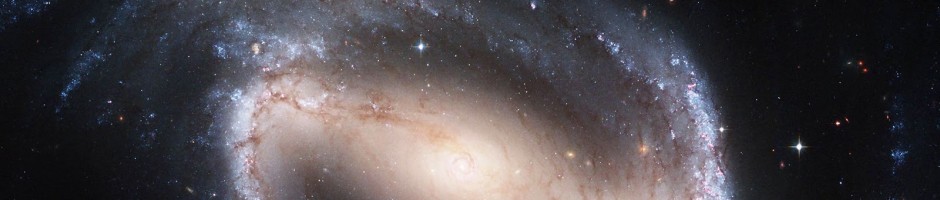
Announcing the Overlap Zoo project!
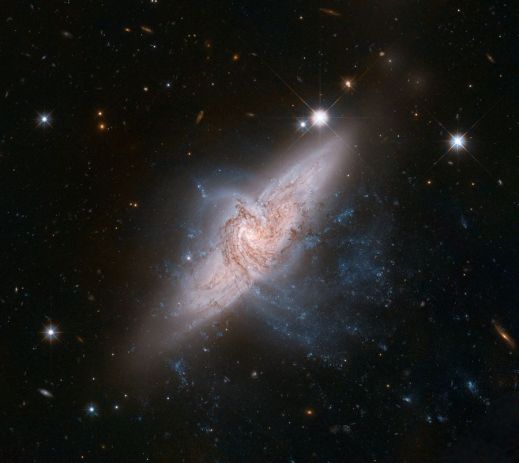
We are excited to announce the launch of Overlap Zoo, a new project under the Galaxy Zoo umbrella! Among the several million galaxies classified in previous Galaxy Zoo projects, a small number of those galaxies happen to overlap one another serendipitously. Now we need your help to classify these rare cosmic objects. We are launching Overlap Zoo with ~4200 candidate overlapping galaxy images from the DESI Legacy Imaging Survey, selected from previous Galaxy Zoo projects, and we invite you to help us identify which of these galaxies are truly overlapping pairs and help us categorise and catalogue them for use in future studies.
A Brief History
To understand how this project came about, it is useful to first look briefly at the work that inspired it. Prior to the start of this project, from around the 1980s through the early 2000s, astronomers began identifying and analysing a small number of individual overlapping galaxy pairs discovered by chance in various astronomical surveys. While these systems provided the astronomers at the time with valuable opportunities to study the properties of overlapping galaxies and dust, a sample consisting of only a small number of pairs was ultimately insufficient (we’ll talk more about the why later!).
This small initial sample was later expanded in 2013, when a project led by Galaxy Zoo team member and astronomer Dr. William ‘Bill’ C. Keel was conducted using imaging data from the Sloan Digital Sky Survey (SDSS) and the help of Galaxy Zoo volunteers to identify candidate overlapping pairs. Rather than relying on chance observation, this approach demonstrated that citizen science, in this case, forum science, could be used to identify a substantial number of overlapping galaxy pairs. This approach was also particularly valuable because these objects are often difficult to identify automatically, and human visual inspection is much better at distinguishing genuine overlapping pairs from apparent overlaps.
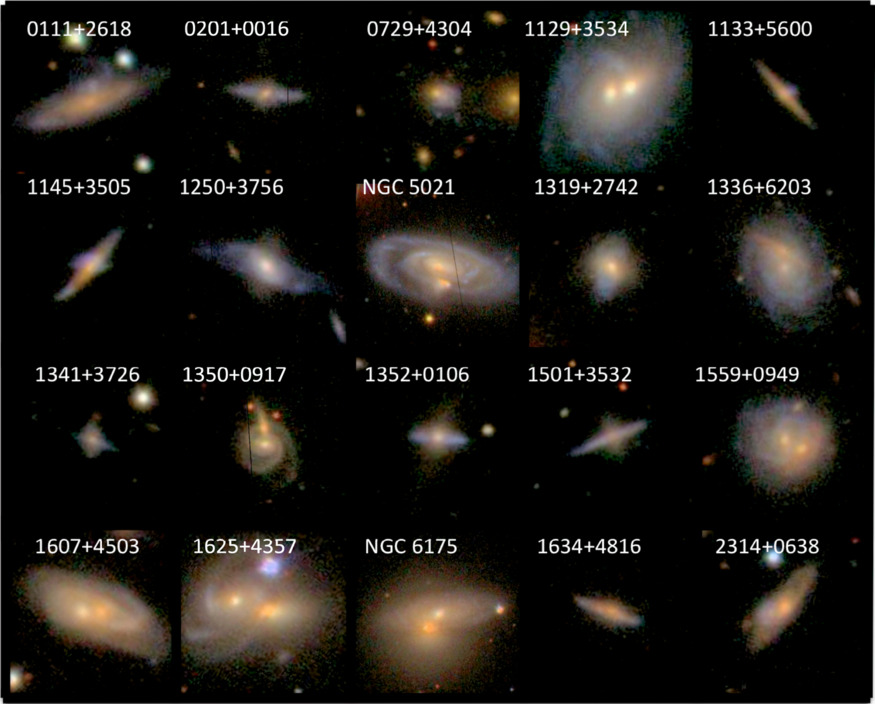
The combined efforts of all the volunteers resulted in the creation of a new large-scale catalogue of about ~2000 overlapping pairs. While this represented a significant increase in sample size, the relatively limited image quality of SDSS made it difficult to study these systems in detail on the scales they were looking for. Nevertheless, it was still a success for classifying and categorising these systems and identifying promising candidates for follow-up observations.
Now, almost a decade later, this earlier project serves not only as the first large-scale catalogue of these objects, but also as the main inspiration for our project, Overlap Zoo. At the same time, the new generation of astronomical surveys from ground and space observatories, including Euclid, the Vera C. Rubin Observatory, the Nancy Grace Roman Space Telescope, and more, have begun, or will soon begin, providing us with higher-quality views of the Universe than ever before. With these extremely powerful new resources becoming available, we now, more than ever, have an exciting opportunity to revisit the study and cataloguing of overlapping galaxies and expand upon previous efforts through our new citizen science project on a much larger scale.
The Science
So, what makes overlapping galaxies so special? Why do we want to study them? These are great questions that I’m sure you were asking yourselves when reading. Now, after learning about how we got here, we can finally get to the why!
When you see a beautiful picture of a galaxy, you may notice a few things right away: its colour, the different structures throughout its disk, the bright core at its centre, and all of the other features that make each galaxy unique. But what we are most interested in are those dark brown patches that you can see throughout the galaxy (like in the picture below!). These dark patches are actually dust, and they can tell us a lot about what is happening inside galaxies.
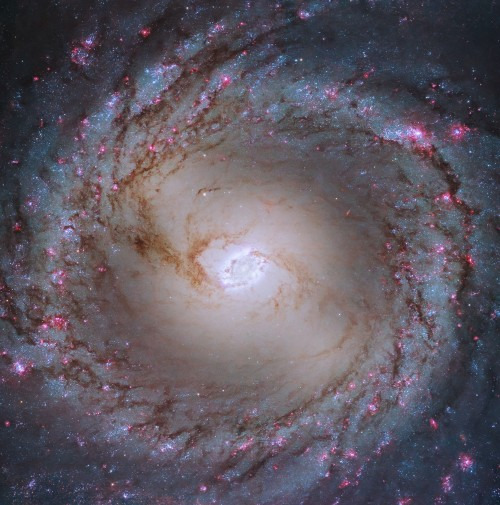
This dust, which consists of tiny particles of silicates and carbon, is an extremely important component of the galaxy, but also a pain point for many astronomers. This is because this dust absorbs and scatters (attenuates) the light of the galaxy. And because we use that light to make many important measurements, such as measuring distances, dust can cause those measurements to be inaccurate. So, astronomers must correct for this attenuation of light in their measurements. It would also be good if we had some type of universal correction that we could apply to every galaxy. And one way we hope to do this is with overlapping galaxies!
When two galaxies happen to overlap along our line of sight, they essentially become an astrophysical laboratory for studying galactic transparency. You can think of the background galaxy as a sort of cosmic flashlight. When it lies behind a foreground galaxy, its light shines through the overlapping region, giving us a direct way to see how much light the dust in the foreground galaxy blocks. By modelling the light from both galaxies and comparing the light that passes through the foreground galaxy with the light from unobscured regions, we can create a map of the dust in the foreground galaxy and also, importantly, measure how much light each region blocks. This direct method, in comparison to other methods, is what makes these systems so valuable to us.
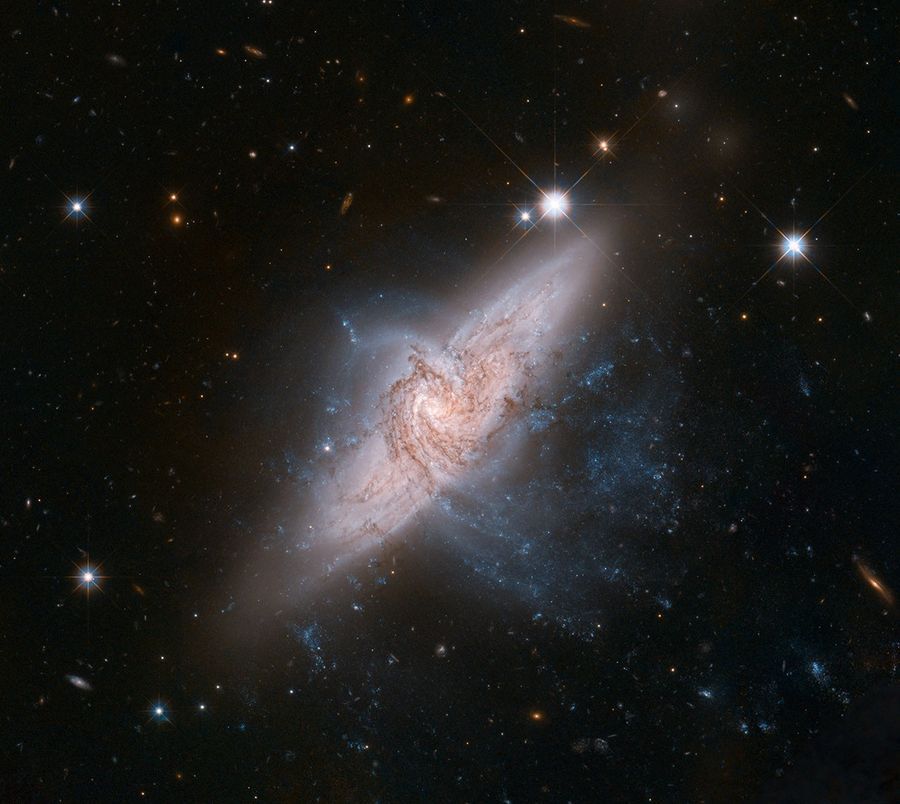
But not every overlapping pair is created equal. If our ultimate goal is to develop a correction that can be universally applied to every galaxy, we first need to understand dust across the many different types and configurations of overlapping pairs that exist. Some configurations can be more useful than others. There are those that are better suited for studying dust in the outer regions, while others allow us to probe into the deeper inner regions. There are also those that are more sensitive to the effects of dust and are easier to model, and vice versa. In other words, every overlapping pair that we can apply our methodology to will provide us with a slightly different piece of the whole picture of dust itself, each with its own advantages and limitations that we must consider when using these systems.
So, by creating dust maps for many different overlapping galaxies, we can begin to put those pieces together and build a more complete picture. With this information, we can hopefully provide astronomers with the data they need to better correct for the effects of dust in their measurements. But we haven’t got there yet!
The Need for a Bigger Sample
Why did we launch Overlap Zoo? What is our goal? To actually start creating those dust maps for many different pairs, we need to move beyond our relatively small sample and build a much larger one. We need as many systems as possible because, among them, we hope to find the rare, ideal configurations that are best suited for applying our technique and achieving this goal.
This is why we launched Overlap Zoo! Our goal with this project is to leverage citizen science and find as many overlapping pairs as we can to support a larger-scale study of these fascinating objects. With enough ideal systems, we could realistically have a background galaxy behind every part of a spiral galaxy—the arms, the outer disk, the inner disk, and so on. This would let us build those dust maps across different regions of spiral galaxies and see how the distribution of dust, and the amount of light it blocks, varies from galaxy to galaxy. We could do the same with elliptical galaxies, although these tend to contain less dust. With these in hand, we can see if there is a universal attenuation law that we can use for each galaxy. We are actually not entirely sure if this is the case yet, so this is extremely important for the field of astronomy as a whole! The more overlapping pairs we find, the better our chances of finding the right systems for these studies and the closer we get to finding a proper answer.
That’s where you come in. Every classification you contribute to Overlap Zoo brings us one step closer to building the sample we need to make these studies possible!
Volunteer Tasks
What will you do in our project? How can you help us? Your task in Overlap Zoo is to answer a series of questions that will help us identify the configuration of each overlapping galaxy pair. You will be presented with an image of an overlapping pair and guided through a series of questions that may feel familiar to Galaxy Zoo, but also slightly different, as we are considering not one, but two galaxies.
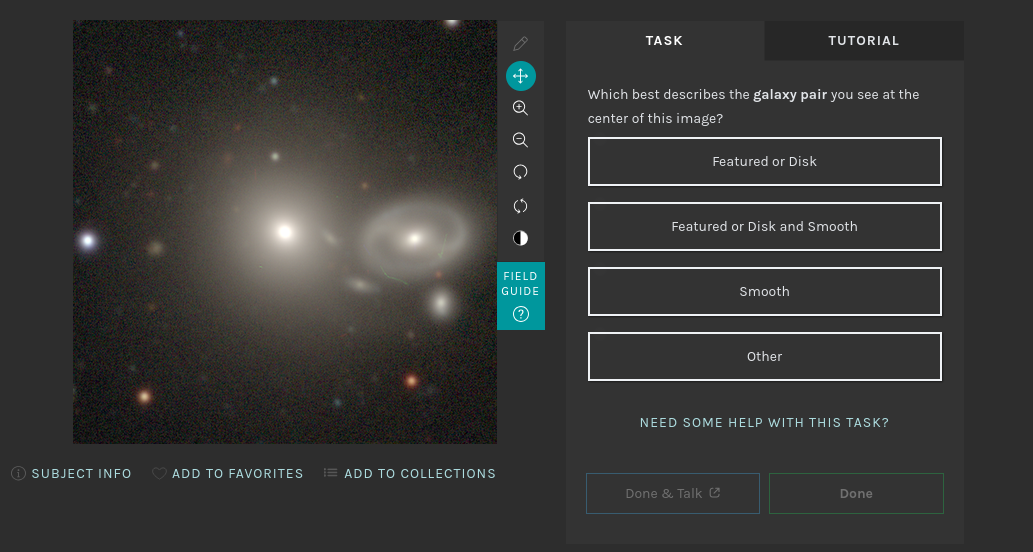
There will also be some questions that will be completely unfamiliar to a typical Galaxy Zoo classifier. We have tried our best to provide as much information as possible so that you can confidently answer these questions. We encourage you to take your time and refer to the field guides or other resources whenever you are unsure about how to classify a particular pair.
To get involved in our project, head over to Overlap Zoo and start classifying now! We look forward to your classifications and your help in expanding our catalogue of these objects for future research!
We look forward to your help,
Trevor Butrum and Benne Holwerda.
Fresh Paint and Familiar Faces: Updates from Galaxy Zoo
We have two quick but exciting updates to share with the Galaxy Zoo community today!
1. Galaxy Zoo’s updated look
Today, Galaxy Zoo is officially migrating to the Zooniverse’s new frontend codebase. This transition brings a fresh, updated design to our project and a more user-friendly interface for your classifications.
This move won’t affect your existing stats, collections, or favorites. The update is all about making the site faster, more accessible, and easier for our team to maintain in the long run. For a deeper dive into the technical details and what this means for the future of the Zooniverse, check out this post over on the Zooniverse blog.
2. Galaxy Zoo featured in recent ISSI video
During our team meeting at the International Space Science Institute (ISSI) in Bern last year, Galaxy Zoo team members Karen Masters (Galaxy Zoo PI) and Becky Smethurst (Dr. Becky) answered some questions about the project and what our team has been working on in the JWST era. In this short video, they discuss why galaxy morphology is so important for understanding the history of the Universe, our recent Galaxy Zoo efforts with JWST, and the incredible impact your classifications have on our science. Check it out below!
As always, thank you for all your hard work and for being such a vital part of the Galaxy Zoo team.
Happy classifying!
— The Galaxy Zoo Team
Almost 1 Million Classifications on GZ JWST! 🎉
We’re thrilled to share that Galaxy Zoo volunteers are about to reach an incredible milestone: 1,000,000 classifications on GZ JWST!
GZ JWST first launched back in April 2025 with over 300,000 galaxies from the COSMOS-Web survey. In the 200 days since, you have worked through this remarkable dataset at an extraordinary pace, helping us trace how galaxy structures change over cosmic time. Thanks to your classifications, we’re gaining a clearer picture of what galaxies looked like in the early Universe and how their shapes evolved into the systems we see around us today.
Galaxy Zoo has always been powered by the curiosity and dedication of its volunteers. Thank you for donating your time, your attention, and your enthusiasm.
Highlights from Talk
As we celebrate this milestone together, it’s worth taking a moment to look at some of the excitement happening on Talk. These are the top five most-discussed galaxies from this survey, with the images below counting down from #5. Each image links to its Notes page, so check it out and join in.
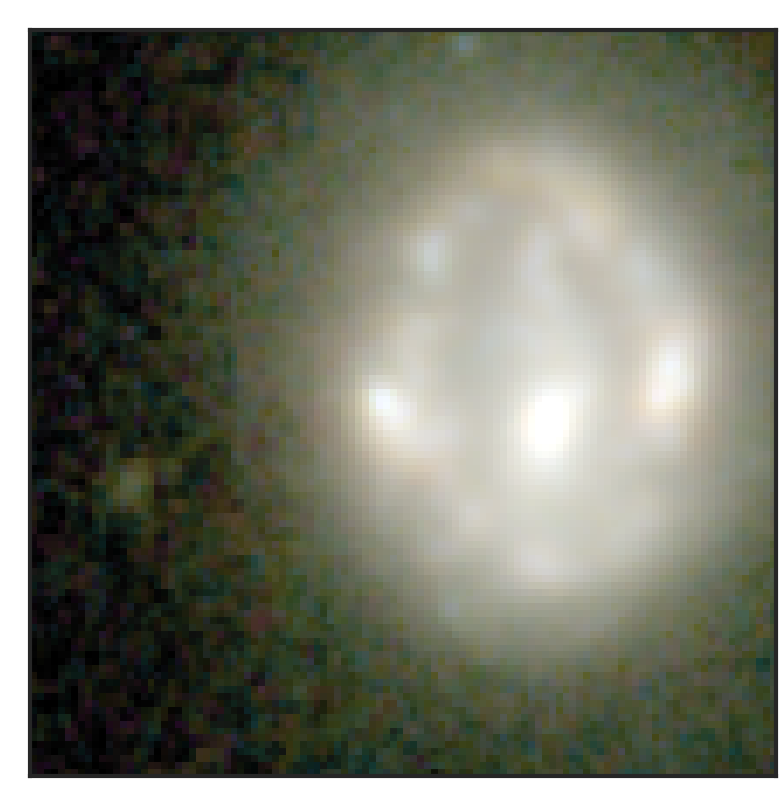


You can find many more stunning galaxies on Talk. For example, the JWST Gems tag highlights some of the most striking objects volunteers have come across. As always, thank you for making Talk such a joy to explore — it’s a pleasure to see what you all discover. And thank you for helping us (almost) reach one million classifications on GZ JWST! We can’t wait to see what you’ll uncover in the next million. 🎉
Galaxy Zoo featured in first Euclid data release!

We’re delighted to share that Galaxy Zoo (and you!) are featured in the first Euclid data release announced today!
Back in August 2024, we launched an intensive Euclid campaign where 9,976 of you classified over 380,000 galaxies. Thanks to your hard work and efforts, you trained the newest iteration of Zoobot and powered the first Euclid data release! Read the paper here.
Thanks again for your participation and help making this science possible!
Galaxy Zoo Team
A Retrospective on the Evolution of Galaxy Zoo and a New Era in Galaxy Classification
So as to not bury the lede, we’re testing a new method for classifying galaxies with Galaxy Zoo Tags! If you want to skip my musings about the evolution of Galaxy Zoo, you can jump directly to the section introducing this new method here.
First, as a quick introduction, my name is Hayley Roberts and I’m a postdoctoral astrophysicist and data scientist for Zooniverse based at the University of Minnesota. I finished my PhD last year at the University of Colorado Boulder, studying a rare phenomenon found in extreme galaxy mergers called OH megamasers. As a postdoc, my work has broadened to studying galaxy evolution through major mergers and starburst galaxies. This has included evaluating how well our galaxy classification schemes work for high redshift, or more distant, galaxies.
Our Evolving View of Galaxies
When Galaxy Zoo (GZ) launched in 2007, the first campaign utilized data from the Sloan Digital Sky Survey (SDSS), a pioneering survey enabled by innovative instrumentation and data handling techniques. It cannot be overstated how much SDSS data revolutionized our understanding of many aspects of astronomy, but particularly galaxy evolution and morphology, through new insights such as the color-magnitude relation and galaxy environment. However, the galaxies in this SDSS sample have a median redshift of z~0.1 (~1.3 billion light-years away), meaning this first GZ campaign was limited to only our nearest neighboring galaxies. This is reflected in the earliest iteration of the GZ classification workflow, which only asked volunteers to determine if a galaxy was a spiral (edge-on, clockwise, or anti-clockwise), an elliptical, or a merger. Clearly, we had a long way to go before the myriad of potential other options reflected in the current GZ workflow were conceived.
What drove the expansion of the classification choices in Galaxy Zoo workflow?
Two things: you and the data. Before the launch of the first iteration of GZ, the hope was to get 20,000–30,000 volunteers to participate in the first few months — the actual number ended up surpassing 100,000. This fundamentally altered the outlook on what GZ was expected to be able to do. The first GZ data release included classifications for nearly a million galaxies, an order of magnitude more than previous comparable studies. This data enabled numerous studies on unprecedented scales (such as studying the properties of dust in spiral galaxies, compiling the largest sample of mergers at the time, and exploring the co-evolution of host galaxies and their AGN), and led to new discoveries (including green peas and voorwerpjes). These first couple years demonstrated that your classifications were enabling GZ to achieve extraordinary scientific results.
Since GZ’s launch, our view of the galaxies in our universe has expanded in number, diversity, and distance. Surveys, such as DESI, have allowed GZ volunteers (you!) to classify millions of galaxy images. The diversity of galaxies classified have inspired aspects of GZ classification tree iterations over the years or entire spinoff projects. However, over the years, the biggest change to the galaxies being classified on GZ has been evident through new technology and telescopes.
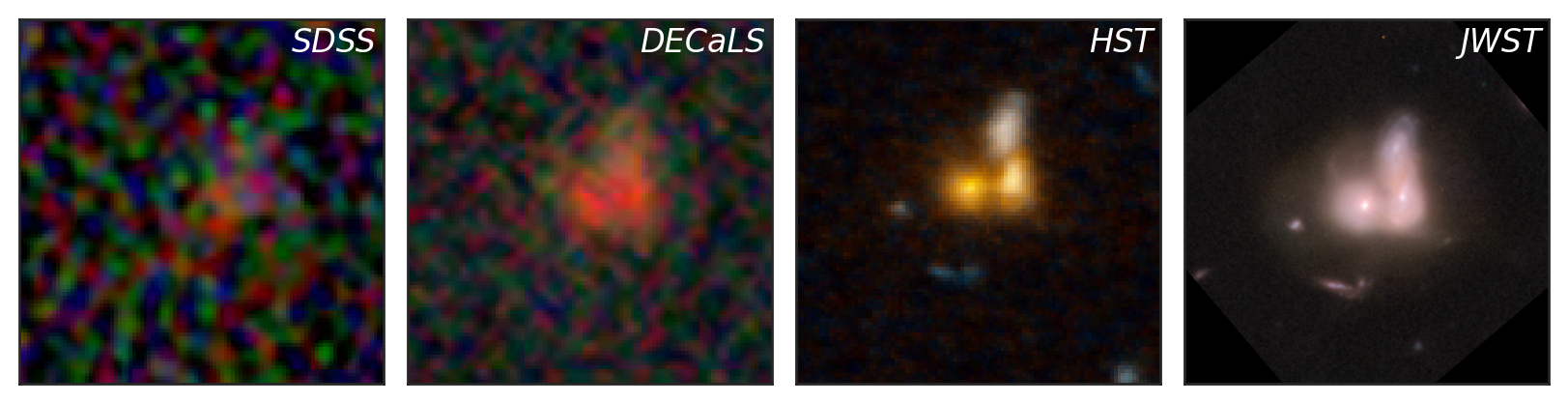
Above shows images of a galaxy obtained by four different telescopes or surveys that have starred in different GZ campaigns: SDSS, DECaLS, HST, and JWST. This galaxy, CANDELS J141937.3+525050.3, has a redshift of z=0.73 (~6.5 billion light-years away) and is a spectacular demonstration of just how our view of the universe has evolved. The SDSS and DECaLS images, the first and second panels, show a distant, unremarkable smudge of a galaxy. However, the images taken by HST and JWST, the third and fourth panels, unveil a spectacular merger between three galaxies. The higher sensitivity and resolution achieved over the years has given us unparalleled views of the galaxies in our neighborhood. Additionally, the number of high redshift galaxies in GZ has vastly increased, as well as the maximum redshift of these galaxies, particularly for JWST.
High redshift galaxies, those that are very distant and therefore seen as they were in the early universe, often defy traditional categories like spiral and elliptical galaxies. The universe was much younger and more dynamic when these galaxies formed, leading to a greater variety of shapes and structures. Unlike their more mature counterparts, high redshift galaxies frequently exhibit irregular and clumpy morphologies, complicating morphological measurements and making them harder to classify using traditional frameworks. Understanding high redshift galaxy morphology may require new classification schemes with less rigidity that account for their unique properties and the evolving state of the early universe.
Introducing Galaxy Zoo Tags: An Experimental New Way to Classify Galaxies
As we push the boundaries of our observations, the classification of high redshift galaxies presents new challenges, as discussed above. To address these challenges, we’re testing an alternative way to classify galaxies called Galaxy Zoo Tags! This workflow allows you to assign multiple “tags” (morphological features) to each galaxy without the restriction of working within the classification tree. This should allow for substantially more flexibility in classifications and feature combinations that might not be fully captured in the traditional classification tree.
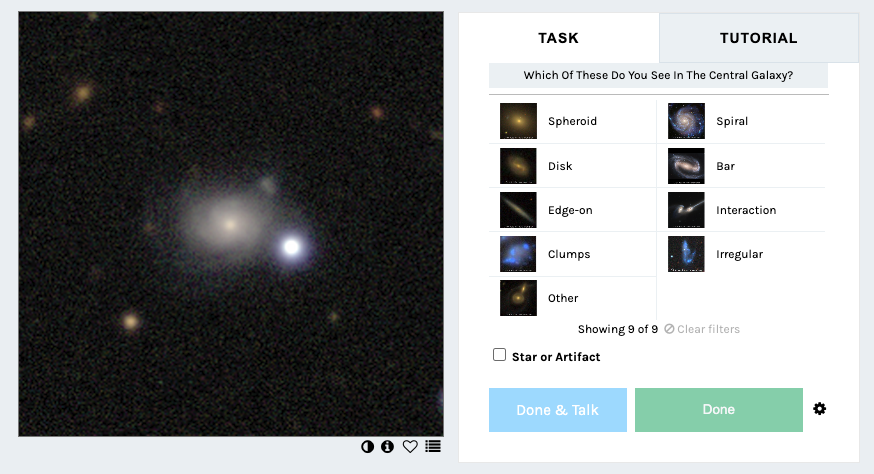
You can start classifying using this new workflow right now on a sample of galaxy images from DECaLS and CEERS data from JWST. All images in this test period have been previously classified using the traditional classification tree. The goals of testing this method are to:
- Compare the results of the two different classification methods (tagging vs. traditional GZ tree), and
- Collect your thoughts and feedback on this new approach.
To help with the second goal, we’ve set up this Google form for you to provide feedback on this new classifying method. It’s also linked in the banner on the GZ Tags page. We would greatly appreciate your time testing this new method out and any thoughts or opinions you may have about it. If you have any questions, you can come chat with us on this Talk board.
We don’t have any plans to remove or replace the current GZ classification system at the moment. The future of this workflow style will be determined both by how helpful/informative the data is and your response. This is just one new approach, but there are likely many others we could pursue. As always, your input, feedback, and ideas are imperative to designing any potentially updated classification schemes, so please do consider testing out this new method and providing feedback via the Google form.
Thank you all again for your efforts and making this all possible.

