Inverted images in Galaxy Zoo
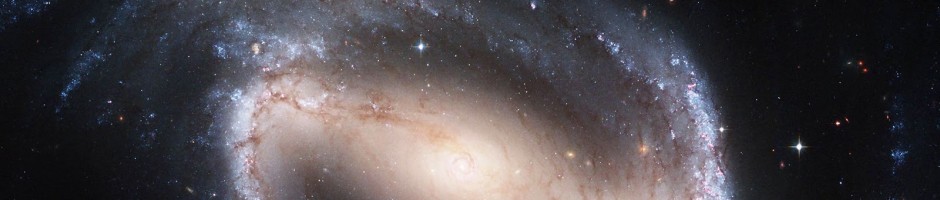
There’s a new addition to Galaxy Zoo today – inverted images. As some of you may know, the Sloan images can be shown in either colour or inverted.
To switch to the inverted version of the galaxy just click on the link “Invert galaxy image”. The inverted images can be useful in bringing out hints of structure that are otherwise hard to spot so we hope that you like this addition.
Happy classifying!
Arfon
Galaxy Zoo gets observing time: the high-energy universe as seen by the `Red Bird'
Galaxy Zoo gets more observing time! As we explained before, getting observing time can be very difficult, especially on the most powerful telescopes on earth and in space. We were therefore very pleased when NASA posted the results of it’s Cycle 4 Announcement of Opportunity to use the Suzaku X-ray space telescope and we spotted a familiar target….

Those of you who have been following our quest to understand what `Hanny’s Voorwerp’ really is might recognise this – IC 2497 is the massive spiral galaxy next to the Voorwerp. We’ve already been successful in getting time on XMM-Newton, another X-ray space telescope, to get a good look at what IC 2497’s supermassive black hole is doing. With Suzaku, we’ll be able to peer even deeper into its murky hear. Suzaku is a Japanese-led hard X-ray space telescope, which can see photons with even higher energy than XMM-Newton, photons to energetic that pretty much nothing can block their way out. Thus, if there really is a currently feeding supermassive black hole in IC 2497, we’ll be able to see it.
Suzaku began life as ASTRO-E, and was launched by the Japanese Space Exploration Agency (JAXA) back in 2005. It was named Suzaku, or ‘red bird’, for a number of reasons. Very early on in its mission though, it experienced a mysterious malfunction, which caused the Helium that was cooling its main instrument to leak into space, which effectively made it useless. It still has its other instruments, which are sensitive like no other right now to the high energy universe, and sometime in the next year or so, it will have a 75,000 second peak at IC 2497…!
Lost in Space … and more (An Italian in the zoo)
Today’s guest blogger is Half65 from the forum:
More than a year and a half ago an Italian weekly newspaper announced the selling, along with the magazine, of the complete saga of Star Wars in DVD at a very good price. Due to the fact that I’m a sci-fi addict and that I love that saga I decided to buy it. The weekly newspaper is not one of my favourites and I bought it only for the DVD and put the magazine on a table. One day I decided to make a little order and I rediscovered the magazine and I began rapidly to take a look at the pages. Suddenly something attracted my sense and I discovered that inside there was an article about astronomical matters but also a brief part about a project to classify galaxies. Strange thing, I thought at that moment, and I supposed it was something similar to seti@home, could be useful but boring. But the computer was on, as usual, and near me and, absent-mindedly, I began to type in the weird URL, without WWW, with the zoo word mixed with galaxy. I didn’t know, at that time, that I was a few steps from addiction. I read the home page then I began to surf in the various links and then …. I arrived at the tutorial page. And bang. Those pictures were beautiful. In that period I was regaining my astronomy passion and I had began to watch the lecture of Prof. Alexei V. Filippenko of Berkley University on web-cast. I remained captured. I read it all carefully. I made all of the examples and then I tried the entry test. Incredibly my first attempt was successful. “And now.” I was lost in space. I began to classify and, at classification no. 283, had a terrible doubt. Anticlockwise?

“It’s not important!” was my first thought. “They request we don’t agonize over the picture.” I was just a click away from losing a great opportunity to become addicted to another fundamental part of the project: the Forum. “A Forum! I never participated in a forum before. Why start now?” I don’t know why but I pushed the forum button and bang (again). I believed that the forum was a sort of FAQ and when I discovered that it is not and that the solution to my problems was to enter a question and wait for an answer I was lost. “Nothing so difficult,” you can say. Yes.
But the forum was in English, which is not my language. But I gave it a try and I wrote a message in an unreadable blue. Don’t be afraid, I don’t want to bother you with the all story of what happened after that. But I must mention the first member that “talked” to me and said: “Hi welcome to the zoo! i see an anti-clock too, but could you please not use the blue writing? its making my eyes go funny (nothing to do with being past my bed time honest) happy hunting”. And it was fluffyporcupine. Bang (there is a lot in this story). Probably without that gentle approach I would have been out of business. And thanks to that I can know other incredible members.
Alice the most lovely moderator in the known part of the Universe.
Hanny the famous discoverer of “Hanny’s voorwerp”.
NGC3314 my overlapping guru.
waveney Waveney my Perl guru.
Edd the great Administrator.
weezerd my electronic brother.
ElisabethB the great asteroid hunter.
Elizabeth the voice from the other side of the Ocean.
Infinity the secret agent of the forum.
Sorry I can’t mention all the members but that was my intention. And also I discovered a mad passion for topic=6732.0>overlapping galaxies, the Object of the Day and the Perl language. I’m able to participate to this project due to the patience and kindness of the members, especially with newbies (I’m still one). Learn English. Talk with real astronomers. Learn too much more and discovered that there was too much to learn. I was able to put together an Object of the Day collection and with them made little tour of the universe that could be visible with the last version of Google Earth. OK. STOP. I must finish now. Don’t be afraid if you don’t know English very well, if you have no degree, if you think that you can’t be of use to the project, that you can’t do the right thing, that you can’t do that. Stop thinking and go to the project and discover that even with a single classification you could be part of history.
Half65.
P.S.: This story was made with the kindness and essential help of Alice really the most lovely moderator in the known part of the Universe.
Top Ten Galaxies
The last time we counted down your Top Ten Galaxies there was a shocking result at number 1. Are things different now Galaxy Zoo 2 is a fortnight old?Read on to find out Read More…
My Galaxies ++
I’ve just updated the ‘My Galaxies’ section of the Galaxy Zoo site. Significantly you can now see all of the favourites that you have added in order of most recent first. I’ve also added a history of your galaxies (but not what classification you made yet!) I’m pleased to say that the restriction on ‘My Galaxies’ being visible three days after registration is now also removed.Enjoy!
Your top ten galaxies…
The ‘Favourites’ feature in the new Galaxy Zoo; seems to have been rather popular in the site’s first week of existence.Everyone will have their own reasons for pressing the ‘Favourite galaxy’ button; whether it’s a galaxy to follow up on the forum, or to enjoy later. In any case, we present the first in a semi-regular series : Galaxy Zoo’s top ten favourite galaxies, in traditional reverse order. Read More…
A new Zoo world…
I wrote the following on my personal blog yesterday, but I thought you’d like a flavour of the first day of the Zoo.
It’s been 19 months since the launch of the original Galaxy Zoo. That week was ridiculous – my main memory is of incredulous laughter as the number of users and classifications climbed and climbed and I, and the rest of the team, realised what we had on our hands.
Since then, we’ve made a lot of use of the results, but I’ve also spent a lot of time talking to all sorts of people and plotting to expand the project way beyond its original scope. Real people are now employed to make this happen, and Galaxy Zoo 2 which launched on Tuesday is our first site to use a new, extremely flexible interface.
It’s all come together rather rapidly in the last few weeks. On Monday night, I talked to the University’s Space and Astronomy society and told them the launch was only an hour or two away. Opening my laptop and connecting to the net on the train, I saw the new site appear. By chance I’d logged on 20 seconds after the beginning. I wonder if I was the first to see it?
I stayed up for a couple of hours that night watching the forum and email to see how reactions were. People were positive, but it stayed quiet and there was no flurry of press attention to mark the end of our press release’s embargo.
I lay in bed that night wondering if we’d just lost a colossal gamble. Perhaps we didn’t understand what it was about Galaxy Zoo that attracted people. Perhaps it really was just a one-off. It still seemed quiet the next morning as I watch the first report on BBC Breakfast TV, at 6.20, but I didn’t have time to think before being picked up and whisked off to Television Centre for more interviews.
And then we were off. More breakfast tv at 7.20, upstairs to 5 Live with Annie, one of our users, for 7.55 before that got bumped. Then back downstairs for more TV at 8.20 (Annie was great!) and then, as she headed off to work upstairs again for Radio 4. Once more I was sitting opposite John Humphrys, and we had a lot of fun on Today getting more and more enthusiastic about the project.
Spat out in the corridor, I was grabbed by the World Service for a quick interview, by now working completely on automatic. Just as quickly I found myself in a cab and at Paddington, and on a train to Oxford had time to catch my breath.
The site was clearly struggling, but stayed up (which is more than we managed for Galaxy Zoo 1) which I think is a pretty impressive achievement. More importantly, we were busy which meant that people were interested, and would come back to the site. Galaxy Zoo 2 is going to work, and we are going to get the data we want. It’s an amazing feeling; a mixture of relief and excitement. Less incredulous laughter, more satisfied grinning, I suppose.
We’d scheduled a small celebration for 5pm in the department, but unfortunately Arfon our lead developer had a bright idea just as the clock ticked toward 5, and he spent the whole time typing frantically, champagne at his side.
Since then, traffic has refused to die (which is fantastic) and as I write we’re on the front page of Digg.com so that’s not going to change any time soon. Thanks for your efforts – and the more classifications you do the sooner you’ll see what we’ve got up our sleeves for our next trick.
My email inbox included a note from Steven last night beginning the preparations for the next set of things, so keep clicking and watch this space!
'My Galaxies' is Back!
This morning we’ve added back in the ‘My Galaxies’ feature to the Zoo 2 site. The ‘My Galaxies’ page increases significantly the load on our servers and so we had to disable it very soon after launch due to the sheer number of people coming to the site. So that we can reintroduce ‘My Galaxies’ without risking slowing the site down too much, you will only be able to see the ‘My Galaxies’ page if you registered more than three days ago. This three day limit is a rolling time window, i.e. all Zooites from Zoo 1 will be able to access ‘My Galaxies’ now and new users will be able to access it three days after they registered.
At the moment ‘My Galaxies’ is only showing the 21 most recently ‘favourited’ galaxies. Don’t worry though, all of your favourites are being stored and soon you will be able to access them all. In addition you’ll soon be able to see your classification history and the classifications you made.
Cheers,
Arfon and the Galaxy Zoo Team.
This is my first time….
This is my first Galaxy Zoo blog posting and being one of the oldest members of the team (42!) I’m a bit lost with this new technology – sign of old age. Galaxy Zoo 2 was launched only a few days ago and Chris L rang me this morning to tell me we already have 2 million classification, so you guys are averaging a million galaxies a day.
That is staggering for us astronomers as we are usually expect our experiments to take a lot longer. For example, if one wants to use a telescope to study something in the sky, one must write a proposal 6 months in advance, submit it for scrutiny, and then await your allocation of time on a telescope. The process can take nearly a year and then after your night staring at the stars, it can take a further year to analyse the data (assuming it wasn’t cloudy!). Only then are we ready to ask questions of the data and test our observations against our original hypothesis written two years ago in a haste!
With the Zoo, it’s all a little too quick! For example, I can ask the question “how many galaxies have a bar through the middle of them” and typically I would embark on a career-long quest to answer this fundamental question. I may even recruit some poor graduate student to eyeball 50,000 galaxies to answer the question (like they did with Kevin!). But now, two days after the launch, we already have the data to address this question and it’s a little too fast for an old-timer like me. This story does however demonstrate the impact of technology on science. Thirty years ago the arrival of CCD digital detectors on telescope revolutionized the way we did astronomy. We could see deeper and faster than with photographic plates and surveys like the Sloan Digital Sky Survey (SDSS) became a reality. The internet is clearly the revolutionary technology of this generation of astronomer. Youngsters like Chris and Steven have embraced it and Galaxy Zoo is an amazing demonstration of how powerful this new tool can be used to address new questions.
The future does look bright as our ability to build bigger and better digital detectors allow us to scan the heavens faster and deeper. This year a new telescope called Pan-STARRS1 will start operations and will scan the northern hemisphere repeatedly looking for killer asteroids and supernovae. This new technological advance will open up the time-domain in astronomy and soon we maybe be showing you movies of each individual galaxy. How many galaxies change in time? Who knows… Therefore, science and technology are intimately linked. The desire of scientists to do better science drives technology, while new technologies open up new science capabilities. We need to fund both of these endeavours. I will end here with my thanks again for all your clicks and encourage you to keep going. You are part of a revolution and it’s a little scary, as all revolutions are.
This evening's downtime
Some of you may have noticed that we had some unscheduled downtime this evening. At about 18:40 our database server failed and due to the sheer number of classifications that you have all been making it took significantly longer than expected to restore the database from backup. I can assure you that we didn’t loose any of your classifications. Your hard work has not been wasted! I’m pleased to say that the site is now running well again and tomorrow I’m going to be working on making our database more resilient so that this doesn’t happen again. Happy classifying! The Galaxy Zoo Team
 Galaxy Zoo